
Floof - My Pet House review
 Analysis by Appsdrops
Some pet games are really dress-up games with an animal in the corner; others lean on caring for a little companion. Floof - My Pet House is aimed at players who want a gentle, animal-centered game, with virtual dogs, cats, and rabbits at its heart. I’d consider it for a child who enjoys friendly pet play or for a parent looking for a low-pressure game to share, while keeping its in-app purchase model in mind.
What you can expect from a pet-focused game
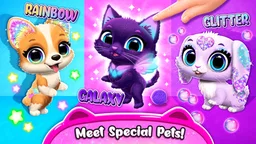
Floof is a free educational game from TutoTOONS, designed for an Everyone audience. Its central appeal is easy to understand: make a pet world around virtual animals rather than taking on the demands of a competitive or story-heavy game. That makes it approachable for younger players and for anyone who prefers a calm theme over timed challenges or combat.
It has an average rating of 4.1 from around 48,000 ratings, with roughly 1.5 thousand written reviews and over 10 million installs. Those figures suggest that it has reached a broad audience, though they don’t guarantee that every child or family will enjoy its style. I’d treat the rating as a useful starting point, not a substitute for considering how your child responds to virtual pet games and optional purchases.
The game’s premise gives it a different feel from a simple animal encyclopedia or a traditional learning app. It uses pets as the reason to engage, so its educational character is best approached as part of playful interaction rather than as a formal course. If you’re looking for structured lessons, practice exercises, or measurable learning goals, I would choose a dedicated educational app instead.
Cost, access, and the purchase decision
The initial download is free, so a family can try the basic experience without paying upfront. That is a meaningful advantage when you aren’t sure whether a child will stick with a pet game. The important qualification is that Floof also offers in-app purchases, with listed items ranging from $1.49 to $159.99. Those are a wide range of prices, so I would check the purchase screen carefully before approving anything.
Free access and paid value are different questions. A free start lets you judge whether the animals and the general style hold a child’s attention; it doesn’t mean every optional item is necessary or that the whole experience will suit your family without spending. I wouldn’t make a purchase on the assumption that it unlocks a particular feature or removes a particular limitation unless the game clearly explains that at the point of sale.
For a younger player, my practical advice is to set expectations before handing over the device: explain that the game can be played without automatically buying every tempting extra, and keep purchases behind an adult approval step where available. This is especially useful if a child tends to tap through prompts quickly. A parent can also take a moment to inspect the in-game purchase options together, turning the free trial into a clear decision rather than an open-ended spending invitation.
Where the value comes from in everyday play
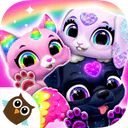
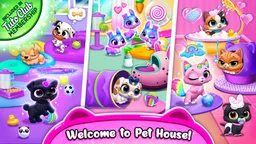
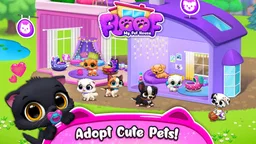
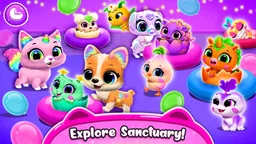
The strongest value here is its approachable pet theme. Dogs, cats, and rabbits offer a familiar point of entry, and the idea of creating a pet world is easy for a child to understand without a long explanation. I can see this working well during a short break at home, when a child wants a light activity and an adult wants to avoid introducing a complicated game with a steep learning curve.
A useful way to try it is to make the first session a shared one. Let the child explore at their own pace, then ask which animal they are most interested in and what they want to do next. That simple routine helps you see whether Floof encourages imaginative play or whether the child is mostly drawn to prompts to acquire more things. It also makes the purchase model easier to supervise without turning the game into a lecture.
Another practical use is as a brief transition activity: for example, a few minutes of pet play while waiting for dinner or settling in after school. I would keep sessions short at first and see whether the child is happy to stop when asked. That tells you more about whether this particular game fits your household than a long first session does. It is a small but valuable test for any app a child may use independently.
Compared with animal games that focus mainly on quizzes or factual learning, Floof puts the virtual pet experience first. Compared with games built around competition, scores, or fast reactions, its appeal is more gentle and accessible. The trade-off is that families seeking a strong lesson plan, a clear skill progression, or a demanding challenge may find a more specialized alternative more rewarding.
Tradeoffs to weigh before installing
The purchase range is the clearest consideration for parents. A free download can still present choices about optional spending, and the upper end of the listed range is substantial. That doesn’t tell me which items a particular player will want, but it does mean I would not leave a young child to make purchase decisions alone. If your household prefers games with no in-app spending at all, a paid-once title or a carefully selected offline activity may be a better fit.
The game’s broad pet premise can also be a limitation for some players. Children who want a specific kind of play—such as detailed animal facts, a deep simulation, or a story that steadily unfolds—may want more than a general pet world offers. I wouldn’t choose Floof as a replacement for hands-on pet responsibilities, either. It can provide a playful digital setting, but it should not be presented as equivalent to caring for a real animal.
There is also a difference between a game being labeled educational and delivering formal instruction. I’d view Floof as an entertainment-first choice with an educational category, not as a tool for teaching a defined subject. That distinction matters if you’re comparing it with apps designed around reading, mathematics, or guided lessons. For open-ended pet-themed play, the label may be a reasonable fit; for school practice, I’d look elsewhere.
Before installing, check that your device meets the minimum requirement of Android 7.0 or later. The current version is 15.1.188, and the game was released on October 7, 2021. Those details help with compatibility and identification, but they don’t tell you how well it will run on every individual device, so a brief trial is still the sensible approach.
Who is likely to get the most from it?
I’d start with children who already enjoy pretend play involving animals and who are comfortable exploring a simple game without needing a competitive goal. The Everyone age rating makes the intended audience broad, but a rating isn’t a personal recommendation for every child. Younger players may benefit from an adult nearby at first, particularly to guide them through any purchase prompts and to help set a stopping point.
Parents may also appreciate the free starting point if they want to judge the game before committing money. I’d use that opportunity to observe three things: whether the child chooses to play with the animals rather than repeatedly asking for paid items, whether the game holds attention for a reasonable short session, and whether stopping feels manageable. These are practical checks, not claims about hidden mechanics, and they can help you decide whether it belongs on a shared family device.
On the other hand, I’d skip it if you want a no-purchase environment without supervision, a structured educational curriculum, or a highly detailed simulation. It may also be a poor match for a child who loses interest quickly unless a game provides frequent new goals. In those cases, a free trial alone may not settle the question; compare it with a lesson-focused app or a pet game whose purchase approach better suits your family.
My verdict on the free start and paid extras
For the right player, Floof offers a friendly entry into virtual pet play without an upfront price. Its broad appeal, familiar animals, and easy-to-grasp idea make it worth trying for families who want a light, child-oriented game. I’d keep the expectations modest: the value is in an accessible pet-centered pastime, not in a substitute for formal learning or a deep simulation.
My recommendation is to begin with the free experience, play alongside a child once, and decide based on how they use it before considering any optional spending. The listed in-app purchase range makes that caution worthwhile. If the pet theme genuinely keeps your child engaged and the available free play feels satisfying, it may earn a place in your rotation. If your priority is guaranteed zero spending, structured lessons, or richer long-term systems, I’d choose a different kind of app.
In short, Floof is most appealing when you want gentle animal play and are comfortable supervising optional purchases. It’s an easy game to sample, but I’d judge its value by the free play your family actually enjoys rather than by the promise of paid extras.
Floof - My Pet House is available free, with optional in-app purchases. I’d recommend it as a casual pet-themed choice for a child who likes dogs, cats, and rabbits, provided an adult stays involved in purchase decisions. For everyone else, the best decision is a quick, supervised trial before making it part of the regular routine.
What we like
- Cute pets and playful animations make the app appealing to younger players.
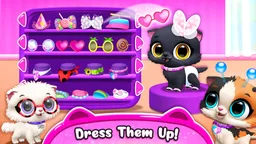
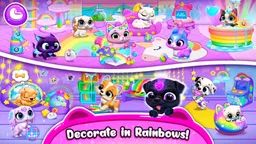
- Decorating the house gives players room to express their style.
- Simple touch controls are easy for children to understand.
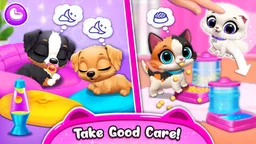
- Pet care activities offer light and relaxing play.
- Offline play makes it suitable for use without an internet connection.
What could be better
- Repeated care tasks can become predictable over time.
- Some furniture and items may require in-app purchases.
- Frequent prompts to watch ads can interrupt play.
- Progress may feel slow without optional purchases.
- The app may take up considerable storage on some devices.







