
Flashback Trivia: Quiz Game review
 Analysis by Appsdrops
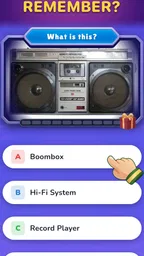
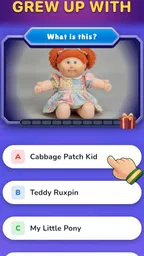
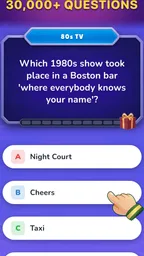
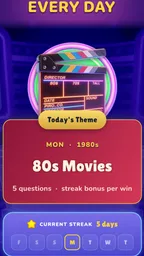
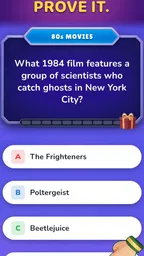
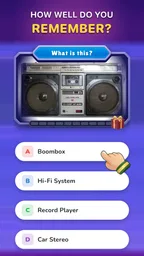
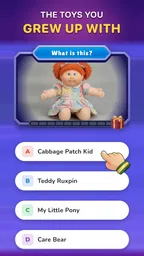
I can see the appeal of Flashback Trivia before opening a question: it turns a familiar decade into a quick memory test. The game is built around multiple-choice pop-culture trivia from the 1980s, 1990s, and 2000s, so it has an easy premise for a spare few minutes, a quiet commute, or a friendly argument over who remembers a song, show, or celebrity correctly. My main question is not whether that sounds fun at first—it does—but whether the format has enough staying power to earn a regular place on a phone.
Why the first sessions are easy to enjoy
As a trivia game, Flashback Trivia is at its best when recognition and uncertainty meet. A question can bring an answer to mind instantly, or leave you choosing between two possibilities you almost remember. That second kind is the satisfying one: it makes a short session feel like a genuine test rather than a string of obvious guesses. The multiple-choice format also keeps the barrier low for people who enjoy pop culture but do not want to type answers or learn complicated rules.
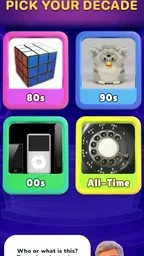
The three-decade spread gives the idea a natural social angle. Friends or family members can compare what they know, and the questions can prompt the kind of side conversation that is often more entertaining than keeping score. Someone who grew up with one decade may have an advantage there, while another player may recognize the later references. I would treat it as a light conversation starter, not as a definitive measure of anyone’s cultural knowledge.
There is also a practical first-week advantage: the game can be played offline. That makes it a plausible choice for a flight, a low-signal journey, or a waiting room where I would rather not depend on a connection. It suits short, self-contained play better than a game that expects me to coordinate with other people or be online at a particular time. If I wanted something to open, answer a few questions, and put away, that simplicity would count in its favor.
The app is free to install, with in-app purchases ranging from sixty-nine cents to just under twenty dollars per item. That makes trying it a relatively straightforward decision, though I would still check purchase details before buying anything. Its Everyone age rating suggests it is positioned for a broad audience, which fits a casual quiz that can be played around mixed-age groups. The developer is Lucky Echo Labs, and the game’s current version is 1.0.59.
Make the decade choice work for your group
A useful way to enjoy a decade-spanning quiz is to avoid treating every question as equally fair. If one person has a strong advantage in a particular era, take turns explaining why an answer feels familiar instead of making the score the whole point. That keeps the game welcoming for someone who is newer to older film or music references. It also reveals whether the fun comes from what you know, what you can reason out, or the stories the questions bring back.
For solo play, I would use the same idea differently: notice which decade repeatedly catches me out. Rather than rushing through questions just to accumulate correct guesses, pause when an answer surprises you and see whether you can remember the clue next time. That small change makes the quiz feel more like a casual memory exercise. It is a practical use of the format, not a claim that the game offers a separate study mode.
What gives it value after the novelty wears off
Flashback Trivia has a clearer long-term role for people who already enjoy pop-culture quizzes than for players looking for a deep game to progress through. The subject matter is the core attraction, and the convenience of offline play can make it easy to revisit. The store’s audience figures show that it has reached over a hundred thousand installs, with an average rating of 4.6 from around 5,700 ratings and 306 written reviews. Those figures are encouraging context, but they cannot tell me whether the particular mix of questions will stay fresh for an individual player.
That distinction matters after the first few sessions. A quiz can feel lively when the questions are unfamiliar and then become less engaging if the same kinds of references keep appearing, or if I already know most answers. I would not assume that a high average rating guarantees a large supply of new material or a particular update rhythm. Instead, I would judge its staying power by whether I still look forward to the subject itself: the decades, the memories, and the chance to learn something I missed.
Compared with broad general-knowledge trivia, this game has a narrower identity. That is a strength if I want entertainment centered on pop culture from the 1980s through the 2000s; it is a limitation if I want science, geography, history, or a wider range of topics in the same session. Compared with a party quiz that depends on a group, its offline option is more convenient for solo downtime. But if my main goal is live competition, a game explicitly built around multiplayer interaction would likely be a better fit.
It also differs from a trivia app designed primarily for learning. Multiple-choice questions can help me test what I recall, but a correct answer alone does not necessarily give much context. If I want detailed explanations or a structured way to study a subject, I would choose a resource built for that purpose. Flashback Trivia makes more sense as entertainment with a knowledge-testing twist than as a replacement for a reference book or a course.
Keeping it in rotation without turning it into a chore
For lasting value, I would keep sessions short and attach them to moments that already have a little downtime: a coffee break, a pause before an appointment, or a shared evening when nobody wants to start a longer game. This is a better match for a quick-answer format than setting a daily target and feeling obliged to complete it. The offline capability is particularly useful when the routine involves travel, though I would not rely on it for a specific trip until I had opened the game and confirmed it was ready to use.
Another sensible approach is to make it a social prompt rather than a solo habit. One person can read a question, everyone can commit to an answer, and the group can discuss the memory behind it. That approach works even when players have uneven knowledge, because the conversation gives less confident participants a way to join in. It also avoids making repeated solo play the only measure of whether the game remains worthwhile.
The app is available for devices running Android 7.0 or later. That broad minimum can make it accessible on older compatible devices, but it does not guarantee the same experience on every handset. If I am installing it on a device I rely on, I would consider storage and general performance as I would with any game, rather than assuming that an older operating system requirement promises identical smoothness everywhere.
Where repetition and mismatch can set in
The biggest likely source of fatigue is the subject boundary. Three decades of pop culture sound broad, but they are still a particular slice of entertainment. Someone uninterested in the references may find the game less engaging no matter how approachable the multiple-choice format is. Even a fan can tire of a quiz if familiar material starts to feel like repetition, so I would avoid making it my only trivia game if variety is important.
There is a second trade-off in the answer format. Multiple choice is welcoming and fast, but it can reward educated guessing as much as confident recall. That is not a flaw for casual play; it simply changes what a correct answer means. If I want a harder challenge where I must produce an answer from memory, a free-response quiz would test me differently. Conversely, if I am playing with someone who dislikes being put on the spot, the choices can make participation easier.
Purchases are another reason to be deliberate. Since the game is free to start and offers optional items across a range from sixty-nine cents to just under twenty dollars, I would play first and decide later whether any purchase adds enough value for me. A purchase is not necessary to find out whether the central idea suits my taste. For anyone sharing a device with a child, it is sensible to keep purchase controls in mind, even though the game’s age rating is Everyone.
Finally, I would not judge the game solely by whether I can make it part of a daily routine. A casual quiz can earn its place by being useful once a week or whenever friends want a low-effort activity. If I open it only when I am in the mood for nostalgia, that can still be a worthwhile role. The important question is whether it remains an enjoyable option, not whether it becomes a habit by force.
Who should keep it—and who should move on
I would recommend Flashback Trivia to someone who likes pop-culture recall, wants a lightweight game for gaps in the day, or needs an offline-friendly option for travel. It is especially appealing when players have different memories of the featured decades and can enjoy comparing answers without taking the score too seriously. The short-description label “Flashback Trivia” captures the mood, but the more useful point is its focused subject: the fun depends on whether those three eras mean something to you.
I would skip it if I wanted broad topic coverage, deep explanations, demanding progression, or a strong live-competition experience. A player who has little interest in pop culture from those years may find the theme more restrictive than nostalgic. Someone who dislikes multiple-choice guessing may also prefer a quiz format that asks for an answer without offering options. In those cases, a general-knowledge game, a learning-focused resource, or a multiplayer party title would better match the goal.
My long-term verdict: Flashback Trivia has a sensible chance of staying useful as an occasional, easy-to-open quiz rather than a game that needs to dominate my screen time. I like the combination of familiar cultural references, quick choices, and offline play, but I would not promise endless novelty from a focused theme. I would install it free, try a few short sessions, and keep it if the questions spark memories or conversation. If that feeling fades, there is no reason to force a routine; its best value is as a convenient little dose of pop-culture nostalgia when the mood is right.
What we like
- Quick rounds make the game easy to pick up during short breaks.
- The trivia format offers a fun way to test your general knowledge.
- A variety of questions can keep repeat sessions feeling fresh.
- Simple controls make answering questions straightforward.
- The game can be enjoyed without needing advanced gaming skills.
What could be better
- Some questions may feel too easy for experienced trivia fans.
- Repeated questions can reduce the challenge over time.
- A timer may put pressure on players who prefer a relaxed pace.
- Progress may depend on a stable internet connection.
- Ads or in-app purchases may interrupt the experience.







