Flags Quiz - Guess The Flag review
 Analysis by Appsdrops
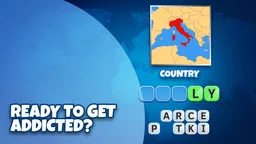
I like geography quizzes best when they turn a spare moment into a small challenge rather than asking me to commit to a long session. Flags Quiz - Guess The Flag has a clear focus: it asks you to recognize countries through their flags and maps, making it a straightforward trivia game for anyone curious about the shapes and symbols on a world map. Its appeal is easy to understand, but the narrow subject also sets expectations. This is a focused practice tool, not a broad general-knowledge game or a geography reference book.
A visual language built around recognition
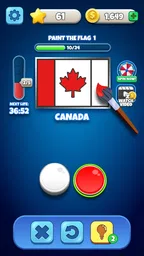
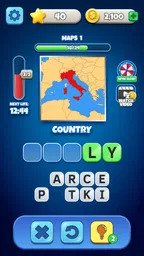
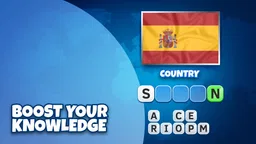
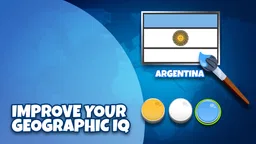
The game’s central idea gives it a coherent visual mood: look at a national flag or a country’s outline, then use what you know to identify it. That changes the kind of attention the quiz rewards. You are not just recalling a capital or picking a fact from a list; you are noticing color combinations, emblems, proportions, and silhouettes. The most satisfying moments come when a small visual detail separates two answers that initially seem alike.
That focus makes it particularly useful for learners who remember images more easily than names. A student reviewing countries, a traveler trying to sharpen their world awareness, or a trivia fan who enjoys visual puzzles can all get something specific from it. I would also use it as a light warm-up before a geography lesson: a quick round can reveal which flags I recognize instantly and which ones I have been confusing.
The store summary describes a collection of over 1,000 flags and maps, which suggests room to keep practicing beyond the best-known countries. I would treat that breadth as a chance to build familiarity gradually rather than expect instant mastery. A useful personal approach is to pause after a wrong answer and study the visual distinction before moving on. For example, instead of memorizing a country name alone, I try to attach it to a memorable stripe arrangement, color, or outline. That makes the quiz more educational than simply tapping through guesses.
The title is developed by PrizePool Studios, and the game sits in the trivia category. It is free to download, with optional in-app purchases listed from $0.99 to $49.99 per item. That makes it easy to try before deciding whether it belongs in your routine, though I would check purchase prompts carefully if I were handing a device to a younger player. Its Teen content rating is another useful detail for families choosing a game, even though the subject itself is educational and geography-focused.
Why the images matter more than a map lesson
Flags and country shapes are compact visual clues, so they work well in short bursts. In a typical geography lesson, a map can feel like a large field of names to memorize. Here, the task is narrower: recognize one image, retrieve a name, and keep going. That makes the experience approachable for someone who feels rusty about geography, while still leaving plenty of room for tricky distinctions among countries with similar colors or layouts.
There is a trade-off, though. Visual recognition is not the same as understanding where a country sits, how its neighbors relate, or why a flag uses particular symbols. The map questions can broaden the exercise, but I would not rely on a quiz alone for a complete picture of world geography. If your goal is to study borders, capitals, regions, or history in depth, a dedicated atlas or structured learning resource is a better companion.
Short sessions, useful habits, and honest limits
The strongest fit is the everyday gap between activities: waiting for a ride, taking a short break, or sharing a casual challenge with someone nearby. In that setting, a focused quiz is easier to pick up than a large geography app with lessons, maps, and multiple modes to navigate. I can imagine opening it for a few questions while waiting for food, then returning later to the flags that gave me trouble. That kind of repeat practice is more realistic than trying to cram every country into one sitting.
To get more from those brief sessions, I recommend turning mistakes into a tiny review routine. When I miss a flag, I would name the feature I overlooked—perhaps a central emblem, a narrow stripe, or a familiar color order—before continuing. For map outlines, I would focus on the country’s overall shape rather than a single coastline bump. This makes each answer a memory cue, not just a score event, and helps reduce the chance of making the same guess next time.
Another useful habit is to alternate between confidence and uncertainty. If you recognize a flag immediately, answer without overthinking; if two candidates seem plausible, take a moment to compare their distinguishing details. That approach is especially helpful with neighboring or visually similar designs. It also makes the game feel less like random tapping and more like deliberate observation, even when you only have a minute or two.
Compared with broad trivia games, this one gives up variety in exchange for a more consistent subject. You will not get the same mix of history, entertainment, science, and current events that a general quiz offers. In return, the questions can reinforce one skill repeatedly: visual country recognition. Compared with a flashcard app, the quiz framing may feel more playful, while flashcards can be better if you want to control exactly what you study or revisit a planned set of weak spots. Which is better depends on whether you want a quick challenge or a more deliberate study workflow.
The game has an average rating of 4.7 from around 81,000 ratings, and it has been installed over 5 million times. Those figures suggest that the simple premise has broad appeal, but they do not tell me whether every player will enjoy a narrowly focused quiz. If you tire quickly of repeated visual identification, the popularity of the format will not change that basic limitation. I would choose it for regular, low-pressure practice rather than expecting a changing sequence of unrelated activities.
Keeping the pace comfortable
A quiz about recognizable images naturally encourages quick decisions, but I think it is better enjoyed at a pace that leaves room to learn. Rushing can turn a useful distinction into a careless miss; lingering too long on every answer can make a casual game feel like homework. I would use it in two different ways: quick rounds when I want a mental break, and slower rounds when I am deliberately trying to improve my recall.
I cannot judge a game’s sound or animation from its subject alone, so I would not make elaborate claims about its music, effects, or presentation. What I can say is that the premise itself supports a calm, visual rhythm: inspect a flag or map, make a choice, and move to the next recognition task. That simplicity is a strength for short sessions, though players looking for a dramatic setting, story, or elaborate audiovisual world should look elsewhere. The mood comes from the act of solving, not from a narrative backdrop.
For a shared session, the content also offers an easy way to turn individual play into conversation. One person can explain why a particular flag looked familiar, or ask the other to name a country from its outline. I would keep it informal rather than treating each answer as a test; the most interesting discussions often come from the near-misses, where two designs or shapes seemed alike. This makes the game a reasonable choice for families or friends who enjoy geography, while its Teen rating remains worth considering when choosing it for a younger player.
There are a few reasons I would skip it. If you want a full atlas, detailed explanations of national symbols, or lessons that build from basic concepts to advanced geography, the game’s guessing format is not a substitute. If you prefer trivia that constantly changes subject, its concentration on flags and maps may feel repetitive. And if you already know these visual cues well, you may find it more useful as occasional practice than as a long-term main game.
On the other hand, beginners should not be put off by the possibility of getting answers wrong. The subject is easy to approach without prior study, and errors can point directly to what deserves another look. I would start with familiar flags and let the less obvious ones become a gradual learning project. The same advice applies to map shapes: focus first on broad outlines, then refine recognition as you encounter more examples.
A focused pick for curious players
The game was released on February 6, 2024, and its current version is 2.1.2. It requires Android 6.0 or later, so device compatibility is worth checking before installing. Those practical details aside, what matters most is whether its small, repeatable challenge matches the way you like to learn. Flags Quiz - Guess The Flag works best when you want geography to feel like a visual puzzle rather than a lesson you have to schedule.
My recommendation is simple: try it if you enjoy spotting patterns, want a lightweight way to refresh country recognition, or need a short activity that can fit around an ordinary day. Keep a mental note of the flags and outlines you confuse, and use those misses as prompts for another look. Choose a map or learning app instead if you need context, guided study, or broad coverage of geography beyond identification.
Overall, I see it as a clear, approachable trivia game with a deliberately narrow lane. Its visual focus gives each question a recognizable purpose, and the mix of flags and maps offers more than one way to test country knowledge. The limitation is also plain: recognition is the main event, so players seeking a richer world, deeper teaching, or varied quiz subjects will need something else. For a friend who wants a free, easy-to-start geography challenge and does not mind optional purchases, I would recommend giving it a try.
What we like
- Covers flags from many countries and regions.
- Short rounds make it easy to play in spare moments.
- Repeated quizzes help reinforce flag recognition.
- Simple controls are easy for new players to learn.
- Works well as a casual geography challenge.
What could be better
- Some flags can look very similar at a glance.
- Repeated questions may make later rounds feel predictable.
- The quiz offers limited depth beyond identifying flags.
- A wrong answer can interrupt the flow of a round.
- It may feel too basic for experienced geography fans.







