Everyday Puzzles: Mini Games review
 Analysis by Appsdrops
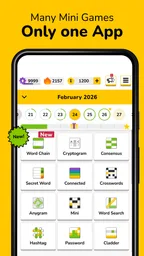
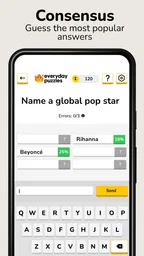
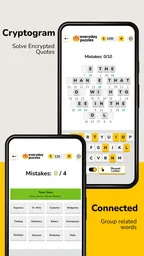
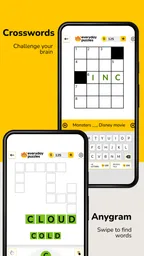
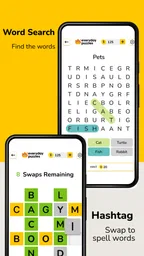
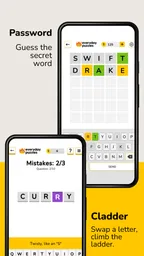
I like a puzzle game that lets me get started without a long tutorial or a big time commitment. Everyday Puzzles: Mini Games is built around that sort of pick-up-and-play appeal: it brings several familiar word-game formats together, including hashtag puzzles, crosswords, and word searches. In my view, its best idea is not that any one format is radically new, but that I can switch between different kinds of word challenge when one stops holding my attention.
That variety makes Everyday Puzzles: Mini Games a sensible choice for short breaks, a quiet commute, or a few minutes before bed. It is a free trivia game from Fanatee, Inc., aimed at Everyone. The app has a 4.6 average from around 95,000 ratings, and it has passed 10 million installs. Those figures suggest that it has found a broad audience, though they do not tell me whether its particular puzzle style will suit every word-game fan.
Small goals make it easy to begin
The clearest early goal is simply to choose a puzzle type and solve it. That sounds modest, but it is a practical strength: I do not need to commit to a long session or learn an elaborate game system before getting something out of the app. A crossword asks me to work through clues and crossing answers; a word search shifts the task toward scanning and recognition; a hashtag-style puzzle offers a different word association challenge. The change of format gives a short session a natural sense of purpose.
For example, if I have a few minutes while waiting for a drink, I can open the game and try a compact puzzle rather than start a lengthy level-based adventure. If I am tired of searching a grid, I can move to a clue-based format and use a different kind of attention. That flexibility is more useful than simply having a large menu: it lets me match the activity to my energy and the time I have.
I would not approach it expecting a deep narrative or a single competitive objective. The appeal is the small, immediate task. That makes the game easy to recommend to people who enjoy casual word puzzles but do not want to plan their play around a long campaign. If you need a strong story, a timed head-to-head contest, or a demanding daily routine to stay interested, this lighter structure may feel too loose.
Switching formats is a practical strategy
One useful way to play is to treat the three formats as different tools rather than as interchangeable content. When I want to warm up, a word search can be a gentler start because the words are presented in a visual field. When I want more deliberate reasoning, a crossword encourages me to use clues and let known answers help with the uncertain ones. Hashtag puzzles are a good change of pace when I want to think in associations rather than scan or fill a grid.
This matters on days when concentration comes and goes. Rather than abandoning the app because a particular puzzle feels frustrating, I can switch modes and come back with a fresher mind. That is a small but meaningful design advantage for casual play: variety can keep the experience pleasant without requiring every puzzle to be equally appealing to every player.
Progress is felt through solving, not a grand campaign
The most reliable progress signal here is the satisfaction of completing a puzzle and moving on to another. That kind of feedback suits a game intended for everyday sessions: I can finish a small task and feel that I have made a clear step, even if I only played briefly. The app’s version is 13.8.0, but the number itself is less important to a player than the basic rhythm of choosing, solving, and returning for another round.
I would describe the progression as a series of bite-sized challenges rather than a journey with a dramatic endpoint. That can be a plus if I want a reliable pastime instead of a game that constantly pressures me to catch up. It also means players looking for a visible long-term progression arc may want more than this app offers. The core reward is the puzzle-solving process, not a promise of a sprawling world or elaborate character development.
A practical tip is to use the formats to manage frustration. If I get stuck on a crossword clue, I can leave it temporarily rather than turn the whole session into a test of patience. Trying a word search or another style can preserve the feeling of progress while giving my mind a break. When I return, a crossing answer or a new association may come more easily. This is not a shortcut or a special feature; it is simply a better way to use the app’s variety.
Challenge depends on the kind of thinking you enjoy
The difficulty experience is not one straight climb, because each format asks for different strengths. A player who spots patterns quickly may find a word search comfortable but prefer more time with crossword clues. Someone who enjoys word associations may gravitate toward hashtag puzzles and find grid scanning less engaging. That makes the app’s range valuable, but it also means difficulty is personal: the same session can feel relaxing in one mode and demanding in another.
When I hit a difficult spot, I would first ask whether the problem is the puzzle itself or simply the format I chose for that moment. If I am tired, clue-solving can feel more taxing than visual searching. If I am distracted, scanning a grid may be harder than working through a clue at my own pace. Choosing a different mode is a sensible adjustment, especially for a casual game where the point is to enjoy the break rather than prove endurance.
There is a trade-off, though. Players who want one carefully escalating challenge may prefer a dedicated crossword app or a focused word-search game, where the entire experience can revolve around that single discipline. Everyday Puzzles is more appealing when variety matters more than depth in any one format. It gives me options, but it is not necessarily the best choice for someone who wants to master one specific puzzle style.
Its pacing is relaxed, with some limits
The game’s short-session structure is its strongest pacing choice. I can play during an ordinary pause and stop after a solved puzzle without feeling that I have interrupted a larger story. That makes it easy to fit around daily life. It also works well as a low-pressure alternative to scrolling: I can give my attention to a word challenge for a while, then put the phone away.
On the other hand, a relaxed pace will not satisfy everyone. If you enjoy leaderboards, competitive matches, or a clear countdown pushing you to improve, this is not the first game I would suggest. The known appeal is a collection of word puzzles, not a high-stakes contest. I would also skip it if I dislike switching between formats or prefer a single, tightly focused puzzle experience.
The game is free to start, with in-app purchases ranging from $0.99 to $49.99 per item. That is worth keeping in mind if you prefer to avoid optional spending altogether. I would decide before playing whether I am comfortable with purchases being available, then treat solving puzzles—not buying anything—as the reason to keep the app. The price range is broad, so it is sensible to check the purchase details in the app store before making a decision.
What keeps me coming back—and what might not
For me, the strongest retention factor is the option to choose a different mental task without leaving the same game. That is particularly useful for a household or friend group with varied tastes: one person may prefer crosswords, another may like searching for words, and someone else may enjoy the association-based format. It is not necessary for everyone to love every mode for the app to earn a place on a phone.
Still, variety alone cannot guarantee lasting interest. If the basic pleasure of finding words and answering clues does not appeal to you, three related formats may feel like three versions of the same general activity. And if you are someone who wants explicit long-term goals to pull you from one session to the next, the app’s compact puzzle loop may eventually feel repetitive. I would think of it as a dependable casual option, not a game that needs to become a daily obligation.
The store lists 2.8 thousand reviews alongside the larger rating total, and the game has been available since January 19, 2022. It runs on Android 7.0 or later. Those details make it easier to judge basic compatibility and how established the app is, but they do not change the central decision: do you want several approachable word-puzzle styles in one place, or would you rather focus on one specialized game?
Who should try it
I would recommend it to people who enjoy word games, want short sessions, and appreciate having more than one kind of puzzle available. It is especially suitable for a casual player who might begin with a crossword, switch to a word search when attention drifts, and return later without needing to remember a complicated plan. Its Everyone age rating also makes its intended audience broad, though individual preferences still matter.
If you are comparing it with the usual alternatives, a dedicated crossword app is likely the better fit when you want clue-solving to be the whole experience. A standalone word-search game may suit you better if visual scanning is your favorite part. A general trivia game may be a stronger choice if you want knowledge questions rather than word patterns. Everyday Puzzles sits between those options: it trades some specialization for convenience and variety.
My verdict is that its progression works best when you want small, self-contained wins rather than a long-term challenge ladder. The choice of puzzle styles gives each break a different feel, and the uncomplicated start is a genuine advantage. Its limits are equally clear: the relaxed format may not provide enough structure for players who need competition, a strong campaign, or deep mastery of one puzzle type. If your ideal game is an easy-to-open collection of word challenges, it is worth trying; if you want one demanding format with a more focused progression, a specialist alternative will probably serve you better.
What we like
- Offers a variety of quick puzzle formats in one app.
- Short rounds make it easy to play during a break.
- Simple controls are approachable for new players.
- Daily challenges can encourage a regular play habit.
- Puzzle variety helps keep sessions from feeling repetitive.
What could be better
- Some puzzles may feel too easy for experienced players.
- Daily content may become repetitive over time.
- Progress can depend on having a steady internet connection.
- Ads may interrupt the flow of play.
- Frequent play may require in-app purchases for extra content.