
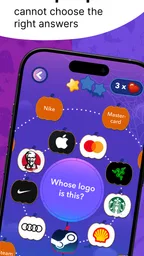





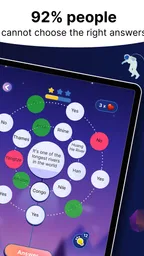

Erudite: Trivia Games & Quiz review
 Analysis by Appsdrops
I like trivia games best when they do more than test what I already know. Erudite: Trivia Games & Quiz is built around that appealing idea: use guessing games and quizzes as a light way to exercise your memory and pick up knowledge. In my experience, its strongest draw is the simple mental reset it offers. I can open it for a short challenge, focus on a question, and enjoy the small satisfaction of working out an answer instead of scrolling through another feed.
That makes Erudite a good fit for people who want casual brain-teasing rather than a formal course or a serious competitive quiz league. It is a free trivia game from Mioris LTD, rated for Everyone, and its broad audience is reflected in its 4.7 average from around 188,000 ratings and more than 5 million installs. Those figures suggest wide appeal, but the more useful question is whether its style suits the way you like to learn and play.
Why the guessing-and-quiz approach works
The central capability is not just asking questions; it is giving you a reason to retrieve an answer from memory. That small effort changes the feel of a quiz. Instead of passively reading a fact, I have to make a guess, weigh what I remember, and commit to a response. Even when I miss, the question gives me a useful prompt to think about what I knew and what I had overlooked.
This is a modest kind of learning, not a replacement for a textbook or a structured study plan. I would use it to keep curiosity active, revisit familiar subjects, or make an idle moment feel a little more engaging. The distinction matters: a game can make facts easier to approach, but a quick correct answer does not automatically mean I will remember the detail next week.
The design idea also explains why the game can work across different moods. If I have only a little attention to spare, a question is manageable. If I am more alert, I can treat the quiz as a small test of what I know. That flexibility is more valuable than a promise of dramatic improvement; it gives the app a role in everyday breaks without asking me to reorganize my routine around it.
Making a short session count
A practical way to get more from Erudite is to pause briefly after an answer rather than rushing straight onward. When I get something wrong, I try to name the clue or association that led me to my guess. That turns a miss into a memory hook and makes the game feel less like a string of disconnected questions. It is a simple habit, but it gives the quiz more staying power than tapping through at speed.
I also find that guessing works best when I treat uncertainty honestly. If I am torn between two answers, I can make a deliberate choice and notice why; if I know the answer immediately, there is little reason to pretend the question taught me something new. This keeps a casual session satisfying without confusing entertainment with deep study.
Erudite is most naturally suited to spare moments: a quiet break between tasks, a short wait, or a relaxed stretch at home when I want something more active than browsing. It can also make a low-key shared activity. Two people can read a question, make separate guesses, and explain their reasoning. That works especially well when nobody minds being wrong and the goal is conversation rather than proving who is the smartest person in the room.
A useful everyday role, with sensible limits
For example, I might open it during a ten-minute pause after lunch. Rather than starting a long video or a game that demands sustained attention, I can spend a little time tackling quiz questions, then put the phone away when the break ends. The key is to keep the session bounded. A casual trivia game is easy to pick up, but it is still screen time, and I would not treat it as a productivity tool simply because it involves facts.
It can also be a pleasant alternative when friends or family want a shared activity without setting up a full board game. The questions provide an immediate topic, and wrong answers can be as entertaining as right ones. For a mixed-age group, the Everyone content rating makes the game a more comfortable choice to consider than entertainment aimed at adults, though I would still check that its particular quiz style suits the people playing.
One useful trade-off is that a broad trivia format favors variety and accessibility over depth. If I want to understand a subject systematically, I need a dedicated learning resource that explains ideas, builds on earlier lessons, and lets me return to difficult material. Erudite is better as a spark for curiosity: a question can remind me that I want to learn more, but the game itself should not be my only source for serious preparation.
Where it differs from other trivia choices
Compared with a conventional quiz app centered on a narrow subject, a general guessing-and-quiz game is easier to dip into when I do not have a particular topic in mind. Compared with a social trivia game built around opponents and rankings, Erudite’s appeal is more about answering and thinking than about the pressure of beating someone else. That makes it a gentler option for solo downtime or casual sharing, but it may feel less compelling to players who need a leaderboard, head-to-head competition, or a strong social loop to stay interested.
There is another difference from flashcard tools. Flashcards are useful when I need to rehearse a known set of terms or prepare for an exam; a trivia game is usually more enjoyable when I want surprise and variety. If your goal is to memorize a specific syllabus, I would choose a study app that lets you control the material. If your goal is to turn a spare moment into a light mental challenge, Erudite makes more sense.
Its focus on guessing also creates a small but important limitation: confidence can sometimes feel like knowledge. A lucky answer may be satisfying, yet it is not the same as being able to explain the fact. I recommend taking a moment to think through answers you guessed, especially if you are using the game to learn rather than simply pass time. That little pause makes the experience more thoughtful without making it feel like homework.
Costs, compatibility, and the decision to try it
The game is free to start, while optional in-app purchases range from $0.99 to $39.99 per item. I would check the purchase choices in the app store before buying anything and decide in advance whether I am comfortable spending money on extras. The presence of purchases does not make the basic idea less appealing, but it does mean “free” should not be confused with every possible option costing nothing.
Erudite is currently at version 3.30.0 and supports devices running Android 8.0 or later. If you are choosing a game for an older device, that minimum system requirement is worth checking before you try to install it. The game was released on November 29, 2021, and its continued presence among widely installed trivia titles suggests that it has found a substantial audience, though popularity alone cannot tell you whether its questions match your tastes.
The main friction for me is a matter of expectations rather than a complicated learning curve. If I want a carefully sequenced lesson, detailed explanations, or a guaranteed path through a subject, I would look elsewhere. If I want intense competition, I would choose a game built around direct matchups. And if I dislike guessing because uncertainty feels frustrating, a calmer reading or puzzle app may be more relaxing.
Who will get the most out of it
I would recommend it to curious players who enjoy testing what they remember, people looking for a family-friendly casual game, and anyone who likes the feeling of solving a question without committing to a long session. It is particularly suited to someone who can enjoy a wrong answer as a prompt to think rather than a reason to quit. For that player, the quiz format turns a few spare minutes into a small, repeatable challenge.
I would be more cautious about recommending it to students who need reliable, structured revision, or to trivia enthusiasts who want a highly competitive community and detailed performance tracking. Those needs call for tools designed around study plans or competition. Erudite’s strength is its approachable middle ground: it gives me a reason to recall, guess, and stay curious without demanding that every session become a serious achievement.
Overall, I see Erudite as a worthwhile free option when I want a light mental workout that feels more interactive than reading random facts. Its guessing-and-quiz approach is the feature that matters most: it asks me to participate, and that makes even a brief break feel more engaging. I would keep my expectations realistic, use it for curiosity and casual play, and turn to a dedicated study or head-to-head trivia app when I need structure or competition. For everyday moments when I simply want to think about something beyond my notifications, it earns a place on my phone.
What we like
- Offers a wide range of quiz topics to suit different interests.
- Short rounds make it easy to play during spare moments.
- Answer explanations can help reinforce general knowledge.
- Daily challenges provide a reason to return regularly.
- Works well for solo play without needing to find opponents.
What could be better
- Some questions may feel too easy for experienced trivia fans.
- Repeated questions can reduce the challenge over time.
- Progress may depend on maintaining a regular play streak.
- Ads can interrupt the flow between quiz rounds.
- A steady internet connection may be needed for some features.







