



Dream Circles Dash: Music Game review
 Analysis by Appsdrops
I found the appeal of Dream Circles Dash: Music Game in a simple promise: move with the music, crash through blocks that match your color, and try to keep the run going. It’s a music game built around quick action rather than a long tutorial or a complicated setup. The first moments make the idea easy to grasp, while the challenge comes from turning that basic action into a steady rhythm.
From the first move to the first mistake
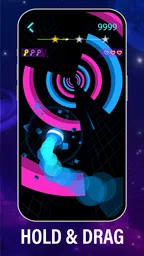
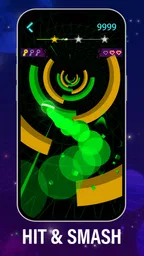
The game’s central task is easy to explain: surf and dash through a musical course, hitting blocks that share your color. That clarity matters. I can focus on the screen and the beat instead of learning a long list of rules before anything happens. The action has a direct cause and effect: I make a move, the game responds, and I quickly see whether I stayed in sync with the color-matching objective.
That immediate feedback gives each attempt a small sense of urgency. A matching block feels like progress; a wrong choice can bring the run to an abrupt stop. The loop is therefore less about wandering around and more about reacting at the right moment. If you enjoy games where the basic rule is simple but keeping your attention sharp is the real test, this setup has an easy-to-understand pull.
Color matching is the key to the action, and the music gives that action its pulse. Rather than treating the soundtrack as mere background, the game frames the experience as a rhythm-based dash. I found that combination appealing because it gives the movement a reason to feel brisk: I’m not just trying to get through a course, but trying to do so while staying engaged with the beat and the blocks in front of me.
A rhythm you can feel
The most satisfying moments come when the action and music seem to line up. A successful move gives a clear sense of confirmation, while a mistake interrupts the flow and makes the next attempt feel worth trying. That feedback is important in a game built around short, reactive decisions. Without it, matching colors could feel like a dry exercise; with the musical framing, each run has a little more momentum.
It is worth setting expectations correctly: this is a compact rhythm-action game, not a music-making tool or a deep simulation of an instrument. Its focus is on playing along through movement and color-matching challenges. I’d recommend it to someone who wants a quick game with a musical identity, rather than to a player looking for extensive customization or a story-driven adventure.
Because the core rule is so direct, the challenge is largely about attention and timing. I need to keep watching what is ahead and respond without losing the beat. That makes the game approachable at first glance, but the pace can still demand concentration. The rhythm offers a helpful sense of continuity; the color requirement keeps me from treating the run as automatic.
Small wins that invite another try
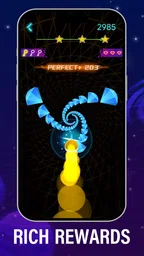
The reward here is the feeling of getting farther into a run and handling the action more confidently. A successful sequence gives me a reason to continue, while a miss creates a neat, understandable target for the next attempt: stay focused, follow the music, and choose the matching blocks. That kind of reward is modest, but it suits the quick-session format. I don’t need a complicated progression system to understand why I want another go.
That repeat-play appeal is the game’s strongest hook. Each run puts the same basic skills back in front of me, so improvement feels personal: I can try to react more cleanly and keep the flow going longer. The objective remains familiar, but the immediate pressure of the next decision keeps the action from feeling entirely passive. For a casual music game, that balance between an accessible rule and a demanding moment-to-moment focus works well.
The presentation also makes the premise easy to share with someone new. I can describe the game in a sentence, then let them see whether the rhythm and color-matching action click for them. That pick-up-and-play quality is useful when I have only a short break. It also makes the game a natural option for players who like tapping into quick rounds without committing to a lengthy session.
When the run ends
A failed run is part of the loop, not a reason to feel lost. The game’s action is clear enough that I can identify the broad goal and go back in with a simple adjustment: pay closer attention to the colors, respond to the beat, and avoid letting the pace catch me off guard. That reset is the hinge between one attempt and the next. The game gives me a clean reason to start again without asking me to relearn its premise.
That structure can be satisfying, though it also means the experience depends heavily on whether the core action appeals to you. If you enjoy repeating a challenge to improve your reactions, the reset can feel motivating. If you prefer a game to keep introducing new systems or changing its goals, the straightforward loop may feel familiar quickly. I see that as a matter of taste rather than a flaw: the game knows the kind of short, repeatable experience it wants to offer.
The rhythm-action format makes the best use of quick attention. I can settle into a run, respond to the sequence in front of me, and decide almost immediately whether I want another attempt. That makes it easy to fit into spare moments, while the possibility of a cleaner run gives those moments a purpose. It is a neat example of how a small core idea can carry a game when the feedback is immediate and the next try is always clear.
Who should give it a try?
I’d point Dream Circles Dash: Music Game toward players who like music-themed arcade action, quick runs, and simple rules that still call for concentration. Its age rating is Everyone, and it is free to download, with optional in-app purchases. The game has an average rating of 4.6 from around 14,000 ratings, and it has passed 10 million installs, suggesting that its straightforward rhythm-and-color premise has reached a broad audience.
It is made by Denzam Games and was released on October 20, 2023. The current version is 1.0.51, and it supports Android 7.1 and later. Those details are useful if you are checking whether it suits your device, but the decision to play will probably come down to the loop itself: follow the music, match the color, and see whether you can keep the run alive.
My take on the loop
For me, the best way to judge this game is by its sequence of action, feedback, reward, and reset. I make a move toward the matching blocks, get an immediate response, enjoy the satisfaction of keeping the rhythm, and then face the choice to try again after a run ends. That cycle is easy to understand and quick to return to. It gives the game a clear identity without dressing the central idea up as something more complicated than it is.
Dream Circles Dash: Music Game is a good fit when I want an uncomplicated music game with a reactive arcade feel. Its main strength is how quickly it gets to the point, then turns a simple color-matching action into a reason to focus and repeat. The experience may not suit someone searching for a sprawling game, but for short sessions built around rhythm, movement, and another chance to do better, it delivers a clear and appealing loop.
What we like
- Quick rounds make it easy to play during short breaks.
- Rhythm-based controls offer a simple learning curve.
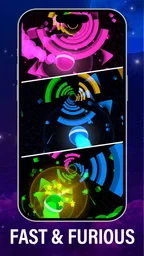
- Colorful visuals give gameplay a lively feel.
- Chasing higher scores adds replay value.
- The music theme helps create an energetic mood.
What could be better
- Timing errors can make later stages challenging.
- Repeated play may feel monotonous over time.
- Fast patterns may be difficult for new players.
- Visual effects can distract from upcoming obstacles.
- Enjoyment may depend on personal music preferences.







