
Dopples World review
 Analysis by Appsdrops
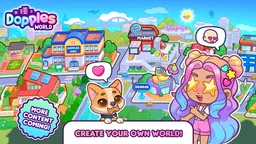
I see Dopples World as a make-believe playground first and an educational game second: its appeal is the chance to shape an avatar’s everyday life and spin small stories from it. That makes it a natural fit for children who enjoy imaginative play more than structured lessons, and for adults looking for a gentle game to share or supervise. It is free to start, but purchases are available, so I’d approach it as a creative activity to explore together rather than assume every option will remain free.
Getting started without turning setup into a chore
The first useful check is whether the device can run the game. The minimum operating system is version 7.0, and the current release is 23.0.65. If a child is eager to play and the game will not open, I would check the device’s operating-system version and whether the app has finished installing before assuming the game itself is at fault.
After opening it, give the player a moment to understand the basic idea: this is about creating an avatar life and making stories, not completing a tightly guided series of lessons. A child expecting quizzes or a clear educational curriculum may wonder what to do next. I’d make the first session a shared one: ask them to choose a character direction, then suggest a simple story prompt such as “What would your avatar do after school?” That gives the open-ended play a starting point without taking over.
Parents may also want to look at the purchase options before handing over the device. The game is free, with in-app purchases ranging from $0.49 to $39.99 per item. I would review the device’s purchase controls and agree on a rule beforehand—such as asking an adult before buying anything. This is a practical way to keep a creative session from becoming a surprise spending decision.
When the player is unsure what to do
Open-ended games can feel inviting to one child and aimless to another. If a player stalls after making an avatar, try giving them a tiny narrative task rather than asking them to “explore everything.” For example, they can invent a character with a particular mood and describe what that character wants today. The point is not to find a hidden objective; it is to make the act of playing feel purposeful.
A useful routine is to take turns adding one detail to a story. One person decides what the avatar is like, another proposes a situation, and the child chooses how the story continues. This gives a quieter player an easy way in and lets an adult observe whether the game’s imaginative format is holding their attention. It also avoids turning play into a lesson disguised as a game.
Because the experience is built around self-directed storytelling, it is not the best match for every child. Someone who prefers clear goals, scorekeeping, or explicit reading and maths practice may be happier with a more structured educational title. I’d choose this one when the desired activity is creative role-play, not when the main aim is to practise a specific school skill.
A workable way to recover from interruptions
Short play sessions are often interrupted by meals, errands, or a device being put away. Before stopping, I’d encourage the child to say what their avatar was doing and what should happen next. That simple verbal recap makes it easier to resume the story later, even if the game itself does not provide a convenient narrative checkpoint. It is a low-effort habit that works especially well when children move between activities quickly.
If the game freezes or fails to load, I’d start with ordinary checks rather than repeatedly tapping the screen: close and reopen the app, make sure the installation is complete, and restart the device if needed. If the problem remains, check whether the operating system meets the minimum requirement and whether the app can be updated through the app store. These steps can separate a temporary device issue from a recurring app problem.
For a child who has lost interest, restarting the same kind of play is unlikely to help. Change the prompt instead: ask them to create a story around a small everyday decision, or let them narrate while someone else suggests possibilities. If that still feels like work, it may simply not be the right play style for them. There is no need to force an open-ended game to deliver the satisfaction of a goal-based one.
What the game does well—and where its limits matter
TutoTOONS is the developer, and the game sits in the educational category, though I would describe its educational value carefully. Its strongest potential is in imaginative expression: a child can practise putting ideas into words, making choices for a character, and extending a story. Those are useful skills, but they are different from a lesson that teaches a defined topic or tracks progress through exercises.
The store shows an average rating of 4.7 from around 60,000 ratings, and the game has over 10 million installs. That broad uptake suggests it has found an audience, but popularity does not settle whether its free-to-play structure or open-ended format suits a particular household. I’d judge it by whether the child returns to invent stories, not by the rating alone.
Compared with familiar educational games built around puzzles, spelling, or number practice, Dopples World puts more weight on pretend play and personal expression. That is its main distinction and also its clearest trade-off. A child who wants to make up characters may find it more engaging than a sequence of exercises; a parent seeking visible, measurable learning tasks may prefer a more curriculum-focused alternative.
One practical way to get more from it is to connect the virtual story to a real conversation. Ask the child why their avatar made a choice, or invite them to tell the story aloud in a beginning-middle-end order. This turns a brief play session into a chance to practise explanation without claiming the game itself teaches a particular subject. It is also easy to stop when attention fades, rather than extending screen time just to reach an arbitrary target.
Age, cost, and choosing the right occasion
The content rating is Everyone, which makes the game broadly suitable in age terms, but a young player can still need help understanding purchases and deciding what to do in an open-ended experience. I would introduce it during a calm, supervised session rather than handing it over as an automatic distraction. That gives an adult a chance to see how the child responds and set expectations around spending.
Its free entry makes it reasonable to try before deciding whether it belongs in a regular rotation. Still, the purchase range means “free” should not be treated as a promise that every available item costs nothing. For families who prefer games with no in-app spending, that is a meaningful reason to choose another title or keep the device’s purchase settings under adult control.
A realistic use case is a short wait at home while dinner is being prepared: the child invents what their avatar is doing, then tells a parent the next part of the story. It can also suit a shared play session when siblings or friends enjoy contributing different ideas. It is less suitable as a quiet, predictable activity for a child who becomes frustrated without instructions, or as a substitute for a specific learning app.
Released on February 11, 2025, Dopples World is best understood as an invitation to create rather than a promise of formal instruction. Its current version is 23.0.65, and I’d keep the app updated through the usual store process if installation or launch problems appear. A high rating and large audience may make it worth considering, but the deciding question is simpler: does the child enjoy inventing stories with an avatar?
My recommendation is a cautious yes for children who like role-play and for adults willing to help them get started. I would try it with a small story prompt, check purchase controls first, and see whether the child naturally wants to continue. If they do, the game offers a flexible creative pastime; if they need clear challenges or focused academic practice, another educational game will probably be a better fit.
What we like
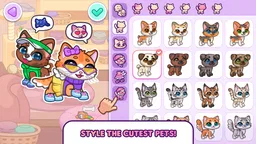
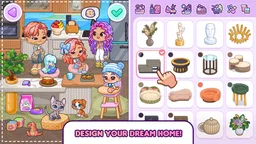
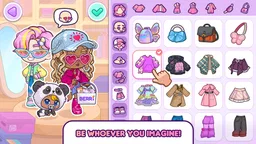
- Character creator offers many outfits and accessories.
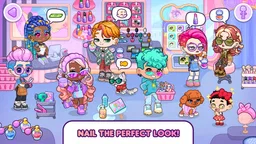
- Players can explore colorful locations at their own pace.
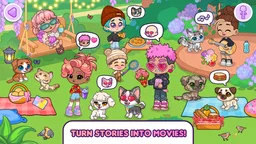
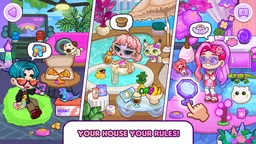
- Role-play encourages imaginative stories and social scenarios.
- The controls are simple for younger players to learn.
- Regular content updates can add fresh items and activities.
What could be better
- Some items and features may require in-app purchases.
- The game may show ads depending on the version.
- Limited goals can make play feel repetitive over time.
- A stable internet connection may be needed for some features.
- Performance can vary across older phones and tablets.







