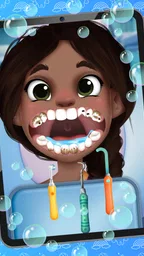
Dentist games review
 Analysis by Appsdrops
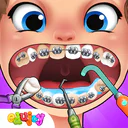
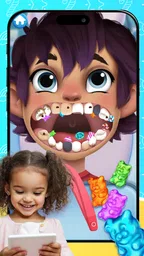
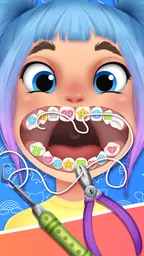
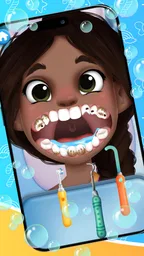
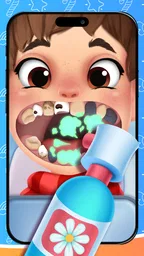
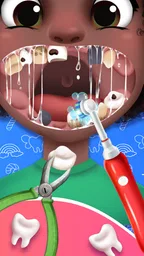
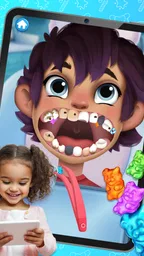
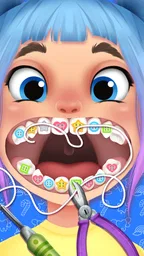
Choosing an educational game can be harder than it sounds. Some are best for quick, playful learning, while others suit players who want a more structured challenge. Dentist games takes a lighthearted route: it invites you to become a dentist and help its friendly characters keep their mouths healthy. I see it as an approachable option for anyone looking for a simple dental-care theme rather than a formal lesson or a competitive game.
What to consider before choosing a dentist game
Before downloading a dental game, I’d think about what you want from it. Are you looking for an activity that introduces the idea of caring for teeth, or do you want a game with a deeper learning path? Is the dental theme itself enough to keep the player interested? And is a free download with optional in-app purchases a comfortable fit for your household?
Those questions matter because educational games can feel very different even when they share a subject. One may focus on a playful role, another may be more like a quiz, and another might be designed around broader health topics. Dentist games makes its central idea clear: step into the dentist’s role and help the characters work toward a healthy mouth. That direct premise is easy to understand, which gives the game an inviting starting point.
I also like to consider who will be playing. The game is rated for everyone, so its audience is broad, and the dental-care theme can appeal to children who are curious about what dentists do. Adults may find it useful as a casual shared activity, too, especially when they want a playful way to talk about oral health. I wouldn’t treat a game as a substitute for professional dental advice, but it can be a friendly conversation starter.
A familiar theme with an educational purpose
Dentist visits can make some children uneasy, and a game that puts the player in the dentist’s role offers a different way to approach the subject. Instead of only thinking about a visit from the patient’s point of view, players can engage with the idea of helping someone else. That role reversal is a simple but appealing foundation for an educational game.
The important distinction is that this is a game built around dental care, not a complete health course. If your priority is a relaxed, themed activity, its premise is a natural match. If you’re looking for extensive explanations or a carefully staged curriculum, you may prefer to compare it with other educational games before deciding. I find that being clear about this expectation makes it easier to choose the right kind of app.
Why this game stands out
The strongest point is its straightforward concept. The store summary describes becoming a dentist and helping friends have a healthy mouth, so there’s no need to guess at the basic appeal. Players who enjoy caring-for-others themes can understand the idea right away. For a young audience, that clarity is valuable: the game’s central role is easy to grasp, and the educational subject is part of the premise rather than an unrelated add-on.
Its reach also suggests that many people have found the concept worth trying. It has passed 50 million installs, and its average rating is 4.5. I wouldn’t use popularity as a guarantee that every player will love it, but it does indicate that this is an established option rather than an obscure release. The ratings and reviews give prospective players another point of reference when comparing dental-themed games.
AppQuiz has developed the game, which has been available since December 28, 2015. Its current version is 17.8, and it is free to download. Those details make it easy to consider as a low-commitment first step: you can try a dental-care game without paying an upfront purchase price. There are in-app purchases, so I’d still take a moment to check the app store’s purchase settings if a child will be using the device.
For me, the game’s appeal is most obvious when the goal is a light, approachable introduction to dental care. It uses a familiar everyday subject and gives it a playful frame. That can make the topic feel less like a lecture and more like an activity. The simple premise also makes it easy to explain to a child before they begin, which can help set expectations and invite a conversation about looking after teeth.
Free to try, with purchases to keep in mind
The free price makes Dentist games accessible to people who want to explore the theme before committing to a paid app. In-app purchases are available, with items priced from $0.99 to $4.99. That range is worth knowing about in advance, particularly for parents setting up a device for a child. A quick check of the device’s purchase controls can help keep the experience aligned with your preferences.
Compatibility is another practical decision point. The game requires Android 7.1 or later, so it’s sensible to check the device’s software before downloading. This is a small step, but it can prevent the frustration of choosing a game only to discover that an older device can’t run it. The game is also listed for everyone, making it suitable for a broad audience from a content-rating perspective.
For searchers looking specifically for a dentist game, a dental-care game for children, or an educational game about healthy mouths, the title fits the subject clearly. That doesn’t mean it will suit every learning style, but it does make the choice easier to evaluate. If the topic and role-playing premise are what you want, the game gives you a focused place to start.
When another type of game may be a better fit
Not every player wants the same kind of educational experience. If someone prefers learning through questions and answers, a quiz-focused app may be a better match. If they want to explore several health topics rather than concentrate on dentistry, a broader health education game may make more sense. And if they are mainly looking for a challenging game, an action or puzzle title might hold their attention more effectively.
Those alternatives aren’t inherently better or worse; they simply serve different needs. A quiz can make recall the main activity, while a broader learning app can cover more than one subject. A general entertainment game may prioritize challenge and variety instead of health education. I’d choose among them based on the player’s interest, attention span, and reason for downloading, rather than expecting one game to cover every goal.
That’s where this title’s focus becomes both its strength and its limitation. A dental theme is a good fit when the player is curious about dentists or oral care. It may be less compelling for someone who wants a wide-ranging educational experience or a game centered on a different topic. If the interest in teeth and dental care is already there, a focused game can feel more engaging than a general-purpose learning app.
Parents can make the choice more personal by asking what the child wants to learn or play. Some children may enjoy taking on the helper role, while others may prefer a different theme or a more structured lesson. I’d also consider whether the game is intended as a short activity, a shared experience, or part of a larger educational routine. Matching the app to that purpose is usually more useful than choosing solely by popularity.
Switching is simple, but expectations matter
Trying a free game and later choosing another category is usually a straightforward decision. The main cost of switching is less about money than about the time spent downloading and exploring a new app, and about making sure it suits the player better. Since this title is free to download, it can be a reasonable first experiment for someone interested in a dentist game. Optional purchases are the part to watch if you want to avoid unexpected spending.
To keep the transition easy, I’d decide what the player liked or didn’t like after trying the dental theme. Was the subject engaging? Did they want more explanation, a different style of activity, or a broader range of topics? Those answers can point toward the next category without assuming anything about how another app works. They also help you avoid installing several games at random when one clear preference could guide the search.
It’s also worth remembering that educational value depends on how the game is used. A playful app can introduce a topic and spark questions, while a parent or caregiver can connect those questions to everyday routines. If the player asks about dental visits or oral health, that’s a chance to continue the conversation in an age-appropriate way. I’d view the game as a starting point for engagement, not as a replacement for real-world guidance.
My recommendation
I recommend Dentist games to people searching for a free, accessible game with a clear dental-care theme. Its idea of becoming a dentist and helping friends maintain healthy mouths is easy to understand, and its educational framing makes it a natural option for children who are curious about the subject. The broad everyone rating and large player reach add reassurance for families comparing apps, although individual preferences will always matter more than popularity alone.
I’d be more cautious if your main priority is a structured course, a broad collection of health lessons, or a different kind of gameplay. In that case, compare it with quiz-based, wider educational, or general entertainment alternatives and choose according to the player’s needs. There’s no reason to expect one dental game to be the right answer for every child or every learning goal.
Overall, this is a sensible pick when you want a light educational game centered on dentists and healthy mouths. It costs nothing to download, while optional purchases are available, so it’s worth checking the relevant device settings before handing it to a child. If the theme appeals to the player and you’re looking for a friendly introduction rather than a full lesson, I think it’s well worth trying.
What we like
- Simple controls make dental procedures easy to learn.
- Bright graphics give the game a cheerful feel.
- Short activities suit quick play sessions.
- Different patients help keep tasks varied.
- No dental knowledge is needed to get started.
What could be better
- Repeated procedures can make gameplay feel predictable.
- Some treatments may be too silly for realistic learning.
- Ads may interrupt play depending on the version.
- Touch controls can feel imprecise during delicate tasks.
- The game may offer limited variety over longer sessions.







