


Dancing Cats 2: Music Games review
 Analysis by Appsdrops
I approached Dancing Cats 2: Music Games as a casual music game rather than a serious rhythm trainer, and that is the right way to judge it. Its appeal is easy to understand: music-led play paired with a cute cat theme. That combination makes it feel more playful than a plain piano-tile game, though it also sets a clear expectation. If you want a relaxed, cheerful distraction, it has a reasonable case; if you want precise practice tools or deep musical control, I would look elsewhere.
What free access means here
The game is free to download, so there is no upfront price to weigh against its entertainment value. I see that as a useful low-commitment option: you can decide whether its music-and-cat presentation suits you without paying just to try it. “Free,” however, only answers the question of the initial download. It should not be taken as a promise about every possible cost or condition inside a mobile game.
That distinction matters when comparing it with paid music games. A paid title may make its cost easier to understand upfront, while a free one can be more convenient to sample. For Dancing Cats 2, I would base the decision on whether you enjoy its central idea and whether it fits the way you like to play, rather than assuming that free access automatically makes it better value.
The game is made by Cobby Labs and is listed for everyone, which makes its cute musical theme broadly approachable. Its average rating is 4.5, based on around nineteen thousand ratings, and it has passed ten million installs. Those figures suggest that many players have given it a try, but they cannot tell you whether its particular style will click for you. I would treat them as useful context, not as a substitute for judging the game yourself.
A music game built around a light mood
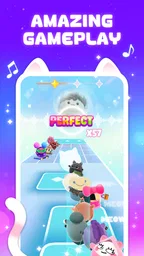
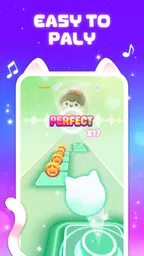
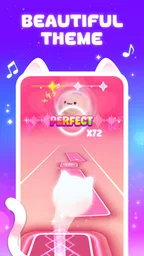
The premise is deliberately easy to grasp: this is a cat-themed music game built around pop piano songs and tile-style play. The familiar musical format gives newcomers an obvious starting point, while the cats give the presentation a distinct identity. It does not ask you to approach music like a lesson. Instead, the attraction is the combination of recognizable musical framing and playful visuals.
That makes it a natural fit for short breaks. I can imagine opening it while waiting for a ride, taking a quick pause between chores, or handing a phone to someone who wants something colorful and musical rather than a long, involved game. A simple premise is useful in those moments because it is easy to understand what the game is about before committing much attention.
There is a tradeoff in that simplicity. Players who enjoy building a long-term challenge, studying songs in detail, or making music themselves may find the basic piano-tile concept too constrained. The cat theme changes the mood, but it does not turn a casual rhythm game into a music-learning tool. I would choose a dedicated instrument or rhythm-training app if improving technique is the main goal.
How to get more out of a quick session
One practical way to approach a game like this is to decide what you want from each session. If you have only a few minutes, treat it as a small rhythm break rather than trying to turn it into a prolonged challenge. That keeps the experience in its strongest lane: a quick mix of music, visual play, and a lighthearted theme. It also helps you notice whether the core interaction stays enjoyable after the novelty of the cats wears off.
Pay attention to the relationship between the music and the tile play. In music games, a familiar tune can make an action feel more intuitive, but the rhythm still asks you to focus. I would avoid playing when I need to divide my attention between the screen and something important, such as crossing a street or following a conversation. It is better suited to a moment when you can look at the phone and enjoy the music without distraction.
Another useful test is to compare how you feel after a short session with how you feel before starting. If the game gives you a pleasant reset, it is doing its job even if you do not play for long. If you find yourself wanting a more demanding rhythm challenge or a broader musical choice than the game’s presentation suggests, that is a sign to switch to a different kind of music game rather than expecting this one to serve every purpose.
Where it sits among music games
Compared with a bare-bones piano-tile game, Dancing Cats 2 has a more character-led identity. That matters if cute visuals make you more willing to pick up a game in the first place. Against a rhythm title focused on dense charts and a serious competitive feel, though, its stated appeal is much gentler. The difference is not simply about difficulty; it is also about the kind of mood each game is trying to create.
It also differs from music apps that teach an instrument. A piano lesson app is meant to build skills through guided practice, while a casual tile game uses musical interaction primarily as entertainment. If your aim is to learn notes, improve finger technique, or understand songs, this is not the replacement I would choose. If your aim is to play something music-themed without turning leisure time into study, its premise is more appropriate.
The best comparison depends on what you normally enjoy. Someone who finds standard piano tiles visually plain may appreciate the cats and a more playful atmosphere. Someone who prefers elaborate progression or highly technical rhythm challenges may feel the opposite: the theme is pleasant, but the format is not the depth they want. I would decide based on the interaction and mood, not just the fact that the game belongs to the music category.
Tradeoffs worth considering before installing
The biggest strength is also the main limitation: the concept is narrow. A cat-themed spin on piano-tile play has a clear, friendly appeal, but it will not satisfy every reason people seek music games. I would not install it expecting a broad music-production experience, an instrument tutor, or a serious way to measure musical progress. Keeping that expectation in check makes the game easier to judge fairly.
There is also a difference between a charming theme and a lasting reason to return. The cat presentation can make the game more inviting, especially for people who like cute character art, but the underlying activity still needs to hold your attention. If you quickly tire of tile-based rhythm play, the theme may not be enough to change your mind. This is one of those games where personal taste matters more than a long feature checklist.
For shared use, I would think about the player rather than assume that an everyone rating means it is ideal for every situation. Its accessible theme can suit a broad audience, but a person looking for a calm, passive music experience may prefer simply listening to songs. The game asks for attention and interaction, so it is better for someone who wants to play along than someone who only wants background music.
Who is most likely to enjoy it?
I would recommend giving it a try if you like cats, enjoy pop-oriented music games, and want an easy-to-understand activity for spare moments. It may also suit a casual player who has found traditional piano-tile games a little plain and would rather have a more characterful presentation. Since the download is free, trying it is a practical way to see whether that combination works for you.
I would be more cautious if you are highly sensitive to rhythm timing, want a structured practice routine, or expect a deep competitive experience. In those cases, a dedicated rhythm game or a music-learning app is more likely to match your goal. I would also skip it if cat-themed visuals are not appealing to you and the tile-game format itself does not sound fun; there is little reason to choose it just because it is popular.
The game’s current version is 0.4.7, and it was released on September 17, 2025. It requires Android 7.0 or later. Those details are useful when deciding whether your device can run it, but they do not change the central question: are you looking for a small, playful music game, or for something with a more serious musical purpose?
My verdict on its value
For me, Dancing Cats 2 is worth considering as a free, light entertainment option, not as a must-have music tool. Its cat-centered style gives a familiar piano-tile idea a specific personality, and the approachable premise suits brief, low-pressure sessions. The large number of installs and strong average rating show that it has found an audience, but I would still let your own preferences decide.
I would install it if I wanted a cheerful game to dip into during a quiet break and liked the idea of pairing pop piano play with cute cats. I would skip it in favor of a dedicated rhythm challenge or an instrument-learning app if I wanted technical depth, musical instruction, or a different kind of interaction. Since the initial download costs nothing, the decision is less about purchase risk and more about whether this particular style earns a place on your phone.
My recommendation is simple: try it for its playful music-and-cat combination, but judge it as casual entertainment. That is where its value makes the most sense, and where its limits are easiest to accept.
What we like
- Catchy tracks make rhythm rounds easy to enjoy.
- Cat characters add a playful look to each session.
- Short levels suit quick play breaks.
- Tap controls are simple to pick up.
- Unlockable content gives players goals to work toward.
What could be better
- Some tracks may feel repetitive after several rounds.
- Fast note patterns can be tough for new players.
- Progress may depend on repeated play.
- Ads can interrupt the flow of play.
- The experience may feel limited for players seeking deep customization.







