Cyber Surfer : Rhythm Odyssey review
 Analysis by Appsdrops
I enjoy music games most when they give me a clear reason to try one more run, and Cyber Surfer: Rhythm Odyssey has an appealing hook: movement, timing, a skateboard, and a lightsaber all wrapped around the beat. It is a free music game from BADSNOWBALL HONGKONG LIMITED, aimed at players who want a quick, energetic rhythm challenge rather than a quiet playlist companion. Its central appeal is easy to grasp, but the longer-term question is whether the goals and challenge keep each session feeling worthwhile.
What gives a first session direction
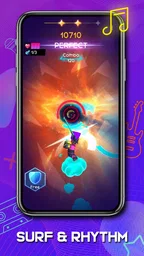
The basic idea is immediately readable: follow the music while steering through a neon-styled course. That makes the opening learning curve approachable even if you have not played many rhythm games. You do not need to understand a complicated setup before you can focus on the main task: responding to the track and keeping your movement in time.
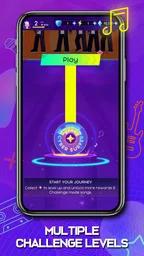
The skateboard and lightsaber framing gives the action a more physical feel than a simple screen-tapping music game. I like that distinction because it changes what I expect from a run. Rather than treating the music as background for a score chase, I pay attention to how the visual movement and beat fit together. The presentation is part of the challenge, not just decoration.
Early goals in a game like this work best when they are immediate: learn the timing, get through a song, and make a cleaner attempt next time. That is the most useful way to approach Cyber Surfer. Instead of worrying about distant unlocks before you know whether the controls suit you, I would start with a short session and see whether steering and rhythm feel natural together.
That first check matters because rhythm games can be demanding in different ways. Some are mainly about tapping precise notes; this one asks you to follow music while guiding a character through a moving environment. If you enjoy reacting to visual cues as well as listening, that combination may feel lively. If you prefer a stripped-back note chart with minimal visual activity, the extra motion may feel distracting rather than exciting.
Small goals make short sessions useful
I find the game easiest to enjoy in brief bursts. A single run gives me a concrete aim, while repeating a track gives me a chance to improve my timing without needing to commit to a long session. That makes it a reasonable pick for a break between other tasks or a short commute when you can safely look at your screen.
A practical approach is to treat early attempts as calibration. Focus on the rhythm and your lane changes rather than trying to chase a perfect result immediately. Once the visual cues feel familiar, you can pay more attention to precision. This can make the first few sessions less frustrating, especially if the action initially seems busier than the music games you usually play.
The game is not something I would recommend playing while walking through a crowded area or doing anything that needs your attention elsewhere. Its music-led movement is best enjoyed when you can look at the screen and react. For a quick pause at home, it suits the moment; as a background activity that you can play without watching, it does not.
How progress feels as the challenge builds
Progress in a rhythm game is most satisfying when it is visible in your own performance. With Cyber Surfer, I would judge improvement by whether I can stay with a track more confidently, read the action sooner, and make fewer reactive corrections. Those are useful progress signals even before considering any unlocks: they tell me that a song that once demanded all my attention is becoming manageable.
That kind of self-measured improvement is a good fit for players who like repetition with a purpose. Replaying a song can feel rewarding when I know what went wrong and can adjust on the next attempt. It is less compelling if I simply repeat runs without a specific target. I recommend choosing one thing to improve at a time—timing, steadier steering, or keeping attention on the beat—rather than treating every miss as a reason to restart in frustration.
The challenge curve is also personal. Someone comfortable with fast visual reactions may settle in quickly, while a player who relies mainly on listening could need time to coordinate the music with the movement on screen. When a run feels difficult, I would first ask whether the problem is rhythm, visual tracking, or steering. Separating those issues makes practice more useful than assuming the song itself is simply too hard.
There is a trade-off here: the energetic visual style helps make each run feel active, but it can compete for attention. If the screen feels overwhelming, slow your focus down mentally and watch the clearest cues rather than trying to absorb every effect at once. I would also avoid turning a short session into a long score grind. A few attentive attempts are more useful than many tired ones when timing is the point.
Unlocks and the value of another run
Unlocks can give a music game a reason to keep returning, but they should not be the only source of enjoyment. I approach Cyber Surfer with a simple test: am I having fun trying to play the track better, or am I only continuing because I feel pushed toward the next reward? If the music and movement are enjoyable on their own, progress becomes a bonus. If they are not, a distant goal is unlikely to fix the underlying mismatch.
For a new player, it is sensible to set a modest goal for each sitting. Try to become comfortable with one track, or replay it until the movement feels less reactive. This creates a personal progression path even when you are not thinking about a particular unlock. It also makes it easier to decide when to stop: if you have reached your small goal, you can leave on a satisfying attempt instead of chasing one more run indefinitely.
There is some retention pressure built into any game that encourages repeated attempts and offers things to pursue. I prefer to keep that pressure in perspective. A free download lowers the barrier to trying it, but optional purchases are still part of the experience: individual in-app items range from $0.99 to $19.99. I would decide whether the core play is enjoyable before spending anything, and avoid treating a purchase as necessary to prove that I am making progress.
That advice is especially useful for younger players and families. The game has a Teen content rating, and its purchase options mean it is worth checking the device’s purchase settings before handing it to someone else. The rating provides a broad age signal, while the actual fit still depends on the player’s comfort with fast-moving visuals and repeated score-focused attempts.
Where it sits among music games
Compared with a conventional rhythm game built around tapping notes in fixed lanes, Cyber Surfer places more emphasis on movement and visual reaction. That can make it a better choice for someone who wants a more kinetic, arcade-like session. By contrast, a player who wants to concentrate on audio timing with less screen activity may prefer a simpler rhythm format.
It also differs from music apps designed primarily for listening. Here, the track is something to play along with, not just something to leave running while doing other things. I would not choose it as a passive soundtrack or a way to discover music. Its strength is the act of responding to a song, so the best use case is a short, focused session when you are ready to interact with the screen.
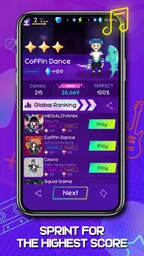
The game has reached a broad audience, with over 50 million installs, and its average rating is 4.4 from around 121,000 ratings. Those figures suggest plenty of players have found something to enjoy, but they do not tell me whether its particular blend of music and movement will suit you. The more useful question is whether you like visual rhythm challenges and are happy to replay tracks while refining your reactions.
On the technical side, the current version is 5.8.38, and it supports Android 7.0 and later. That gives prospective Android players a straightforward compatibility check before installing. The game is free to start, which makes trying the control style a low-commitment decision, though the available paid items are worth keeping in mind if you prefer games with no optional spending at all.
Who will enjoy it, and who may want another style
I would recommend Cyber Surfer to people who like bright, fast rhythm games and enjoy improving through repeated attempts. It is also a good candidate for someone who wants a music game that feels more like an arcade run than a sequence of taps. If you have a few minutes to focus and enjoy reacting to visual movement, its central idea is easy to test for yourself.
I would be more cautious if you find busy visuals tiring, dislike replaying songs, or want a game that can be played mostly by ear. It may also be the wrong fit if you are looking for a deep music library or a calm listening experience; those are different needs from the focused, screen-led play this game offers. A simpler rhythm game is likely better for precise note practice, while a music player is better when you want sound without a challenge attached.
BADSNOWBALL HONGKONG LIMITED has built the game around an identity that is easy to recognize, and the mix of a skateboard, a lightsaber, and rhythm gives it a distinct arcade flavor. Still, the idea only works if the movement helps you feel connected to the music instead of pulling your attention away from it. I suggest giving it a few runs before deciding: the first attempt may be about learning the visual language, while a later one can show whether the timing itself is satisfying.
My verdict on its progression
Cyber Surfer: Rhythm Odyssey is most convincing when I treat progress as a series of small improvements rather than a race toward an unspecified finish line. The immediate goal is clear, the rhythm-and-movement combination gives practice a purpose, and a short session can feel complete without requiring a lengthy commitment. Its strongest audience is players who enjoy energetic visual feedback and are willing to replay a track to get more comfortable.
Its main limitation is also tied to that identity: the screen-led action may not suit players who want a quieter or more audio-focused rhythm experience. Repetition can become less rewarding if you do not enjoy refining your own performance, and optional purchases are another reason to keep expectations and spending habits in check. I would try it for free, focus on whether the core movement feels good, and only keep returning if the music makes you want another run.
Overall, I see it as a lively pick for focused bursts, not an all-purpose music game. If the skateboard-and-lightsaber presentation makes you curious and you like learning through retries, it is worth a try. If your ideal rhythm game is minimal, relaxed, or built around tapping alone, another style will probably serve you better.
What we like
- Responsive controls make it easy to match moves to the beat.
- Bright neon visuals give each run a distinct arcade feel.
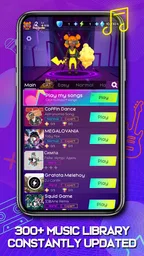
- A wide selection of tracks keeps repeat runs varied.
- Short levels work well for quick play sessions.
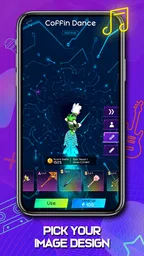
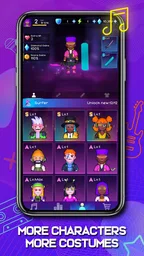
- Unlockable cosmetics add goals beyond simply finishing tracks.
What could be better
- Fast sections can feel difficult for players new to rhythm games.
- Some tracks may require practice to learn their patterns.
- Visual effects can make hazards harder to spot at times.
- Progress may depend on replaying levels to earn enough rewards.
- The experience is less appealing if you prefer slower gameplay.







