


Cute Monster Band review
 Analysis by Appsdrops
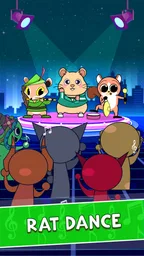
I like music games that let me make a little noise without asking for a long session or perfect timing. Cute Monster Band has an appealingly simple premise: bring funny characters together and let their sounds form a repeating tune. In practice, that makes it feel less like a conventional rhythm test and more like a playful musical toy. I found the central pleasure in trying combinations and listening to how the loop changes, rather than chasing a score.
Making a first loop feel worthwhile
The first useful goal is easy to understand even if you have never played a music-making game: put characters together and see what they contribute. That immediate cause and effect suits short, casual play. I can imagine opening it while waiting for a drink, trying a combination, then deciding whether the result is worth another minute of tinkering. There is no need to arrive with musical knowledge or a plan for a finished song.
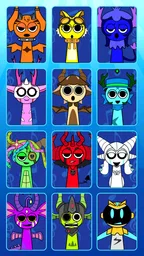
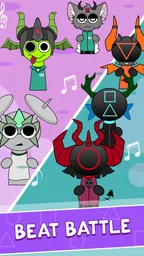
Cute Monster Band is a free music game from Great Meme Games, with a lighthearted character-led identity rather than the precise, competitive feel of a traditional rhythm game. Its central loop invites experimentation: a character is not just decoration if changing the mix changes the melody you hear. That makes the first few choices feel like small creative decisions instead of chores to clear before the game becomes enjoyable.
That said, the premise is more compelling for players who enjoy hearing variations than for those who need a clear mission at all times. If your favorite games tell you exactly what to do next, with a map, checklist, or tightly staged campaign, this may feel loose. I would approach it as a compact place to play with musical combinations, not as a quest-driven game whose appeal depends on a long chain of objectives.
Small experiments, not a formal lesson
A helpful way to start is to change one thing at a time. If you swap several characters at once, the new loop may sound different, but it is harder to tell which choice made the biggest difference. Keeping most of the arrangement steady while testing one new character turns casual tapping into a simple listening exercise. It is a practical habit, not a complicated system, and it makes experimentation more satisfying.
I also recommend listening through a loop before making another change. The first moment after a swap can be exciting, but the real test is whether the new combination still feels pleasant once it repeats. A sound that catches your attention immediately may become tiring after several cycles; another may seem subtle at first and fit the arrangement better over time. That distinction gives the game a little more depth than its playful presentation might suggest.
This is a useful choice for a shared moment, too. One person can suggest a character while another judges whether the tune improves. Because the activity is based on reactions and combinations rather than a demanding performance, it can work as low-pressure play for different ages. The game is rated Everyone, which fits its broad, approachable style, though that does not mean every player will find its open-ended structure engaging.
What counts as progress here?
In a score-driven music game, progress is usually obvious: a better result, a harder track, or a new rank. Here, I find it more helpful to think of progress as learning what kind of combination I enjoy and getting more deliberate about shaping it. The satisfying signal is the sound itself. If I can replace a random arrangement with one that feels more balanced or more amusing, I have made a meaningful improvement even without a displayed performance milestone.
That approach has a trade-off. Players who like visible rewards and a steady stream of unlocks may want clearer confirmation that each session moves them forward. I would not judge the game by expecting every experiment to produce a prize or a dramatic change in challenge. Its strongest feedback is immediate and audible; its weaker side, for reward-focused players, is that personal taste may have to do more work than a structured progression track.
For a more focused session, I would pick a simple goal before starting: make a loop that feels calm, try to create a more crowded sound, or find a combination that makes me laugh. These are self-set targets, not claims about built-in objectives. They keep the open-ended format from turning into aimless tapping, and they give a child or a friend a clear way to join in without needing a tutorial on music theory.
Challenge and pacing without a score chase
The challenge here is mainly one of choice and taste, rather than fast reactions. That is a welcome change if you find conventional rhythm games stressful, especially when a missed note breaks a run or a track’s speed leaves little room to think. Cute Monster Band lets the player focus on how characters work together. I would pick it when I want playful audio experimentation, not when I want to test my timing or compete against a difficult chart.
Its pacing depends on how much pleasure you get from adjusting a loop. A few minutes can be enough for a quick experiment, while a longer session needs you to keep finding combinations worth hearing. I think that makes it naturally suited to brief visits rather than an all-evening commitment. If the loop you have made is already pleasing, there is no strong reason to keep changing it just to extend the session.
One useful restraint is to stop when the arrangement starts to feel crowded or repetitive. Adding more sounds is not automatically an improvement; sometimes a simpler mix is easier to enjoy. Treating subtraction as a valid choice—removing a part that competes with the rest—can make experimentation more intentional. That is a small but practical way to get more from a game built around mixing characters, rather than assuming that every new addition must make the result better.
Compared with the usual alternatives in music games, this sits on the casual, creative side rather than the accuracy-and-score side. A rhythm game is the better pick if you want a clear test of timing, familiar songs to perform, or a rising skill challenge. A more elaborate music production tool is better if you need detailed control and a project you can shape with technical precision. I would choose this when the goal is simply to play with character sounds and enjoy the result without turning music-making into work.
When the loop stops pulling you back
Retention is the point where I would keep expectations realistic. The concept can make a loop enjoyable to revisit, but repetition is also the obvious risk: a sound that is charming at first may lose its appeal when you have heard it many times. If you need a steady stream of fresh stages, explicit challenges, or competitive pressure to return, this may not hold you for long. I would not recommend choosing it as your main game on the assumption that an open-ended music toy will provide the same long-term structure as a campaign or score ladder.
The lighter approach can be an advantage for parents or anyone looking for an easygoing activity. It avoids making every session feel like a test, and the broad age rating supports its accessible presentation. Still, a child who wants a clear reward after each action may need help making their own small goals. Asking “which mix sounds funnier?” or “can we make one that feels calmer?” gives the play a direction without pretending the game supplies a formal lesson or challenge ladder.
Cost is another sensible part of the decision. The game is free to start, while in-app purchases are listed at $2.99 per item. I would try the basic experience before spending anything and only consider a purchase if it addresses something you specifically want. That makes it easier to decide whether the character-mixing loop itself suits you, instead of assuming paid extras are necessary for an enjoyable first session.
At the time of writing, the game is on version 1.0.66 and requires Android 7.1 or later. It has an average rating of 4.5 from around 10,000 ratings, with over 1 million installs. Those figures suggest it has reached a sizable casual audience, but they do not settle the personal question that matters more: whether you enjoy making and revisiting loops more than chasing a score. The developer is Great Meme Games, and the release date was April 12, 2025.
Who I would recommend it to
I would suggest trying it if you like cute characters, playful sounds, and games that let you experiment without punishing a wrong move. It can fit a short break, a relaxed shared activity, or a few minutes of creative distraction. It is especially appealing if you are curious about how changing a small part of a musical arrangement affects the whole loop, but do not want to learn a complicated production interface.
I would steer away from it if your priority is a demanding rhythm challenge, a deep composing workspace, or a progression path with clearly signposted goals. Those are different needs, and a more specialized game will serve them better. The same goes for anyone who quickly tires of repeated musical patterns: the central loop depends on wanting to hear variations, so that preference matters more than the cute presentation.
My progression verdict
My overall impression is that Cute Monster Band is strongest when I set a small intention, listen carefully, and let the music—not an assumed reward track—tell me whether an experiment worked. It gives casual players a friendly reason to keep adjusting a mix, but the open-ended structure may not supply enough direction for people who need constant goals or visible unlocks. The best reason to keep playing is the pleasure of finding a loop that sounds like your own.
Cute Monster Band is worth a try if that kind of low-pressure musical play sounds appealing. Start with a simple combination, change one part, and give the result time to repeat before deciding whether it works. If you find yourself enjoying that process, the game’s loose pacing is part of its charm. If you are waiting for a score, a demanding curve, or a detailed composing suite, I would choose a different kind of music game instead.
What we like
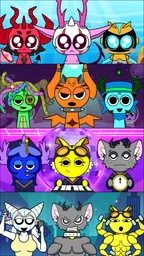
- Bright monster designs give the band a playful look.
- Simple controls make it approachable for younger players.
- Short play sessions suit casual gaming.
- Its cheerful theme feels lighthearted and kid-friendly.
- The music-focused premise offers a change from typical action games.
What could be better
- Gameplay may feel repetitive after several sessions.
- The cute presentation may not appeal to older players.
- Limited challenge may leave experienced gamers wanting more.
- Some features may require an internet connection.
- Availability and performance can vary by device.







