Cocobi Dentist - Kids Hospital review
 Analysis by Appsdrops
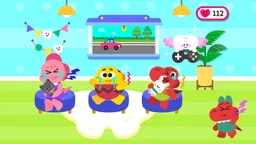
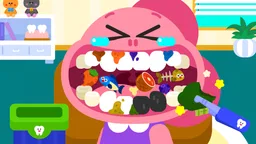
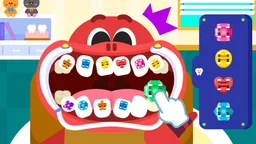
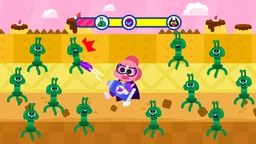
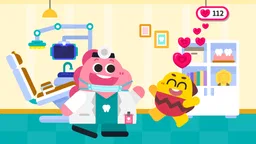
I’d treat Cocobi Dentist - Kids Hospital as a short, playful introduction to dentist visits rather than a deep educational course. Its appeal is easy to understand: children can pretend to care for Cocobi’s friends in a dental setting, turning an unfamiliar appointment into make-believe. That can make it a handy choice when a child is curious or a little uneasy about teeth, though I wouldn’t rely on a game alone to explain real dental care.
A gentle way into dentist role-play
This is a free educational game from KIGLE, aimed at Everyone. Its current version is 1.0.29, and it has been available since March 14, 2023. Those details make it a straightforward option for families looking for a child-friendly game, but the best reason to try it is the focused theme: it gives kids a familiar role to play, with Cocobi characters as the patients and the dental visit as the setting.
The premise suits a small window of attention better than a long sit-down activity. I’d bring it out while waiting for an appointment, during a quiet moment at home, or after a child asks what happens at the dentist. In that context, the game can act as a conversation starter: let the child play, then ask what they think a dentist does and connect the pretend visit to their own experience.
That distinction matters. A child may enjoy the idea of being the helper without learning a reliable sequence for brushing, checkups, or treatment. I’d frame it as imaginative play, not instruction from a dental professional. If you want a structured lesson with clear health guidance, a dedicated brushing timer or an age-appropriate explanation from a dentist will be a better fit.
What the current version tells families
The version number gives parents a useful reference point: 1.0.29 is the current release, so it is sensible to check that the installed copy is up to date if something seems different from what a child remembers. The game has reached more than ten million installs and holds an average rating of 3.8 from around five and a half thousand ratings. I read that as evidence of broad interest, not a guarantee that every child will enjoy the same pace or style.
There have been 49 written reviews, which is a smaller pool than the rating count. I wouldn’t use that number alone to predict whether it suits a particular family. Children’s preferences vary sharply: one may happily repeat a pretend-care activity, while another may lose interest unless a game offers exploration, competition, or a more involved story.
For an existing player, the version label is more useful than a vague sense that the game has changed. It helps distinguish a current installation from an older one, but it does not, by itself, tell me what has been added or adjusted between releases. I wouldn’t promise a particular new activity or improvement without evidence. If the child already likes the game, the sensible approach is simply to update through the app store and see whether the familiar experience still works well for them.
How to make the play more useful
One practical tip is to let the child lead instead of turning every action into a lesson. Ask them to describe what they think is happening, then respond in plain language. That keeps the game relaxed and reveals whether they are treating the dentist as a friendly helper or imagining something frightening. If they seem worried, pause the game and reassure them directly rather than expecting the characters to settle the concern.
A second useful approach is to connect pretend play to a real routine without claiming the game teaches one. After playing, you could invite the child to show how they brush, or talk through what they might ask at their next appointment. Keep the activity brief and specific; a short conversation is more likely to stick than a lecture attached to screen time.
It can also work as a low-pressure choice between other activities. For example, while a caregiver is preparing dinner, a child who wants a quiet game can spend a little time with the dental theme, then move on to drawing a picture of a dentist visit. This is a better use than leaving it on as background entertainment, because the subject gives adults an easy opening for conversation.
Where it fits among children’s games
Compared with open-ended pretend-play games, a dentist theme is narrower. That focus is a strength when a child is preparing for a checkup or likes caring for characters; it is a limitation if they want a broad world to explore. Compared with educational apps built around quizzes or lessons, it is likely to feel more like role-play than formal teaching. I’d choose it for engagement with the idea of a dental visit, not for measurable progress in health knowledge.
There is a trade-off in that simplicity. A focused scenario can be approachable for a young child who might find a larger game confusing, yet children who need frequent novelty may tire of the same kind of pretend situation. If your child tends to replay familiar activities, that repetition may be welcome. If they quickly ask for new challenges, a game with several distinct modes or a more open-ended toy may serve them better.
The game is free to download, with in-app purchases listed at $1.99 per item. I’d make the purchase situation clear before handing over a device, especially if a child can navigate menus independently. For a shared family device, checking the relevant purchase controls beforehand is a simple way to avoid interruptions or accidental spending. The free entry point makes it easy to test whether the theme clicks before deciding whether anything else is worth considering.
Limits worth keeping in mind
The main limitation is the gap between pretend dentistry and real dental advice. A playful hospital setting may help a child talk about an appointment, but it should not replace a dentist’s explanation or a caregiver’s guidance. If a child has pain, a damaged tooth, or a specific health concern, the right next step is professional care, not an in-game activity.
Another consideration is age and temperament. The Everyone rating makes the game broadly suitable by its content classification, but that doesn’t mean every young child will find the theme comforting. Some children love taking charge of a pretend clinic; others are sensitive to anything associated with needles, pain, or medical visits. I’d stay nearby the first time and follow the child’s reaction rather than assuming the friendly characters will make the subject easy for them.
It may also be the wrong choice for a child who expects a substantial lesson or a long-term progression system. This is a themed game, not a replacement for a brushing routine, a children’s book about oral health, or a parent-guided conversation. If the goal is to build a daily habit, a simple real-world routine with adult participation is more dependable than relying on game time to motivate it.
Who I’d recommend it to
I’d suggest trying it with a child who enjoys Cocobi characters, likes caring for pretend patients, or has started asking questions about dental visits. It is especially useful as a shared activity: an adult can watch the child play, pick up on their questions, and gently relate the pretend setting to an upcoming appointment. That makes the game more valuable than simply passing time on a screen.
I’d skip it if you are searching for a comprehensive oral-health curriculum, an app that tracks brushing, or a rich game with lots of different settings. A child who dislikes medical themes may also prefer a different subject altogether. The best match is a young player who enjoys simple character-based role-play and can treat the dentist scenario as make-believe.
What I would watch next
For families already using it, the useful things to watch are practical rather than speculative: whether the child stays engaged, whether the game prompts useful questions, and whether the current version runs smoothly on the device. If the child repeats the activity but never wants to talk about dental care, that is still valid play; it simply means the educational value is limited for that child.
I’d also keep an eye on how the child responds over time. A game that helps before one appointment may become less interesting afterward, and that is no reason to push it. Let the child’s interest decide whether it remains part of the routine. Updates may change the experience, but I would judge any change by what the child can actually do in the installed version rather than assuming a version number promises particular additions.
Overall, Cocobi Dentist - Kids Hospital is a modest, approachable option for turning a dental theme into pretend play. Its value is strongest when an adult uses it as a bridge to conversation, not as a substitute for real-world care or structured teaching. I’d give it a try if the child is curious about dentists and enjoys Cocobi; if they need deeper learning or a more varied game, I’d choose a different kind of activity.
What we like
- Child-friendly visuals make dental visits feel less intimidating.
- Simple controls are accessible to young children.
- Pretend-play activities can encourage interest in oral care.
- Bright animations help keep children engaged.
- Suitable for short play sessions with a clear goal.
What could be better
- Gameplay may feel repetitive after several visits.
- Some children may need an adult to guide them.
- In-app ads may interrupt play depending on the version.
- The app offers limited challenge for older children.
- It does not replace real dental advice or treatment.







