


City Patrol : Rescue Vehicles review
 Analysis by Appsdrops
I can see the appeal of City Patrol: Rescue Vehicles in a shared household: a child can spend a little time with emergency and other service vehicles, while an adult can sit nearby and turn the play into a conversation about what each vehicle does. That makes it a more purposeful choice than a game chosen only to fill a quiet moment. I would still treat it as a simple educational game, not as a substitute for explaining real-world safety or for a more structured learning activity.
How it fits into shared play at home
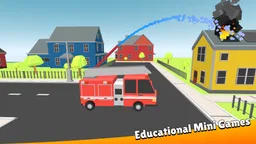
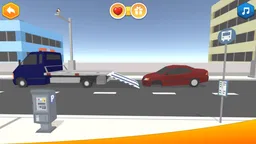
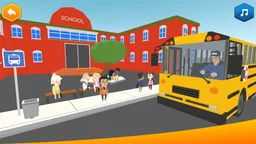
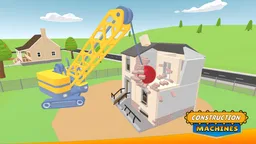
The game is aimed at children and sits in the educational category, with vehicles and city services as its central theme. In my view, that subject gives parents and caregivers an easy way to join in without needing to take over. A child can point out a vehicle, guess its role, and ask questions; the adult can connect that moment to familiar places such as a street, a hospital, or a fire station.
A practical use is a short turn after school or during a quiet stretch at home. Instead of handing over a device and walking away, I would sit with the child for the first few sessions and ask them to describe what they notice. That makes the vehicle theme useful even if the child is not yet reading confidently. It also helps an adult see whether the game holds the child’s attention or whether they are simply tapping through without engaging with the subject.
That shared approach matters because a vehicle game can be enjoyable without automatically teaching much. The learning value depends partly on how a child interprets what is on screen. Asking “Who might need this vehicle?” or “What kind of job does it do?” turns play into a small bit of guided learning, without making the session feel like a lesson.
One device, different expectations
On a family tablet or a phone that several people use, I would set expectations before handing it over: this is a child-focused game, and playtime ends when the adult says it does. I would also keep the device’s ordinary household boundaries in place rather than assuming the game itself will manage them. That is especially sensible when a younger child is still learning to switch between apps or respect a shared device.
The game is free to download, but it offers in-app purchases priced from $1.99 to $3.99 per item. For a shared device, I recommend checking the purchase settings on the device and discussing purchases with the child before play begins. That simple step avoids an awkward surprise and keeps the adult responsible for spending decisions, rather than asking a child to judge an in-app prompt alone.
I would also avoid treating one person’s play as a record of everyone’s progress. When siblings or cousins take turns on the same device, they may have different interests and attention spans. A child who wants to explore vehicles slowly should not feel rushed by a sibling who taps quickly. Taking turns in short, clearly defined sessions is a more comfortable arrangement than expecting the game to coordinate a group on its own.
Helping children take turns and stay engaged
A useful household routine is to let one child choose the next activity or vehicle-themed moment, then ask the other child to explain what they think it is for. This gives both children a role: one leads, the other observes and responds. It also makes the game a starting point for conversation rather than a competition over who controls the screen.
For a child who tends to move rapidly through games, I would pause between turns and ask them to name one thing they noticed. For a child who is more hesitant, I would keep questions open and let them answer in their own words. These approaches work well with a familiar subject such as service vehicles because children can often connect the topic to what they have seen on the road, even if they do not know every detail.
There is a trade-off, though: adults who want a carefully sequenced lesson, detailed explanations, or a clearly measurable learning path may prefer a more formal educational app. City Patrol is better suited to informal exploration and adult-guided conversation. I would not choose it as the only resource for teaching emergency procedures, road safety, or civic services; those topics need accurate, age-appropriate discussion beyond a game.
Age suitability and adult judgement
The content rating is Everyone, and the game is designed for children. That broad rating is reassuring for a family considering a casual download, but it does not tell me whether every child will find the experience equally engaging or easy to understand. Younger children may benefit from an adult nearby, while older children who expect deeper challenges or more complex explanations may find the theme too basic.
For a preschool-age child, I would use it as a shared activity and keep the session short enough that the device remains one option among books, toys, and conversation. For a school-age child who already enjoys vehicles, it can be a convenient way to explore the subject independently for a while, with a caregiver checking in. The best fit is a child who likes identifying and thinking about vehicles, not necessarily one who wants a long, demanding game.
Trust also includes being realistic about what “educational” means. I would use the game to prompt curiosity, not assume that a child has learned a complete or authoritative account of emergency services just by playing. If a child asks what to do in a real emergency, I would answer directly and calmly rather than relying on the game to supply practical guidance.
What to expect from the app itself
Edugamus is the developer, and the game has reached over 50 million installs. It has a 3.4 average rating from around 13,000 ratings, which suggests a large audience but also a mixed reception. I would interpret that as a reason to keep expectations measured: the vehicle theme has broad appeal, yet not every family will find the gameplay or presentation a perfect match.
The game was released on March 4, 2022, and its current version is 2.3.8. It requires Android 7.0 or later. Those details make it easier to judge whether an older Android device is eligible before planning to use it as a shared play option. The game is free to start, while individual in-app items cost between $1.99 and $3.99, so I would consider purchase controls part of setup rather than an afterthought.
Compared with the usual alternatives in children’s educational games, its distinguishing appeal is the narrow focus on city and service vehicles. A broader learning app may cover more subjects, while a general vehicle game may put more emphasis on racing or collecting. This one is the better fit when the child’s interest is specifically in rescue and community-service vehicles; it is less compelling if the goal is a varied curriculum or a fast-paced action game.
Who I would recommend it to
I would suggest giving it a try if a child already points out emergency vehicles on walks or asks what different service vehicles do. It can turn that interest into a low-pressure shared activity, and it is easy for an adult to extend the play with questions drawn from everyday life. It also makes sense for a family looking for a free starting point, provided the adult is comfortable reviewing the in-app purchase settings first.
I would skip it if you need a game with a clear lesson plan, substantial depth for older children, or a strong group-play structure for siblings. I would also look elsewhere if your child is mainly seeking an intense driving challenge rather than a child-oriented educational experience. The game’s topic is specific, which is its strength for the right child and its limitation for everyone else.
A sensible household choice, with adult guidance
My overall view is that City Patrol: Rescue Vehicles is best treated as a small, shared learning prompt rather than a complete teaching tool. Its focus gives children an approachable way to engage with emergency and service vehicles, and a caregiver can add value simply by talking through what the child sees. A little adult involvement also helps keep turns fair, spending decisions clear, and the topic grounded in real-world understanding.
For a household that wants a simple vehicle-themed game for occasional play, I think it is worth considering. I would download it with realistic expectations, check the device’s purchase protections, and try a short session together before making it part of a regular routine. If the child enjoys noticing and discussing the vehicles, it has a useful place in the family’s app rotation; if they want deeper instruction or more elaborate gameplay, another option will be a better match.
What we like
- Rescue vehicles give the game a clear theme for young players.
- Simple controls make basic missions easy to understand.
- Short activities suit quick play sessions.
- Vehicle variety adds visual interest to missions.
- Rescue scenarios encourage helpful role-play.
What could be better
- Mission variety may feel limited over time.
- Gameplay may be too simple for older players.
- Repeated tasks can reduce replay appeal.
- Some children may need help navigating menus.
- The game may require an internet connection for some features.







