
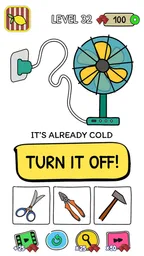
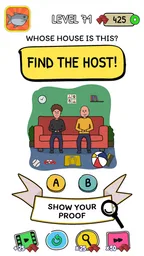
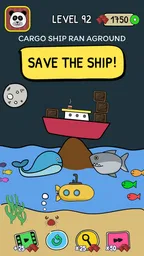
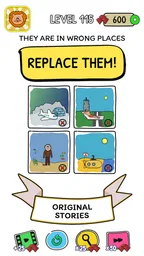
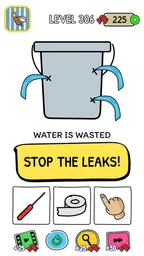
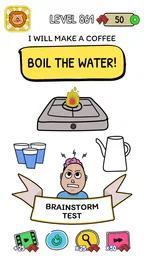
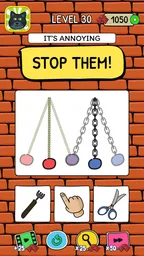

Brainstorm Test: Tricky Puzzle review
 Analysis by Appsdrops
I like puzzle games best when they make me pause, look again, and question the first answer that comes to mind. That is the appeal of Brainstorm Test: Tricky Puzzle: it is a free trivia game from Tribom Games built around brainteasers, with the focus on finding a less obvious way to think rather than simply recalling facts. In my experience, it suits short breaks particularly well. I can try a puzzle, consider what its wording or presentation might be nudging me toward, and decide whether I want another round.
Starting with a second look
The useful habit to bring into a session is patience. A tricky puzzle can make a straightforward response feel tempting, but the challenge is to inspect the question before committing to it. I try reading the prompt twice, then checking whether I am relying on an assumption that the puzzle has not actually stated. That small pause is often more productive than tapping at random.
This approach makes the game a fit for players who enjoy lateral-thinking questions more than conventional quizzes. If you want a test of specialist knowledge, a timed trivia contest, or a sprawling adventure with a narrative to follow, this is not the same kind of experience. Its identity is closer to a compact collection of mental challenges: the pleasure is in spotting a trick or reframing the problem.
The first attempt is also where I decide how much help I want to give myself. I recommend making one deliberate guess before seeking any outside hint or explanation. Even a wrong answer can show which assumption led you astray, while immediately searching for a solution can remove the most satisfying part: working out what the puzzle is asking you to notice.
That method is especially handy when a question seems absurd or unfair at first glance. Instead of treating that feeling as proof that the puzzle is broken, I look for a detail I skimmed or an interpretation I took for granted. Not every brainteaser will land equally well for every player, but slowing down gives the design a fairer chance.
How the feedback keeps a round moving
The loop is easy to understand: I attempt a puzzle, see whether my thinking has worked, and then decide whether to tackle the next challenge or take a break. That clear response matters in a game built around short problems. It gives each attempt a natural ending, rather than leaving me unsure whether I have completed a task or need to keep exploring.
The feedback is most useful when I treat it as a prompt to reconsider, not merely as a score. If an answer is wrong, I retrace my reasoning: Did I read a word too quickly? Did I assume the question was asking for the most ordinary answer? Did I overlook a visual or contextual clue? This little review turns a miss into a second thinking exercise, and it is a better way to play than cycling through guesses.
There is a trade-off in that style. Players who want detailed teaching after every answer may prefer a quiz or puzzle app that explains its reasoning at length. The appeal here is the challenge itself and the quick movement from one attempt to the next; the less patient player may find a stubborn puzzle frustrating if they want a full explanation rather than a chance to reconsider.
I also find that the game works better when I do not race through it just because a puzzle looks simple. A quick answer can be satisfying, but a deliberate one makes the trick feel earned. If I am tired or distracted, I am more likely to misread the setup and blame the question. A short pause, or switching to another activity, is often a better reset than forcing an answer.
What makes another puzzle tempting
The reward is the mental click when a confusing question becomes clear. That moment is modest rather than dramatic, but it is well suited to a casual trivia game. I enjoy the feeling of catching myself making an assumption and then finding a cleaner interpretation. When a puzzle does that, the next one is tempting because I want to see whether I can spot the trap sooner.
That reward is different from collecting facts or building a long-term strategy. Brainstorm Test is best approached as a string of self-contained challenges, not as a course that promises to teach a broad subject. If you enjoy the satisfaction of solving a compact riddle, that can be enough. If you need a detailed progression system, competitive pressure, or a clear learning curriculum to stay engaged, the format may feel thin.
For a practical everyday use, I would open it during a quiet wait—say, while sitting in a lobby or taking a pause between chores—rather than when I have only a few seconds and need to be interrupted repeatedly. I can give a puzzle my attention, make a thoughtful attempt, and stop when the moment ends. It also works as a low-pressure challenge to share verbally with a friend: read the problem aloud, let each person explain a guess, and compare how they interpreted it. The fun there comes from the reasoning, not from turning it into a serious competition.
One tip that improves the experience is to notice the wording before focusing on the answer. In tricky questions, a small qualifier can matter more than the apparent topic. Another is to describe your assumption out loud or in your head: “I think it wants a factual answer” or “I assume this object is being used normally.” Naming the assumption gives you something specific to test. These habits make the puzzles feel less like random gotchas and more like exercises in careful reading.
Choosing a useful session length
I would treat each visit as a flexible handful of attempts rather than setting a strict target. A puzzle can be a quick win, or it can take long enough that continuing stops being enjoyable. When I notice myself guessing without thinking, that is a good point to leave and come back later. The reset is simple: the next session begins because I feel curious again, not because I need to maintain a streak or finish a long commitment.
This also makes the game easy to recommend to people with different schedules. Someone with a few spare minutes can test a single question, while someone who enjoys brainteasers can stay longer if the challenges keep their attention. The important distinction is that the game’s appeal depends on your appetite for this particular kind of mental play. It is not a replacement for a full trivia night, a deep logic-puzzle collection, or a word game focused on vocabulary.
Compared with familiar quiz games that reward broad knowledge, this one puts more weight on interpreting a prompt in an unexpected way. Compared with a conventional logic game, it is less about building a chain of formal deductions and more about being alert to the question’s framing. That makes it approachable, but it can also mean that a puzzle’s charm depends heavily on whether its trick feels clever to you. If you prefer transparent rules and steadily increasing strategic depth, a more structured puzzle game is likely a better match.
Practical details before you install
Brainstorm Test is rated for Everyone, so it is positioned as a broadly accessible choice for casual play. It has a 4.1 average from around 21,000 ratings, and it has passed one million installs. Those figures suggest that it has found a sizeable audience, though they cannot tell you whether the specific style of its puzzles will suit your taste. I would use them as context, not as a promise that every question will feel fair or satisfying.
The game is free to download, with optional in-app purchases listed from $1.99 to $29.99 per item. I would check the purchase details in the app store before spending, especially if you are installing it for a younger player or simply want to keep a casual game free. The listing identifies version 1.2.2 and a minimum operating-system requirement of 8.1, which is useful to check against your device before installing. It was released on May 26, 2023.
Tribom Games has made a focused proposition here: a trivia game for people who enjoy being surprised by the way a question is framed. The strongest reason to try it is that it asks for attention without requiring a large time commitment. The main reason to skip it is equally clear: if you dislike trick questions, want detailed explanations, or prefer knowledge-based quizzes with predictable rules, its central style may irritate rather than entertain you.
My verdict on the repeat-play loop
I would recommend Brainstorm Test: Tricky Puzzle to a friend who likes riddles, enjoys catching their own assumptions, and wants an easy game to pick up for a brief mental break. The action is simple, the feedback gives each attempt a clear result, and the reward is that satisfying moment when a puzzle finally makes sense. Then the session can end cleanly—or another can begin because curiosity has kicked in again.
My advice is to play thoughtfully, give each question a fair read, and stop when you find yourself guessing instead of reasoning. That keeps the game’s best quality—the small pleasure of seeing a problem differently—in the foreground. It is not the right choice for every quiz fan, but for casual players who enjoy a clever twist more than a pile of facts, it offers a straightforward reason to come back for one more puzzle.
What we like
- Fresh puzzle ideas keep later stages from feeling repetitive.
- Short levels make it easy to play in quick sessions.
- Unexpected answers reward creative thinking.
- Simple controls make puzzles accessible to new players.
- Hints can help when a solution is hard to spot.
What could be better
- Some answers rely on wordplay that may feel unclear.
- Repeated hint use can interrupt the puzzle-solving flow.
- A few puzzles may feel more like tricks than logic tests.
- Progress can stall if a particular answer is not obvious.
- Ads may disrupt play depending on the version.







