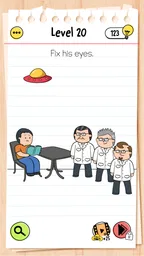
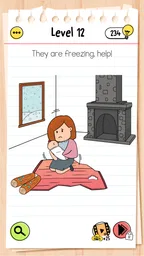
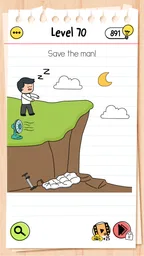
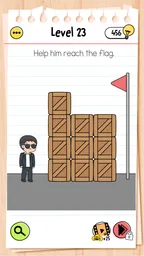
Brain Test X: Hard Challenge review
 Analysis by Appsdrops
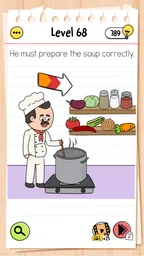
Brain Test X: Hard Challenge is a free trivia game from Unico Studio, built around puzzles that ask you to look beyond the most obvious answer. I find that premise appealing when I want a quick mental diversion rather than a long, rules-heavy game. Its central pleasure is the moment a question makes me stop, reconsider what I assumed, and try a different angle. That can feel satisfying, though it also means the experience depends on whether you enjoy playful misdirection.
What the puzzle style asks of you
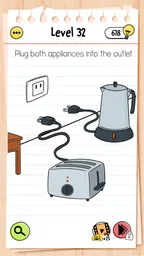
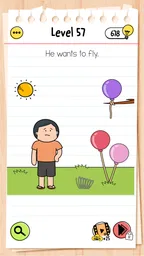
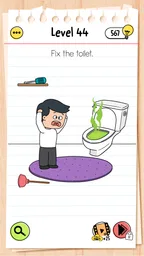
The game’s store summary points to tricky brain puzzles, and its short label is Brain Test X. In practice, the useful way to approach this kind of trivia is not to treat every prompt as a conventional fact quiz. I would read each puzzle carefully, test whether its wording hides a clue, and resist tapping the first answer that seems reasonable. The challenge is as much about attention and flexible thinking as recalling information.
That distinction matters when choosing between this and a standard trivia app. Traditional quiz games tend to reward broad knowledge, quick recall, or familiarity with set topics. Here, the attraction is the puzzle-solving mindset: a small prompt can invite a surprisingly indirect response. If you want to test what you know about history, science, or geography, a subject-based quiz is a better fit. If you enjoy being caught by a clever twist, this is closer to the right kind of diversion.
I would use it in short gaps: while waiting for someone, taking a break between tasks, or winding down without committing to a long session. A realistic routine might be opening a puzzle during a bus wait, giving it a few thoughtful attempts, and putting the phone away when the ride arrives. That works better than expecting a continuous story or a deep, uninterrupted challenge. The appeal is a compact mental nudge, not a substitute for a full-length puzzle campaign.
The game is listed as free, with optional in-app purchases priced from $0.99 to $24.99 per item. That gives you a straightforward starting point: you can try the game without paying an upfront price. The purchase range is worth keeping in mind if you manage spending on a shared device or for a younger player. I would check the purchase controls on the device before handing it over, rather than assuming that free to download means every part of play is cost-free.
Spending, progress, and the feel of pressure
My clearest purchasing takeaway is limited but useful: the game has in-app purchases, and individual items fall within that stated range. The available purchase facts do not establish what each item provides or whether any particular purchase is necessary to continue, so I would not treat a specific benefit as guaranteed. A sensible approach is to begin without spending, see whether the puzzle format holds your interest, and make a purchase only if its purpose is clear in the game itself.
For a game built around difficult prompts, the important pressure point is usually not a timer or leaderboard but the player’s own urge to solve a puzzle before moving on. I recommend giving a question a deliberate pause instead of tapping repeatedly. First identify exactly what it asks; then check whether a word, visual detail, or assumed rule could change the meaning. This simple routine makes the challenge feel more like reasoning and less like guessing.
There is a trade-off here. A surprising solution can make a puzzle memorable, but a puzzle that feels too dependent on an unexpected interpretation can also feel unfair. When I hit that point, I would take a short break rather than keep making random attempts. Coming back with fresh attention is often a better test of whether the prompt contains a clue than escalating frustration. Players who prefer transparent rules and a clear, steadily taught logic system may find this style less satisfying.
There is also a useful way to play socially without turning it into a contest: let another person read the prompt, then compare how each of you interprets it before either taps an answer. That exposes assumptions and can make a short session more entertaining. It is a play suggestion, not a claim that the game includes a multiplayer mode. If you specifically want shared online matches, rankings, or head-to-head scoring, choose a trivia game that clearly offers those features.
Fairness is different from competition
The game’s category is trivia, but that label alone does not tell me whether success depends on knowledge, lateral thinking, or a mixture of both. The harder-puzzle framing suggests that patience and interpretation are central to the appeal. For fairness, I would judge a puzzle by whether its wording or presentation gives a careful player a reasonable path to the solution, not by whether the answer was the one I expected at first.
There is no verified basis here for claiming competitive systems, player rankings, or a particular scoring method, so I would not recommend it on the promise of a fair race against other people. Instead, I would treat it as a personal challenge: solve at your own pace and judge the fun by whether the twists feel clever. That also makes it less suitable for someone who wants a measurable skill ladder or a dependable way to compare quiz knowledge with friends.
Brain Test is associated with Unico Studio, and the game has an average rating of 4.8 from around 74,000 ratings, with roughly 5 million installs. Those figures suggest that many players have tried it and that the overall reception is positive, but they cannot guarantee that its particular sense of humor or puzzle logic will suit you. I find ratings most helpful as a reason to consider a game, not as a replacement for matching its style to what I want from a trivia session.
It is marked for everyone, which makes the stated age classification broad. That does not mean every child will find every puzzle easy, or that a parent should ignore purchase settings. For family use, I would make the first session a shared one: you can see whether the wording and difficulty are a good match, and you can set expectations about optional spending before passing over the device. The game can work as a light conversation starter, but I would not assume it is a structured educational course.
What I would check before settling in
The current version is 1.3.1, and the listed minimum operating-system requirement is 7.0. If you are considering installing it on an older device, checking that requirement first is more practical than relying on a general impression that a puzzle game should run anywhere. The game was released on February 12, 2026, so it is also worth checking the app store on your device for the current compatibility details before installing, particularly if the operating system is near its minimum.
One review question I would keep separate from the purchase facts is how the game handles continued progress and interruptions. The facts available establish the purchase range, but they do not establish a particular save system, hint supply, ad arrangement, or purchase effect. I would look at the in-game descriptions before spending and avoid assuming that a purchase unlocks a certain feature. If you need a game that guarantees offline play, a specific hint policy, or a particular approach to saving, verify that detail in the app itself before relying on it.
The same restraint applies to difficulty. A “hard challenge” framing sets an expectation of trickier thinking, but it does not tell me how quickly puzzles become difficult or whether the challenge adjusts to each player. I would not install it expecting a carefully paced training plan. Instead, start with an open mind and see whether the puzzles feel rewarding. If you prefer a transparent curriculum that teaches a logic technique and then builds on it, a dedicated logic-puzzle app may be a more dependable choice.
When a solution feels opaque, the most useful response is to inspect the prompt again rather than assume that more tapping will reveal a rule. Look for the smallest detail you may have dismissed, and ask whether the question is testing literal reading rather than general knowledge. This is a practical method, not a claim about a hidden hint feature. It can help preserve the fun of solving while making clear when the game’s particular style is simply not clicking for you.
Who will enjoy it—and who may want another kind of quiz
I would recommend this game to people who like trick questions, enjoy changing their first interpretation, and want a free starting point for casual puzzle sessions. It is especially suited to someone who does not mind pausing over a short prompt and occasionally feeling surprised by the intended answer. The combination of a broad age rating and a simple trivia premise may also make it easy to try together, provided the group understands that the challenge is about twists rather than a conventional quiz syllabus.
I would skip it if I wanted a dependable stream of factual questions, a clear competitive format, or an experience that explains every rule before testing me. It may also frustrate players who see an unexpected answer as a flaw rather than part of the joke. In those cases, a standard knowledge quiz offers a more direct contract: know the subject, answer the question, and measure progress through correct responses. The better choice depends less on which game is “best” and more on whether you want to be tested on what you know or on how you interpret a prompt.
Compared with common trivia alternatives, the distinctive trade-off is clear: a conventional quiz is easier to understand but can feel predictable, while a trick-puzzle approach can create sharper moments of surprise at the cost of occasional ambiguity. I would make that the deciding question before installing. If you enjoy asking, “What assumption am I making?” this game has a good reason to be on your phone. If you would rather answer cleanly worded questions from familiar subjects, choose a more traditional quiz instead.
My final take on whether it is worth trying
My verdict is positive, with a caveat about taste. Brain Test X: Hard Challenge makes sense as a low-commitment way to exercise attention and lateral thinking in brief sessions. Unico Studio’s game has a strong average rating and a large install base, and it is free to begin, while optional purchases mean sensible spending boundaries still matter. I would try it for the puzzle style, not because those signals promise that every answer will feel fair or every player will enjoy the same level of misdirection.
For a first session, I would play slowly, read each prompt twice, and stop when solving starts to feel like random trial and error. I would also check any purchase description in context before paying, especially if someone else will use the device. That approach lets the game show its strengths without assuming unconfirmed details about hints, ads, progress, or competitive play.
Overall, I would recommend it to a friend who likes compact, twist-driven brain teasers and has patience for an occasional answer that challenges their assumptions. I would point a subject-quiz fan or a player seeking transparent competition elsewhere. That is the honest dividing line: its best moments come from reconsidering the question, and whether that feels clever or irritating will determine if this particular trivia game earns a place in your regular rotation.
What we like
- Quick puzzles make it easy to play in short sessions.
- Unexpected solutions keep familiar puzzle formats engaging.
- Hints can help when a level becomes frustrating.
- The simple controls make most challenges easy to start.
- Its playful presentation suits casual puzzle fans.
What could be better
- Some answers rely on trick wording rather than logic.
- Repeated mistakes may require extra hints or retries.
- Ads can interrupt the flow between puzzles.
- A few puzzles may feel more confusing than challenging.
- Players seeking a story or deep progression may find it limited.







