
Brain Test All-Star: IQ Boost review
 Analysis by Appsdrops
I like Brain Test All-Star: IQ Boost best as a short, playful challenge for moments when I want to think without committing to a long game. Its puzzles invite lateral thinking rather than relying only on memorized facts, so getting an answer wrong can be part of the fun: I have to pause, question what I assumed, and look at the problem from a different angle. That makes it a stronger fit for casual brain-teaser fans than for anyone seeking a structured course in logic or a serious competitive trivia experience.
Why the puzzles make a good quick break
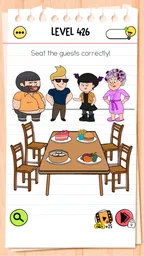
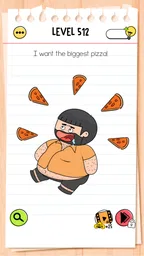
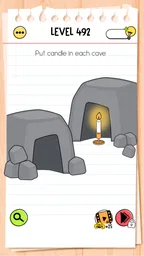
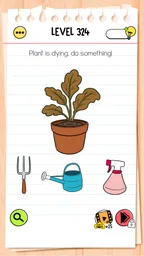
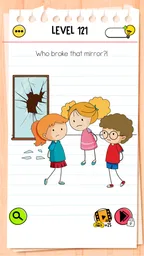
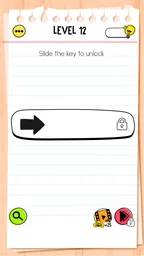
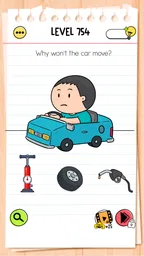
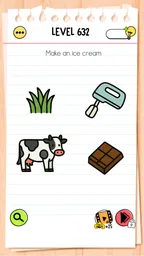
Unico Studio’s trivia game builds on the Brain Test name with a broad collection of tricky puzzles and brain games. The appeal is less about proving how much I know and more about noticing the detail I initially overlooked. That distinction matters: a conventional quiz often rewards recall, while this kind of challenge is more satisfying when I test an interpretation, inspect the wording, or reconsider what the puzzle is really asking.
In my view, that makes the game especially useful in small pockets of downtime. If I have a few minutes before an appointment, I can try a puzzle or two without needing to remember a complicated story or plan a lengthy session. It also works as a light shared activity: I can show a puzzle to someone nearby, let us each suggest an answer, and compare how we approached it. The fun comes from the reasoning and the surprise, not from turning every moment into a score contest.
The strongest puzzles are the ones that make me feel I could have solved them, but had taken the obvious route too quickly. A good brain teaser creates a small, fair surprise: the answer makes sense once I see it, even if I did not spot it at first. That little “oh, of course” reaction is the game’s central pleasure. It can also make a wrong guess feel less like failure and more like a prompt to inspect the puzzle again.
I would not treat every puzzle as a dependable measure of intelligence, though. A lateral-thinking challenge can hinge on interpreting a clue in a particular way, and sometimes the intended leap is more important than formal logic. When I get stuck, the useful question is not simply “What do I know?” but “What assumption am I making about the wording or the situation?” That change of approach is a practical way to keep the experience enjoyable rather than turning it into a test of self-worth.
A different kind of trivia session
People who enjoy standard trivia may wonder whether this is the same sort of game as a quiz about history, science, or pop culture. I would set expectations differently. The emphasis here is on puzzles and brain games, so it is better approached as a playful reasoning challenge than as a way to build factual knowledge. If I want to test what I remember, a conventional quiz is the clearer choice; if I want a puzzle to interrupt an idle moment, this game is more in its element.
That difference also affects how I would use it with friends or family. Rather than asking everyone to race through questions, I would pick a puzzle and let people explain their thought process. Someone may notice a clue that another person ignored, and discussing the misdirection can be as entertaining as reaching the answer. It is a relaxed format for a short conversation, although it may not suit a group specifically looking for team scoring, head-to-head competition, or a shared quiz format.
The collection’s breadth is part of the attraction, but variety alone does not guarantee that every challenge will land equally well for every player. Lateral puzzles are personal: one person’s clever twist is another person’s frustrating ambiguity. I recommend giving a stubborn question a little time, then stepping away if it stops being fun. Returning with fresh eyes can help, while repeatedly forcing a solution can make even a playful challenge feel like an obligation.
What can interrupt the flow
The main limitation is built into the format: a puzzle that depends on a surprise interpretation can feel arbitrary when I cannot see why the intended answer follows. If I prefer clues that lead step by step to one clearly deduced result, some brain teasers may test patience more than reasoning. This is not a reason to dismiss the game, but it is a reason to keep expectations modest. The experience is most rewarding when I enjoy trying possibilities, not when I demand that every challenge behave like a formal logic problem.
Another trade-off is that short-session convenience can encourage me to open the game whenever there is a spare minute, but that does not mean it will suit every spare minute. If I am tired, distracted, or in a hurry, a twist that would normally make me smile may just feel irritating. I would save it for a break when I can give a puzzle a little attention. For background entertainment that requires almost no thought, a casual arcade game may be a better fit; for sustained, carefully structured problem-solving, a dedicated logic-puzzle app is likely more satisfying.
It is also worth remembering that the game is free to start but includes optional in-app purchases, with individual items priced from $0.99 to $14.99. That is useful to know if I am choosing something for a younger player or sharing a device: the game’s free entry does not mean every possible purchase is free. I would make purchase expectations clear beforehand and use the device’s usual purchase controls if needed. The game has an Everyone 10+ content rating, so it is aimed at a broad audience while still carrying that age guidance.
Who I would recommend it to
I would recommend it to anyone who enjoys trying an answer, discovering a hidden assumption, and laughing at a clever misdirection. It is particularly easy to fit into a commute wait, a quiet lunch break, or a few minutes between household tasks. In an everyday situation, I might open it while waiting for a friend who is running late, solve a challenge, then put my phone away when they arrive. That is a better match for the game than expecting it to occupy an entire evening or deliver a deep, continuous narrative.
It can also be a pleasant option for families who want to talk through puzzles together, provided the age guidance and any purchase settings are considered. I would avoid making it a timed test for a child or treating a quick answer as a measure of ability. A more enjoyable approach is to ask what clue each person noticed and why they chose an answer. That turns a potentially frustrating moment into a small exercise in explaining ideas and listening to another perspective.
On the other hand, I would steer away from it if I mainly want a fact-based trivia database, multiplayer competition, or a highly predictable progression of increasingly formal logic problems. The game’s appeal is the twist, and that same quality is not for everyone. Players who dislike ambiguous wording or who want every answer to be deducible through a tidy chain of rules may prefer a quiz built around factual questions or a puzzle game with explicit mechanics.
The reception suggests that many players have found its approach appealing: it holds an average rating of 4.7 from around 808,000 ratings, and it has passed 10 million installs. Those figures give me a sense of its broad reach, but they do not guarantee that its particular style will suit an individual. I would use them as context, then decide based on whether lateral puzzles sound fun rather than assuming popularity means a perfect fit.
Practical details and lasting appeal
As a free-to-play trivia game, Brain Test All-Star: IQ Boost is an approachable way to sample this kind of puzzle without paying up front. It was released on August 3, 2024, and version 1.6.9 is the current version. It requires Android 7.0 or later, so I would check the device’s operating-system version before trying to install it. Those details matter most for someone using an older phone or deciding whether the game is suitable for a particular device.
The title is also backed by a recognizable developer: Unico Studio. I would still judge the experience on its own terms rather than assuming that a familiar name guarantees every puzzle will click. What matters in play is whether I enjoy being nudged away from the first answer that comes to mind. If I do, the game has a simple, repeatable role: it gives me a compact challenge, a reason to rethink an assumption, and a small moment of satisfaction when a tricky clue finally makes sense.
My verdict is positive, with a clear caveat. This is a good pick for casual players who want clever, bite-sized brain teasers and do not mind that some puzzles rely on a playful twist rather than textbook logic. It is less suitable for people who want factual quiz practice, a competitive social format, or consistently unambiguous deductions. I would recommend trying it as a low-pressure break, keeping purchases in mind, and stopping when a puzzle has ceased to be entertaining. At its best, it makes a few spare minutes feel more engaging; it does not need to be anything more than that.
What we like
- Short puzzles make it easy to play in brief sessions.
- A broad mix of puzzle styles keeps challenges varied.
- Hints can help when a puzzle proves difficult.
- Offline play is useful when an internet connection is unavailable.
- Suitable for casual play across a wide range of ages.
What could be better
- Some answers rely on unexpected wordplay rather than logic.
- Repeated hint use may be limited by in-game resources.
- Frequent ads can interrupt the flow between puzzles.
- Later challenges may feel repetitive to experienced players.
- A few puzzles may require trial and error to solve.







