


Bible Trivia Quiz Game review
 Analysis by Appsdrops
When I want a quick Bible-themed quiz, Bible Trivia Quiz Game has an immediately clear appeal: it turns knowledge of scripture into a small, focused game rather than asking me to work through a study course. Its strongest fit is casual play, whether I’m testing what I remember on my own or bringing a few questions to a conversation with family or friends. I like that simple premise, though I’d approach it as a trivia game, not as a substitute for reading or studying the Bible.
A focused first impression
This is a free trivia game from Floral Game, released on August 13, 2025. It has a 4.8 average from around 12,000 ratings, and has been installed over 100,000 times. Those figures suggest that the idea has found an audience, but they don’t tell me whether its questions suit my background or preferred style of play. That comes down to what I want from Bible trivia.
The game is rated for Everyone, which makes it an approachable option to consider for shared play across ages. The rating is a general suitability signal, not a promise that every question will be equally easy for every player. Biblical familiarity varies widely, so a question that feels obvious to someone who grew up studying scripture may be a challenge for a newcomer.
The first practical thing I’d do is treat an early session as a test run. Try a few questions without turning the result into a judgment about your overall Bible knowledge. If a question catches you out, use it as a prompt to look up the passage or topic afterward. That makes the game more useful than simply rushing through answers and forgetting them.
A quiz setting with a clear purpose
Its subject gives the game a more specific identity than a general knowledge quiz. The setting is scripture itself: people, events, teachings, and details that players may recognize from different books or traditions. That focus helps a short session feel purposeful, especially if you already enjoy Bible study or want a light way to revisit familiar material.
I wouldn’t assume that a Bible quiz automatically offers the same thing as a guided lesson. Trivia rewards recall, and recall can be different from understanding a passage in context. When I use a question as a learning prompt, I’d check the relevant chapter rather than rely on a quick answer alone. That small habit keeps the game entertaining without letting a quiz format flatten a complicated topic.
The app’s name is direct, and so is its premise. There’s no need to figure out what kind of game it is before deciding whether it belongs on your phone. That clarity is welcome, but it also sets expectations: players looking for a broad collection of puzzle types or a story-driven adventure should choose something else.
How the mood supports the subject
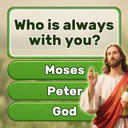
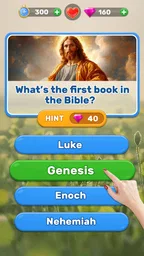
For a scripture-focused game, the most effective art direction is usually the kind that helps questions stay at the center rather than competing with them. I’d judge the visual presentation by practical questions: can I read the prompt comfortably, understand the answer choices at a glance, and keep my attention on the topic? A quiz works best when its screen feels calm enough for thought, not so busy that every turn becomes a search for the next button.
The same principle applies to sound. Audio can give a quiz a sense of occasion, but it should never make a quiet setting awkward or distract from reading. If I’m playing in a waiting room, at bedtime, or beside someone who is working, I’d keep the phone’s sound low or off and see whether the experience still feels clear. A good trivia session should stand on its questions, not require sound to make each answer satisfying.
I wouldn’t choose the game for an elaborate fictional world or a dramatic soundtrack. Its appeal is the subject matter and the small challenge of remembering details. That distinction matters: someone who wants atmosphere built through characters, exploration, and a continuing plot may find this format too spare, while someone who wants a focused Bible quiz may appreciate that it gets to the point.
Let the pace work for you
Trivia is naturally suited to short bursts, and that is where I’d place this game in an everyday routine. A few questions can fit into a break, a quiet moment before an appointment, or a shared pause during a family gathering. I wouldn’t set aside a long stretch expecting a deep, structured study session. The useful rhythm is brief play followed, when a question interests me, by a closer look at the passage behind it.
One practical way to make a solo session more memorable is to keep a mental note of the questions you guessed rather than genuinely knew. Those are better follow-up topics than the ones you answered confidently. Later, I’d check the relevant passage and see whether my answer came from the text, a familiar retelling, or a half-remembered detail. That turns a quick quiz into a simple personal review without pretending the game itself is a study guide.
For a group, I’d use questions as conversation starters rather than as a contest with a winner who is declared the most knowledgeable. Players may know different parts of the Bible, and some may be less comfortable answering aloud. Taking turns, allowing discussion, and checking a passage together can make the activity welcoming without changing the game into a formal lesson.
Where the format helps—and where it doesn’t
Compared with a general trivia app, this game’s main advantage is its narrow subject. There’s less jumping between unrelated topics, which makes it a better match for someone who specifically wants Bible questions. Compared with a Bible reading or study app, however, trivia is the lighter tool: it can test what you remember, but it should not be expected to provide the depth, context, or reading plan of a dedicated study resource.
That trade-off is important if you are new to the Bible. A quiz can be motivating, but unfamiliar names and events may feel like a test before you have had a chance to learn the material. I’d pair it with reading if that is your goal, and skip it as a primary learning tool if you need explanations at every step. For someone who already knows the broad stories and wants to challenge recall, the same concise format is more likely to feel rewarding.
The game is free to download, with optional in-app purchases ranging from $0.99 to $49.99 per item. I’d start with the free experience and decide whether anything beyond it is useful to me before spending. Those purchase options don’t change the basic question of whether the quiz itself matches your interests, so there’s no reason to treat buying something as part of getting started.
Its current version is 4.0.1, and it requires Android 10 or later. That makes the operating-system requirement worth checking before downloading if you use an older device. If you’re deciding between versions of a Bible-themed app, I’d also consider whether you want quick recall practice, as here, or a reading-first experience; the right choice depends more on that purpose than on the category label.
Who I’d recommend it to
I’d recommend Bible Trivia Quiz Game to someone who enjoys scripture-based questions and wants an easy activity to pick up without committing to a long session. It can also work for households or informal groups that want a shared topic, provided everyone is comfortable with trivia and the group treats missed answers as chances to learn rather than reasons to compete harshly.
I’d be more cautious about recommending it to someone seeking a comprehensive Bible course, detailed commentary, or an accessible introduction that explains every unfamiliar reference. It may also be the wrong choice if you prefer games with a strong narrative, varied mechanics, or a wide mix of subjects. In those situations, a study-focused Bible app or a broader quiz game would serve a different need better.
A useful way to decide is to ask what you want from your next few minutes: a quick test of what you remember, or a guided explanation of what you don’t yet know. If it’s the first, this focused trivia format makes sense. If it’s the second, I’d open a Bible reading or study resource alongside it rather than expecting the quiz to do both jobs.
A measured recommendation
Overall, I see this as a straightforward choice for Bible trivia, with a clear audience and a sensible role: short, subject-focused play that can spark a conversation or point you toward a passage worth revisiting. Its strongest value is that focus. Its main limitation is the same one built into trivia itself: answering questions is not the same as building a full understanding of scripture.
Floral Game’s title is worth trying if you already like this kind of challenge and want a compact way to exercise your recall. I’d keep sessions relaxed, look up questions that make me curious, and avoid treating a score as a measure of faith or expertise. With those expectations, it can be a pleasant companion for a spare moment; for deeper learning or a more immersive game, I’d choose a tool designed specifically for that instead.
What we like
- Short rounds make it easy to play during a break.
- Multiple-choice questions keep the controls simple.
- Trivia offers a light way to revisit Bible stories.
- The quiz format works well for solo play.
- Questions can spark further study of Scripture.
What could be better
- Some questions may require detailed biblical knowledge.
- Answer options can make guessing easier than recall.
- Repeated questions may reduce the challenge over time.
- Players may need to check answers against their preferred translation.
- Quiz play may not suit users seeking a full Bible study tool.







