

Bible Trivia - Bible Quiz Game review
 Analysis by Appsdrops
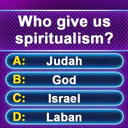
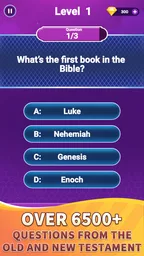
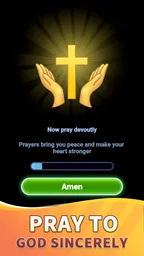
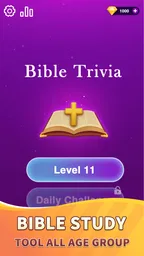
When I want a quick Bible-themed quiz rather than a long reading session, Bible Trivia - Bible Quiz Game is the kind of game I would consider opening. It is a trivia game from Aged Studio Limited, aimed at players who enjoy testing what they know about biblical stories and teachings. Its appeal is straightforward: a quiz gives you a focused question to think about, while the level-based format offers a sense of progression. I would treat it as a light learning companion, not as a substitute for a Bible or a careful study resource.
What to consider before you play
The main decision is whether you want recall practice or deeper explanation. Bible trivia is naturally strongest when you already have some familiarity with the material and want to check your memory. It can also make a casual conversation more engaging: two people can take turns answering, then use a question they missed as a prompt to look up the passage later. If your goal is close reading, historical context, or a guided devotional routine, a Bible app or study guide is likely a better fit.
The game is listed in the trivia category, and its central idea is easy to grasp without learning a complicated set of rules. That simplicity is useful for short breaks, but it also means your enjoyment depends heavily on whether you like answering quiz questions. Players who prefer exploration, character-driven stories, or strategic choices may find the format too narrow. I would choose it for a few minutes of focused recall, not expect it to provide the variety of a broader puzzle game.
One practical way to decide is to notice what you want from a session. If you have a spare moment and enjoy asking yourself, “Do I remember this story correctly?”, a level-based quiz can be satisfying. If you are trying to understand a difficult passage for the first time, answering isolated questions may leave gaps. In that situation, I would read the relevant text first and use the quiz afterward as a memory check, rather than letting a correct or incorrect answer stand in for understanding.
Why the level-based format can work
Levels give trivia a modest sense of direction. Instead of treating every question as a disconnected fact, progression can make a short session feel like a small task with a finish point. That is especially handy when I do not want to commit to a long game. It also provides a natural way to return later: I can pick up the general activity without having to remember a complicated story or rebuild a strategy.
There is a useful learning habit hidden in that format: pause after a wrong answer instead of tapping onward immediately. Try to recall why your first choice seemed plausible, then check the relevant Bible passage in a separate source if you want more confidence. That turns a quiz mistake into a retrieval cue, which is more useful than simply memorizing a correct option. The game can prompt curiosity, while the text itself supplies the context.
Another good use is a low-pressure group warm-up. At home, I could imagine asking a family member a question during a quiet moment, then discussing how each of us remembered the story. The key is to keep the conversation friendly: a trivia answer should not become a contest over who is more religious or knowledgeable. For children or mixed-age groups, an adult can help distinguish a game’s short answer from the fuller meaning of a passage.
Where it fits better than common alternatives
Compared with a general knowledge quiz, this game has a clear subject, so it is more relevant to someone who specifically wants Bible-related questions. Compared with reading directly from scripture, it asks for active recall rather than passive browsing. Those are different benefits: a quiz is more playful and easier to approach in brief bursts, while reading is better for seeing how a line fits into its surrounding chapter and broader narrative.
It may also suit someone who wants a simple alternative to a structured study plan. A study guide often asks for sustained attention and interpretation; a trivia game lowers the barrier to starting. I would use that convenience as a doorway, not as proof that a subject has been fully learned. If a question raises an interesting point, taking a moment to read the passage and compare translations is a stronger follow-up than relying on a single quiz response.
The app has an average rating of 4.8 from around 140,000 ratings, and it has passed one million installs. Those figures suggest that the straightforward quiz premise has found a sizable audience, though popularity cannot tell you whether its style suits your own preferences. I would weigh the subject and format more heavily: if you enjoy Bible trivia, the premise is a natural match; if you want broad educational content, a general quiz app will probably give you more variety.
Limits to keep in mind
Trivia compresses complicated material into short questions and answers. That can be entertaining, but biblical interpretation may involve differences in translation, context, and tradition. I would avoid treating a quiz as an authority on disputed or nuanced topics. When an answer seems surprising, or when a question touches on a passage you care about, checking the source text is the sensible next step.
The focused subject is also a limitation. Once you have had your fill of Bible questions, the same central theme may feel repetitive, especially if you usually rotate between genres. This is not the right pick for someone who wants an open-ended reading library, a multiplayer community, or a complete course in theology. Those expectations call for different kinds of apps, and the quiz format should not be judged by features that belong to those alternatives.
Another trade-off is the difference between a quick score and durable understanding. A player can recognize an answer in a multiple-choice setting without being able to explain the story later. To get more out of a session, I would make a tiny note of any question I missed and revisit those topics during a reading session. That simple workflow turns the game into a prompt for learning rather than a tally of correct answers.
Price, age suitability, and getting started
The game is free to download, with in-app purchases ranging from $0.99 to $49.99 per item. That broad range makes it worth checking purchase details carefully before confirming anything, particularly if a child will use the device. I would start with the free experience and decide whether the quiz itself is enjoyable before spending money. There is no reason to buy anything just to test whether a Bible trivia format fits your routine.
Its content rating is Everyone, which makes it broadly suitable by age classification, but parents may still want to play alongside younger children. That is less about the rating and more about how family members discuss religious material: a child might need help understanding a question or finding the relevant story. The game is on version 1.1.003 and requires Android 7.0 or later, so checking device compatibility before downloading is a practical first step for Android users.
For a first session, I would keep expectations modest: play a few questions, notice whether the level progression keeps you interested, and see whether you want to look up anything afterward. If you enjoy learning through short challenges, that is a good sign. If you find yourself wishing for explanations, a reading plan, or wider subject coverage, it is better to pair the game with another resource rather than expecting the quiz to do every job.
Switching between quiz play and study
Trying the game does not require changing how you read or study. You can use it as a separate, occasional activity and keep your usual Bible app, printed Bible, or study notes for deeper work. That makes the cost of switching low: there is no need to abandon a familiar routine. The more important choice is whether you want a quiz alongside it, or whether your limited screen time is better spent reading and reflecting directly.
I would also be selective about when to use it. A short session during a commute or while waiting can suit simple recall, but it is not ideal when you need quiet concentration for careful study. At home, playing a question and then finding its source passage creates a more useful two-step routine. In a group, sharing one question can spark discussion; alone, keeping track of missed topics can help identify what to revisit. These uses make the format more purposeful without pretending it is a full course.
My recommendation is to try it if you want an approachable, Bible-focused trivia game for brief sessions. Aged Studio Limited has kept the central idea easy to understand, and the level-based structure gives casual play a little direction. I would recommend it most to readers who already enjoy biblical stories, families looking for a simple discussion starter, and quiz fans who want a specific subject rather than an all-purpose trivia mix.
I would skip it if you need detailed explanations, comprehensive study tools, or a wide range of topics in one game. For those needs, reading resources or broader quiz alternatives are a better match. For everyone else, Bible Trivia - Bible Quiz Game is a reasonable free place to test whether Bible questions make learning more engaging for you. Just treat it as a playful prompt, check important answers against the text, and spend on optional purchases only if the experience has already earned a place in your routine.
What we like
- Offers a simple way to test Bible knowledge in short sessions.
- Suitable for solo play without needing a group.
- Quiz format can encourage players to revisit scripture.
- Questions cover biblical people and stories.
- Easy to pick up for casual trivia fans.
What could be better
- Some answers may depend on a particular Bible translation.
- Trivia questions do not replace reading the Bible in context.
- Repeated questions may reduce replay value.
- Players may need prior Bible knowledge to score well.
- The quiz format may feel too basic for experienced players.







