


Beat Racing review
 Analysis by Appsdrops
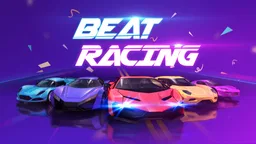
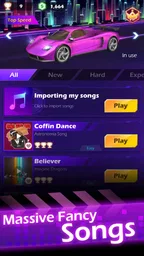
I approach Beat Racing as a quick music game rather than a full driving simulator. Its appeal is the combination of rhythm and racing: you react to a track’s beat while trying to keep a run on course, with the prospect of earning more cars giving the action a simple goal. That makes it easy to understand at a glance, but the experience is most rewarding if you enjoy repeating short, timing-focused challenges rather than exploring a detailed world or tuning a vehicle.
What free access gets you
The game is free to download and play, while optional in-app purchases range from $2.99 to $35.99 per item. That gives newcomers a straightforward way to try its central rhythm-racing idea before deciding whether it suits them. I would treat the free entry point as the main reason to give it a look, not assume that paying is necessary to enjoy the basic premise.
It is worth distinguishing that accessible starting price from a promise that every car or progression step will be free. Purchases are part of the game, and the listed range spans modest to much larger spending. If you are comfortable playing without buying extras, start that way and judge the pace for yourself. If you tend to spend impulsively when a game puts new rewards in front of you, decide on a budget before you begin.
The app is a music-category game from BADSNOWBALL HONGKONG LIMITED. It is rated for Everyone, and the listed current version is 2.8.8. It was released on November 25, 2020, and requires Android 7.0 or later. Those details make it easier to assess basic suitability and compatibility, but they do not change the key value question: whether you enjoy matching movement to music enough to return after the novelty wears off.
Where the value comes from
For me, the strongest value is in the focused premise. A conventional racing game usually asks me to think about steering, speed, routes, or competition; a rhythm game often centers on hitting musical cues. Beat Racing puts those ideas together, so a run can feel like a compact test of listening and reaction rather than a long race with a complicated setup. That distinction matters if you want a game you can pick up for a brief break.
The music is not just decoration in this kind of experience: timing is part of the challenge. That creates a useful reason to replay a track. Instead of only asking whether I finished, I can pay attention to whether I stayed in rhythm more consistently and handled the sequence more cleanly. A small personal goal like that can make a short session feel satisfying without needing a deep campaign or a large set of menus.
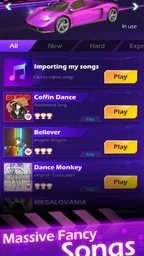
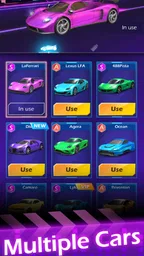
There is also a collectible incentive in the promise of earning more supercars. For players who like seeing a growing selection of vehicles, that gives each run a purpose beyond simply hearing the music. I would keep expectations grounded, though: collecting cars is a motivation to continue, not evidence that the game offers the customization depth of a dedicated car game. If your idea of value depends on detailed vehicle setups, this is probably not the place to look.
Its audience size suggests that the concept has reached plenty of players: Beat Racing has over 50 million installs, with an average rating of 3.7 from around 65,000 ratings. I read that combination as a reason to approach it with measured expectations. It has clearly attracted broad interest, but the rating is not an automatic endorsement for every player; the rhythm-and-racing blend will naturally suit some tastes more than others.
How I would fit it into an ordinary day
Imagine waiting for a friend or taking a short break between errands. This is the sort of game I would try in that spare window: start a run, focus on the beat, and stop when the break ends. Its central idea does not require me to commit to a long story or learn a large set of racing rules before getting started. That makes it more practical for brief bursts than a sprawling racer that expects a longer session.
For a better first impression, I would play somewhere I can listen clearly. Because the game is built around rhythm, competing noise can make timing feel less natural and leave you judging the controls rather than the music. If you are in a quiet place, give the opening attempts room to settle before deciding whether the pace clicks. A rough first run may say more about distraction or unfamiliarity than about whether the format is for you.
One useful way to test the game without spending is to set a small goal that has nothing to do with purchases: replay a track and see whether your timing feels steadier, or decide after a few short sessions whether collecting cars is motivating. This avoids confusing an in-game reward with genuine enjoyment. If the rhythm itself is not fun, paying for something will not fix that mismatch.
Another trade-off is that rhythm games reward attention, while casual play often happens in noisy or interrupted situations. If you expect to play with half your focus on messages, conversation, or a commute, the timing element may feel more frustrating than relaxing. I would choose it for a brief, focused pause rather than as background entertainment. A less timing-dependent casual game is likely a better fit when you want to play distracted.
What it does differently from other music games
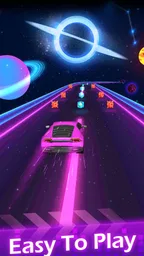
Compared with a standard rhythm game, the racing framing gives the action a more visual, forward-moving goal. You are not only responding to a sequence as a musical exercise; the race and car-collection idea give that response a sense of direction. Compared with an ordinary racer, the musical timing is the distinguishing hook. That middle ground is the game’s clearest identity and also its main limitation: players who want either a pure music challenge or a traditional driving simulation may find that the blend is not quite what they wanted.
If you usually enjoy tapping along to songs but do not care about cars, the racing theme may be an entertaining change rather than a reason to stay. If you mainly want to drive, the rhythm element may feel like an extra demand. I would choose Beat Racing over a conventional racing game when I want a short reaction challenge shaped by music, and choose a dedicated music title when accuracy to musical patterns is the whole point.
This is also not the strongest match for someone seeking a deep, structured progression experience. The available description emphasizes fast rhythm-racing and earning cars, so that is the expectation I would bring. I would not install it expecting a story-driven campaign, realistic driving, or extensive mechanical tuning. A game can be worthwhile without those features; the important thing is not to mistake a compact arcade-style idea for a larger simulation.
Spending, patience, and the main trade-offs
The purchase range deserves a little thought because free access and paid value are different questions. The free download lowers the risk of trying the game, while the optional items create a separate spending decision. I would first find out whether the core loop holds my attention over several sessions. Only then would I consider whether a purchase solves a specific problem for me or simply speeds up collecting something I already enjoy earning.
There is no need to treat the highest listed purchase as a target. A sensible approach is to play without spending, notice whether progress feels enjoyable at its natural pace, and stop if the game begins to feel like a chore. If you are playing with a child, the Everyone age rating is useful context, but the presence of in-app purchases still makes it sensible to keep spending decisions supervised and clear.
The broad appeal of a free music game can be useful for trying an unfamiliar genre, but it does not guarantee that everyone will connect with the controls or rhythm. The rating average is moderate rather than overwhelming, so I would approach it as a worthwhile experiment, not a sure bet. This is especially true if you are sensitive to repeated attempts: replaying a challenge can be satisfying when you want to improve, but tedious when you expect every run to feel entirely new.
Who is likely to get the most from it?
I would recommend trying it if you like music games, quick arcade sessions, and a clear collection goal, but do not need a realistic driving model. It may also suit someone who wants to test a rhythm-based game without paying up front. The combination gives you an easy way to see whether reaction and music make a compelling pair for you, and the short-session framing fits spare moments better than a game that demands a long uninterrupted visit.
I would skip it if you mainly want a serious racer, a rich car-customization tool, or a music game focused on precise performance without a racing wrapper. It is also a poor choice if you know that repeatable timing challenges frustrate you, or if you want a game that works well while your attention is elsewhere. In those cases, choosing a title built around your preferred kind of play will probably deliver better value than trying to make this hybrid fit.
For a first session, I would keep the plan simple: install the free game, play when you can hear the music, and decide whether the beat-led driving feels enjoyable before thinking about purchases. That sequence answers the most important practical questions—whether the style suits you, whether short runs fit your routine, and whether earning cars gives you a reason to continue—without turning a casual test into a spending commitment.
My verdict
Beat Racing is best treated as a free-to-try rhythm arcade game, not as a full racing simulation. I like the clear crossover between music, quick reactions, and the motivation to collect cars; it gives short sessions a recognizable purpose. Its value depends less on the size of the purchase options than on whether the central timing challenge keeps you coming back. Try it without spending first, and pay only if you have a clear reason after enjoying the basic loop.
In short, I would recommend giving it a chance if you want an accessible musical challenge with a racing theme and are happy to keep expectations modest. I would pass if you need depth, realistic driving, or hands-off background play. With a 3.7 average and a large audience, it is a familiar option in the music-game space, but the right decision is still personal: the beat has to feel fun to you, not like another task to complete.
What we like
- One-finger controls make steering easy to learn.
- Music cues help guide the timing of each run.
- Unlockable cars add goals beyond completing levels.
- Short stages suit quick play sessions.
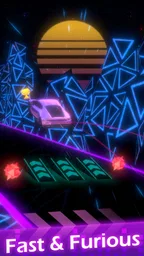
- Bright visuals make the action easy to follow.
What could be better
- Steering can feel imprecise during fast sections.
- Repeated runs may make the gameplay feel predictable.
- Some tracks require repeated attempts to master.
- Ads may interrupt the flow between runs.
- Music-focused play may appeal less to players who prefer varied gameplay.







