

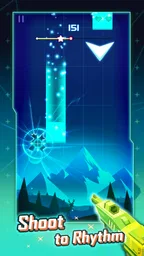






Beat Fire - Edm Gun Music Game review
 Analysis by Appsdrops
At first glance, Beat Fire promises a lively mash-up: pop beats, rhythm challenges, and the playful image of shooting musical tiles. That combination gives it an immediately recognizable mood, somewhere between a music game and an arcade-style score chase. I like the idea because it puts the song at the center while giving each tap a punchier feel than a plain sequence of notes. It is free to download, and its Teen content rating offers a useful quick guide for players and families considering it.
A bright, beat-led first impression
The central appeal is easy to grasp: follow the music, react to the tiles, and try to keep your timing on track. The gun-and-tile concept gives the familiar rhythm-game premise a more energetic presentation, suggesting quick reactions and an action-flavored visual style without asking the player to learn a complicated story first. For anyone searching for a music rhythm game with an arcade edge, that clear identity is a good starting point.
In my view, a game built around songs works best when its presentation supports the listening experience rather than distracting from it. Beat Fire’s premise points in that direction. The tiles are not just objects to tap; they are part of a visual interpretation of the beat, and the shooting theme gives successful timing a sense of impact. That framing makes the basic activity feel more expressive than simply watching notes pass by.
The game is developed by Adaric Music, and its broad audience is reflected in its reach: it has passed 50 million installs. That kind of popularity makes it an easy title to recognize among mobile music games, though the real question for any player is more personal: does the rhythm-and-action combination suit the mood they want from a quick game session?
One idea, clearly presented
Beat Fire does not need a complicated premise to explain itself. Its store tagline sums up the hook in a few words: pop beats meet rhythm battles. I find that directness useful. It tells players what sort of energy to expect and keeps the focus on timing, music, and the satisfying visual idea of shooting tiles in time with a track.
That clarity also shapes the pacing. A rhythm game needs to invite attention quickly, because its appeal depends on responding to what is happening right now. The tile-shooting theme gives the action a brisk, game-like character, while the music supplies the pulse that holds the experience together. It is a straightforward setup, but straightforward is often a strength when the central pleasure is staying in sync.
Visual language built around the beat
The art direction implied by Beat Fire’s concept is deliberately tied to its mechanics. Musical tiles become targets, and the act of matching the rhythm takes on the language of an arcade challenge. Rather than presenting music as a passive backdrop, the game invites players to treat it as something they interact with moment by moment. That makes the visual premise feel coherent with the task at hand.
I appreciate when a music game gives its visuals a clear job. Here, the shooting motif helps communicate action and momentum, while the tiles keep the rhythm-game structure legible. The contrast between musical material and weapon imagery could have felt disconnected, but the store’s own description brings them together through the idea of shooting music tiles. The result is a compact identity that is easy to understand before playing.
That identity also helps set expectations. This is not presented as a quiet, meditative music player or a narrative adventure; it is a game built around pop beats and active participation. Players looking for a fast, colorful arcade music game may find that framing appealing. Those who prefer an understated presentation may respond differently, since the concept leans into energy and impact.
Setting a mood without a long introduction
Some games establish their atmosphere through elaborate worlds, characters, and story scenes. Beat Fire’s hook works in a more immediate way: the music and shooting-tile concept do most of the mood-setting. That can be a good fit for a game whose central activity depends on quick attention. Instead of asking players to absorb a lengthy setup, it puts the rhythm challenge front and center.
The resulting mood is playful and active. The combination suggests a space where music is something to react to, not just something to hear. Even without leaning on a detailed fictional setting, the game’s theme gives its action a recognizable flavor. For me, that kind of focused world language can be effective when the mechanics and visuals point in the same direction.
Sound and rhythm at the center
Music is the main attraction here, not an optional decoration around a separate game. The store describes the experience through pop beats and rhythm battles, making sound the foundation for the player’s timing and the game’s overall pace. That focus is important: in a music game, the beat needs to feel like the reason to keep playing, while the visual action should reinforce it.
Beat Fire’s concept gives each musical moment a clear gameplay purpose. Tiles are tied to the rhythm, and the player’s attention is directed toward responding in time. The gun imagery adds a sense of sharpness to that interaction, turning a musical cue into an arcade-style action. It is a simple loop to understand, which leaves the music free to provide much of the personality.
For people choosing a rhythm game for Android, the appeal will depend on whether they enjoy games that ask for active listening and quick responses. Beat Fire’s premise is designed around that kind of engagement. It is not merely about putting on a soundtrack while doing something else; the music shapes what the player is expected to do. That makes it a natural pick for short sessions when you want a game that feels lively and hands-on.
Keeping the pace readable
Good rhythm-game pacing depends on a balance: the action should feel energetic, but players also need to read what is happening and react. Beat Fire’s tiles provide the visual focus, while the beat supplies the timing cue. The shooting theme helps sell the sense of movement, but the core promise remains musical responsiveness rather than a complicated action system.
That balance is also what gives the game its accessible pitch. You can understand the basic idea immediately, even if mastering the timing takes attention and practice. I like that distinction: a simple premise does not have to mean a passive experience. The more carefully a player listens and reacts, the more meaningful each successful moment can feel.
Mechanics that fit the presentation
The game’s defining mechanic and visual theme appear closely matched. Shooting tiles to the music turns rhythm into an action, and that alignment gives Beat Fire a coherent identity. The premise does not suggest a deep simulation or a broad collection of unrelated systems; it points to one central activity and builds its mood around it. For players who want a focused music challenge, that can be more appealing than a game that tries to do everything at once.
As with many rhythm games, the basic loop is easy to describe but asks for concentration in practice. You listen, watch, and respond. The appeal comes from the connection between those steps: the music informs your timing, the tiles give your attention a target, and the shooting concept adds a punchy arcade tone. It is a neat fit between what the game looks like and what the player is asked to do.
Beat Fire is free to play, with optional in-app purchases priced from $0.99 to $99.99 per item. That range is worth keeping in mind before spending. Players can decide for themselves whether they want to make any purchases, and younger players should involve a parent or guardian when considering them. The game’s Teen rating is another helpful piece of context when deciding whether it is appropriate for a particular player.
The current version is 2.2.3, and the game supports Android 7.0 and later. Those details can help players check whether it fits their device before installing. It launched on November 5, 2019, and has continued to attract a sizeable audience, with an average rating of 4.1 from around 326,000 ratings. The overall response suggests that many players have found the music-and-action formula worth trying, while personal enjoyment will still come down to taste in rhythm games.
Who is likely to enjoy the loop?
I would point Beat Fire toward players who like music-led challenges, arcade-style presentation, and a clear action hook. Its concept is especially easy to recommend to someone who wants a game that gets to the point: the beat is the guide, the tiles are the focus, and the challenge is to stay responsive. If that sounds more appealing than a slower or story-heavy experience, the game’s premise has a strong chance of clicking.
It may be less suited to players who want music to remain in the background or who prefer a calmer visual tone. The gun-and-tile idea is intentionally energetic, and the game’s identity depends on that contrast. That is not a flaw; it is simply the kind of mood the game chooses. Knowing that mood in advance makes it easier to decide whether Beat Fire fits your tastes.
A lively atmosphere with a clear purpose
What stands out about Beat Fire is the way its parts point toward the same feeling. Pop beats provide the pulse, tiles turn that pulse into a visual challenge, and the shooting theme gives each interaction an arcade edge. The game’s setting is less about building an elaborate fictional world and more about creating a focused space where music and action meet. I find that unity more memorable than a pile of features without a common identity.
Its strengths are also closely tied to its premise. The clear concept is easy to understand, the music sits at the heart of the experience, and the visual theme makes the rhythm challenge feel active. The trade-off is that players need to enjoy this particular blend of pop music and action-flavored imagery. If they do, the presentation has a consistent mood; if not, the same bold identity may be less inviting.
Overall, Beat Fire is a straightforward choice for anyone curious about a free music game that puts rhythm into an arcade-style frame. It has a recognizable hook, a sound-first focus, and a visual idea that supports the way players interact with the beat. With a 4.1 average rating and more than 50 million installs, it has found a broad audience, but its best recommendation is still its clear personality: lively, direct, and built around musical timing.
If you enjoy reacting to songs, prefer quick and focused challenges, and like a presentation with some extra punch, Beat Fire is worth considering. It does not need a complicated setup to make its point. It brings music and tile-shooting together in a way that is easy to grasp, then lets the rhythm carry the mood. For me, that makes it a coherent and approachable option in the mobile music-game space.
What we like
- Simple controls make it easy to start playing.
- A wide range of EDM tracks keeps the music selection varied.
- Bright visuals add energy to each level.
- Unlockable weapons offer a sense of progression.
- Short stages suit quick play sessions.
What could be better
- Frequent ads may interrupt the flow of play.
- Some songs or items may require in-app purchases.
- Gameplay can feel repetitive over longer sessions.
- Fast visual effects may be uncomfortable for some players.
- Accurate timing can be difficult on smaller screens.







