

Aha World: Doll Dress-Up Game review
 Analysis by Appsdrops
I find Aha World: Doll Dress-Up Game most appealing as a little stage for children’s imaginations, rather than as a game with scores to chase or levels to clear. The fun comes from making a character, choosing a setting and deciding what happens next. That open-ended approach suits kids who like pretend play, and it gives parents a different sort of screen-time option from a typical puzzle or action game.
A make-believe world built for short play sessions
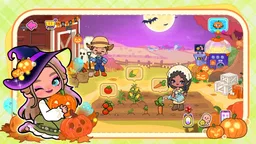
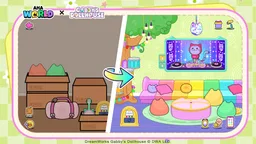
At its heart, this is an educational role-play game from IHUMAN (SG) PTE. LTD. Its central idea is simple: use characters and places as prompts, then invent a story. A child might turn a dress-up choice into a trip, a celebration or a whole family drama. The app does not need to decide what the story means; the child supplies that part.
That freedom is a strength, but it also means the experience depends on the player. Children who enjoy choosing outfits and acting out scenes can settle in without needing instructions from an adult. A child who expects clear goals, a win screen or a steady stream of challenges may find the open-ended play less engaging. I’d think of it as a digital toy box, not a conventional game campaign.
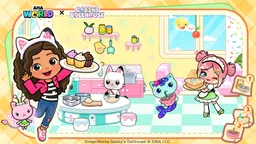
The listing also points to Aha World and Gabby’s Dollhouse, which makes the licensed setting an obvious draw for fans. Still, the broader appeal is not limited to children who know the show: the role-play premise works even when a player is simply interested in costumes and make-believe. At the same time, a familiar property should not be mistaken for a guarantee that every child will connect with the play style.
What the current release tells me
The game is free to download and is rated Everyone, so it is positioned for a broad family audience. It has a 4.6 average from around 231,000 ratings, with roughly 4,000 written reviews, and has passed 50 million installs. Those figures suggest that many families have tried it, but they can’t tell me whether its open-ended format will suit a particular child. I’d use the first session to see whether the child invents scenes or quickly asks what to do next.
The current version is 6.8.1, and the game was released on January 6, 2023. That gives a useful sense of its timeline, but a version number alone doesn’t reveal which features changed or how much the experience has evolved. I wouldn’t treat the number as proof of a particular update or assume that every detail has been redesigned since launch.
One practical point for families is that free-to-download does not mean every possible purchase is free. In-app purchases range from $0.99 to $119.99 per item. That is a wide range, so I’d check purchase controls before handing over a device, especially if a child is likely to explore menus independently. The best approach is to agree on whether purchases are allowed before play begins, rather than having that conversation after a tempting item appears.
How it fits into a child’s routine
For a realistic everyday use, imagine a child waiting at home while dinner is being prepared. Instead of asking for a game with a fixed endpoint, they can set up a small scene, decide who is going where and narrate what happens. That can make a short stretch of waiting feel more purposeful. It is also easy to stop at a natural point if the child has completed a story in their own mind, though a parent may need to help them leave the scene when it is time to move on.
I’d also use it as a prompt for offline play. A parent can ask, “What happens next?” or invite the child to draw a character or retell the scene after putting the device away. This is a more useful way to approach an open-ended game than expecting it to teach a fixed lesson by itself. The creative value comes from the choices and storytelling the child brings to it.
A small but useful tip is to give a child a simple story mission before opening the app: plan a party, help someone get ready, or invent a beginning and an ending. Open worlds can be liberating, but a light prompt helps children who otherwise bounce between choices without settling into play. It also gives parents a way to check whether the game is holding attention without turning the session into a lesson.
Another good workflow is to let the child choose the premise first and the appearance second. If dress-up choices take over, the storytelling can disappear into repeated outfit changes. Starting with a question such as “Who is visiting?” or “Where are they going?” gives those choices a reason. That is not a feature built into the app; it is a practical way I’d guide the play so the child gets more from the same session.
What may feel different from other children’s games
Compared with a standard educational game built around questions or correct answers, this one puts more emphasis on imaginative choices than on measurable progress. That makes it better for a child who likes to direct a scene than for one who wants a clear task and immediate feedback. Compared with a simple dress-up app, the story-making angle gives outfits a possible role in a larger pretend situation, although the child still has to create that connection.
That trade-off matters for parents choosing between this and a more structured alternative. If the goal is to practise a specific skill with a clear sequence, I’d look for a game designed around that skill. If the goal is to encourage make-believe during a quiet moment, this is a more natural fit. It is not a substitute for toys, conversation or shared play, but it can give a child a starting point when those are not immediately available.
The game’s educational category should not lead parents to expect classroom-style instruction. I see its learning value as indirect: children can practise making choices, building a sequence and explaining what is happening in a story. How much of that happens depends on the player and, sometimes, on an adult’s willingness to join in with a question or two.
What the version and release date do—and don’t—show
The release date and current version give a grounded picture of the product’s age and present iteration. For existing players, that is useful context when deciding whether to keep using it or install it on another compatible device. The game supports Android 9 or later. But without a clearly identified change history, I can’t responsibly attribute particular new scenes, character options or technical improvements to version 6.8.1.
That distinction is important because families often want to know whether an update will alter familiar play. A version number confirms which release is current, not whether a child’s favourite content has changed. If a child has already built routines around the game, I’d check the app after an update before assuming that everything will look or behave exactly as before. That is sensible housekeeping for any regularly updated app, rather than a claim that this release caused a problem.
The product has clearly reached a large audience, and its current release number shows that it has moved beyond its initial launch. Those facts point to an established app, but they don’t establish a roadmap or promise what will arrive next. I’d make a download decision based on the play style available now, not on hopes for future additions.
Limits worth considering before downloading
The biggest limitation is the same quality that makes the game attractive: there may be no obvious “right” way to play. Some children love making their own rules; others want the app to tell them what to do. If your child tends to lose interest without goals, challenges or a clear sense of completion, this may work better as an occasional creative option than as their main game.
Another consideration is spending. The free entry point makes it easy to try, but the listed in-app purchase range stretches from $0.99 to $119.99 per item. I would not leave purchasing decisions to a young child. Set device-level approval or supervision where available, and make the household rule clear before play. That way, the child can focus on the story rather than negotiating over a purchase mid-session.
Age suitability is broad, with an Everyone rating, but that does not mean the format suits every age or temperament equally. Younger children may benefit from an adult helping them get started, while older children may prefer games with deeper systems or more explicit objectives. If a child wants a tightly directed adventure, this is probably not the right pick; if they enjoy inventing scenes, the open structure is the point.
Who I’d recommend it to
I’d recommend Aha World: Doll Dress-Up Game to families looking for a creative, low-pressure game that can support pretend play, especially for children who already enjoy character-based stories. It is also a reasonable choice when a parent wants a game that can be approached in brief sessions and extended through conversation afterward.
I’d be more cautious if the child is easily frustrated by open-ended play, if the household needs a game with a specific educational curriculum, or if managing in-app purchases would be difficult. In those cases, a structured learning game, a puzzle with clear goals or an offline activity may be a better match. A large audience and a strong average rating are encouraging signs, but fit matters more than popularity.
Overall, I see this as a useful digital space for children who like to dress up characters and make their own stories, not as a game that will entertain every child automatically. Its free download makes it easy to try, while the purchase range is a reason to set boundaries first. If your child enjoys taking the lead in pretend play, I think it is worth giving them a supervised first session and seeing what they create.
What we like
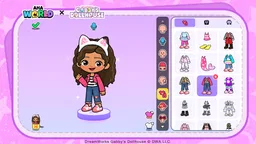
- A broad wardrobe encourages creative outfit combinations.
- Character customization supports a range of styles.
- Colorful visuals make the world appealing to younger players.
- Open-ended play lets children create their own scenarios.
- Simple touch controls are easy for beginners to learn.
What could be better
- Some outfits and items may require in-app purchases.
- Frequent prompts to unlock content can interrupt play.
- The dress-up activities may feel repetitive over time.
- Young children may need help navigating store options.
- A stable internet connection may be needed for some features.







