

ZEPETO: Avatar, Connect & Live review
 Analysis by Appsdrops
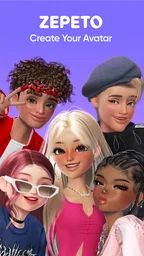
I see ZEPETO as an entertainment app built around making a digital version of yourself and spending time in a social, avatar-centered world. That can be appealing if you enjoy styling characters, sharing creative images, or meeting people through a virtual identity. It is less compelling if you want a straightforward game with clear goals, or if you would rather avoid social interaction altogether.
Trust is part of the decision, not a side issue. An avatar can feel playful, but using one in a social app still means thinking about what you share, who can see it, and how comfortable you are with the account you create. I would approach ZEPETO as a place to express yourself while making deliberate choices about personal details and interactions, rather than treating the character as a reason to disclose more than you normally would.
What kind of experience ZEPETO offers
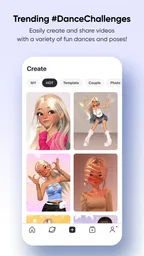
Developed by Naver Z Corporation, ZEPETO belongs to the entertainment category. Its central appeal is personal expression: the avatar gives you a recognizable character to dress, present, and use as a point of connection with other people. That makes the app feel different from a conventional social feed, where the main focus is usually photographs or text, and from a typical mobile game, where progress and objectives tend to lead the experience.
The app has a 4.6 average from around 3.1 million ratings, with roughly 58,000 written reviews and over 100 million installs. Those figures indicate a large audience, but they are not a substitute for deciding whether the format suits you. A busy community can make an avatar-based world more engaging; it can also mean that the experience depends heavily on what you choose to explore and how much social activity you want.
For me, the most useful way to think about ZEPETO is as a creative social space rather than a game with a finish line. You can spend a short visit adjusting your character or making something to share, then leave without needing to complete a quest. If you are looking for a focused challenge, a tactical game, or a quiet utility, that open-ended design may feel aimless rather than freeing.
Trust starts with the kind of account you want
Before investing time in an avatar, I would decide what role it should play. It could be a playful character that does not resemble you closely, a style experiment, or a social identity you use with people you already know. That decision is practical: the more personally identifiable your character and profile become, the more carefully you may want to think about what you publish and with whom you interact.
I would not assume that a virtual character automatically makes every interaction private or consequence-free. A stylized image can still communicate taste, habits, or social connections. My approach would be to keep the avatar expressive without treating it as a secure disguise, and to avoid putting information into a profile or conversation that I would not want shared beyond its intended audience.
The age rating is Teen, so I would also treat the social dimension as something families should discuss rather than relying on the rating alone. A teenager may enjoy designing a character and exploring a creative community, but it is still sensible to talk through boundaries around personal information, contact with other users, and what to do when an interaction feels uncomfortable.
Make choices before sharing
The most useful habit is to pause at the point where a private creative experiment becomes something public or social. I would first make the avatar and try different looks without rushing to share them. Then I would decide whether a particular image or identity is meant for a small circle or for a broader audience, and check the relevant audience choices available in the app before posting or interacting.
That order matters because creation and sharing are different activities. You may be happy to spend time building a distinctive character but less comfortable having it associated with a public profile. Keeping those decisions separate gives you more control over how much of your creative work becomes part of your social presence.
I also recommend treating conversations and public-facing content as separate levels of exposure. A detail that feels harmless in a one-to-one exchange may be less comfortable if it reaches a wider audience. If you are using the app with a young person, it is more useful to discuss this distinction in concrete terms than to give a blanket instruction to “be careful online.”
Account controls and visible user choices are worth reviewing as part of setup and again if your comfort level changes. I would look for the controls the app presents for the account and its social interactions, then use the available options to shape how I participate. Since the interface and settings can change between versions, I would check what is currently visible in the app rather than rely on old instructions or assume that a control works a particular way.
Where personal information can matter
Avatar customization can feel low-stakes, but the choices around it can gradually become identifying. A character’s appearance, name, profile details, and the material you share may combine into a more specific picture than any single element suggests. My practical rule is to avoid using details that connect the character directly to private information unless I have a clear reason and understand the audience.
Social participation is another moment to slow down. When you encounter new people, keep early exchanges within the app’s ordinary boundaries and avoid moving into more personal disclosure just because the conversation feels friendly. If something becomes uncomfortable, use the account or interaction controls that are available and step away; you do not have to keep engaging to be polite.
For parents or guardians, a useful first session can be a shared tour rather than a surveillance exercise. Ask the teenager to show how they chose the character and what they enjoy doing, then talk together about what they would keep private. That approach respects the creative appeal while making it easier to raise concerns before a problem arises.
I would not make claims about specific data collection or permissions without checking the current in-app disclosures and the device’s permission settings. Those are the places to review what the app requests and what choices are offered. If a permission does not seem necessary for the way you want to use the app, consider whether you can decline it and still enjoy the parts you care about.
A practical routine for getting value from it
One everyday use case is a short creative break between tasks. I would open ZEPETO, make one deliberate change to the avatar, and save or share only if the result feels worth showing. Setting that small intention helps prevent an open-ended social app from turning into aimless scrolling, while still leaving room for discovery when you have more time.
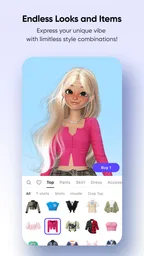
A second useful workflow is to build a look in stages. Start with a basic character, experiment with a few visual directions, and settle on a style before worrying about how it will appear to other users. This makes it easier to distinguish what you enjoy privately from what you want to present publicly. It also avoids the pressure of treating every customization choice as a permanent statement of identity.
If you are joining because friends use the app, agree on how you will recognize one another and what you are comfortable sharing before inviting a wider circle. That can make the social side feel more manageable than entering an unfamiliar community with no plan. It is also a sensible way to test whether the app’s social format actually adds anything for you.
Compared with a photo-first social network, ZEPETO puts a designed character at the center instead of requiring your real appearance to carry the interaction. Compared with a dress-up game, it offers a more social premise, so the creative work can have an audience and a context. That combination is its strongest distinction, but it also means that someone who only wants private outfit experimentation may prefer a simpler, offline-focused alternative.
Costs, compatibility, and everyday friction
The app is free to download, but it includes in-app purchases ranging from $0.29 to $409.99 per item. That is a wide span, so I would treat optional purchases as something to inspect carefully rather than assume that every appealing customization is inexpensive. If a child will use the app, agree on spending boundaries in advance and check the device’s purchase controls; a free starting point does not mean every later choice is free.
ZEPETO is currently at version 4.35.000 and requires Android 8.0 or later. Those details matter if you are installing it on an older device, but compatibility alone does not guarantee a smooth experience on every phone. If the app feels cumbersome, consider whether the device has enough room and whether the social and creative features are worth the time it takes to navigate them.
The open-ended format is both a strength and a limitation. There is no obvious reason to open the app unless you want to create, browse, or connect, so users who prefer clear objectives may not find a satisfying routine. I would also expect the experience to be less rewarding if you are unwilling to spend time shaping an avatar or have little interest in interacting around that identity.
Who should try it—and who may be happier elsewhere
I would recommend ZEPETO to someone who enjoys character design and wants a social setting where a virtual persona is central. It can suit friends who like sharing playful looks, people who enjoy experimenting with visual identity, and creative users who want more than a private customization screen. The large audience may make it easier to find activity, though a larger community does not guarantee that every interaction will be a good fit.
I would be more cautious about recommending it to someone who wants a private, distraction-free creative tool, dislikes social feeds, or finds virtual currencies and optional purchases frustrating. If the main goal is simply to make an avatar and keep it to yourself, a focused character creator may be a better match. If you want a game with structured levels and measurable progress, choose a game designed around those goals instead.
For anyone unsure, I would begin with a modest account, spend time exploring the creation side, and review the visible privacy and interaction choices before joining conversations or sharing content. Keep purchases optional, especially at first, and reassess the app after a few sessions: are you enjoying the creative process, the community, or neither? That answer is more useful than installing it because it is popular.
My verdict is that ZEPETO has a clear appeal when avatar creation and social expression are both part of what you want. I like that it offers a way to participate through a designed character instead of making a conventional personal profile the whole point. At the same time, the social setting and broad range of in-app purchase prices call for sensible boundaries, particularly for younger users.
If you approach it as a creative entertainment app, check the controls that matter to you, and share selectively, it is worth trying. If you want a quiet tool, a conventional game, or a space with no social dimension, I would skip it and choose something built for that purpose. That cautious balance is the best way to enjoy what makes it distinctive without assuming that every part of the experience will suit you.
What we like
- Detailed avatar customization supports a wide range of personal styles.
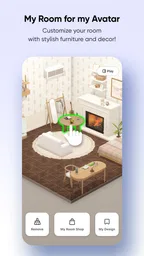
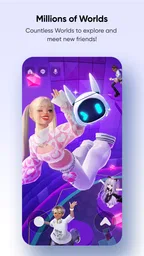
- Virtual spaces make it easy to explore user-created environments.
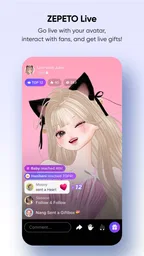
- Social features let users interact through avatars rather than photos.
- Frequent themed items give creators new ways to refresh their look.
- Avatar animations add personality to chats and shared experiences.
What could be better
- Many clothing and customization items require paid currency.
- The large catalog can make specific items difficult to find.
- Some social spaces may include content unsuitable for younger users.
- A reliable internet connection is needed for most features.
- Performance can vary across devices in busy virtual spaces.





