YarnPal - Crochet for Beginner review
 Analysis by Appsdrops
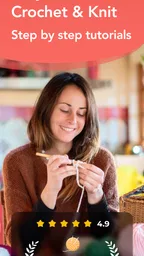
I’d recommend YarnPal to someone who has been curious about crochet but feels unsure where to begin. The app is designed around learning through guided projects rather than expecting you to arrive with a pattern-reading vocabulary. That makes the first step less intimidating: you can focus on following along and getting comfortable with the basic rhythm of crochet instead of trying to decode a dense set of instructions on your own.
In my view, its best use is as a patient companion for a beginner who wants to make something tangible. It is a free lifestyle app from PIXELCELL PTE. LIMITED, and its focus is narrow in a helpful way: crochet tutorials, beginner-friendly patterns, and projects. The YarnPal experience is most appealing if you want practical guidance at home, during a quiet evening, or while taking a break from scrolling.
What to expect from a crochet-first app
YarnPal is not a general craft encyclopedia or a social network for makers. Its value comes from keeping attention on crochet and making the learning curve feel more manageable. If you have searched for a project online and found yourself jumping between written patterns, short clips, and unfamiliar abbreviations, a focused learning app can make the process feel more coherent.
The app has an average rating of 4.7 from around 273,000 ratings, with more than a million installs. Those figures suggest it has reached a substantial audience, but they do not tell me whether every tutorial will suit every learner. Crochet instruction is unusually sensitive to presentation: a technique that feels obvious in a clear demonstration can be frustrating when the steps move too quickly or assume prior knowledge.
So I would approach it as a learning aid, not a guarantee that every project will be effortless. Beginners still need to practise hand tension, recognize their stitches, and accept that the first attempt may look uneven. The app can help organize that learning, but the satisfying part comes from slowing down and repeating a step until your hands understand it.
That distinction matters when choosing between YarnPal and the usual alternatives. Free videos can offer many teaching styles and let you pause or replay a particular moment, while printed patterns are convenient once you already understand the shorthand. YarnPal’s beginner-project focus is a better fit when you want a guided starting point and less browsing before you begin. If you already crochet confidently and mainly need advanced pattern variety or a specialist reference, a dedicated pattern library or a trusted written pattern may suit you better.
Who is likely to enjoy it
I think it is a strong match for someone who has never held a hook, someone returning after a long break, or a casual crafter who wants a small project rather than a new hobby curriculum. It can also help a learner who gets discouraged by reading instructions alone, because a stepwise approach gives you a reason to tackle one small action at a time.
It is less suitable if you need an offline reference for every technique, want to compare many independent designers, or prefer to learn exclusively from books. It may also be the wrong choice if you are looking for a broad craft app covering knitting, sewing, or other hobbies. YarnPal’s specialization is its point, but that same focus naturally limits what it can replace.
Start with a small, realistic setup
Before opening a project, I’d make the first session easy on yourself. Find a comfortable seat, good light, and a place where yarn can move without snagging. If you already own a hook and yarn, keep them within reach; if not, choose a simple beginner set from a source you trust rather than buying a large collection before you know what you enjoy making.
Then choose a project that looks achievable rather than impressive. A small, repetitive piece is usually a better first test than something that depends on shaping, multiple parts, or a polished finish. The goal of the first session is not to produce a gift-ready object. It is to learn how the instructions are presented and complete a few steps without feeling rushed.
YarnPal is free to download, though it offers in-app purchases priced from $3.99 to $49.99 per item. I’d begin by exploring the free experience and decide whether its teaching style works for you before considering a purchase. That is particularly sensible if you are still unsure whether crochet will become a regular hobby. The app is rated for Everyone, and the current version is 1.4.0.
Your first meaningful success
For a first session, I would define success as following a short stretch of instruction and recognizing what your hands are doing—not finishing a flawless project. Start with the earliest technique the chosen project requires. Pause after each small step, check that the work in your hands resembles what the tutorial is describing, and continue only when you are comfortable enough to repeat it.
A useful trick is to treat the first few minutes as a test of clarity. If you lose track of where a stitch begins, stop and inspect the fabric rather than pulling the yarn tighter and hoping the problem disappears. Beginners often mistake tight tension for neatness; in practice, overly tight loops can make it harder to insert the hook and can turn a simple repeat into a struggle.
Another helpful habit is to keep a tiny progress note outside the app: write down the project you chose and the last step you completed. This is not a special app feature, just a practical way to resume later without spending time retracing your progress. It is especially useful if you crochet in short sessions between other tasks, when remembering the exact point you reached can be harder than the stitch itself.
For example, imagine you have twenty minutes after dinner and want to try crochet before deciding whether to commit to a longer project. Pick one beginner project, gather only the materials it calls for, and work through a manageable section. If you make a mistake, pause and undo only enough to return to a point you recognize. Ending with a small, understandable piece of progress is more encouraging than racing through the steps and finishing with a tangled result.
Where beginners can get confused
The most common source of frustration is not necessarily the app; it is the difference between watching a stitch and reproducing it. Your hands may move at a different angle, and yarn can behave differently depending on its thickness and how firmly you hold it. If the result looks off, first check your tension and whether you are working into the correct loop before deciding that you have misunderstood the whole lesson.
It also helps to separate learning the movement from learning to read a pattern. A beginner tutorial may feel straightforward while you follow it, but a written pattern can use compact terms that are unfamiliar at first. I would not treat difficulty with abbreviations as evidence that you are bad at crochet. Learn the repeated action in context, then build a small personal glossary as new terms appear.
One trade-off with guided instruction is that it can encourage copying without understanding. To avoid that, after completing a step, ask yourself what changed in the fabric and why. That quick check helps you notice whether you added a stitch, made an edge, or repeated a basic action. It is a small habit that makes later projects less dependent on watching every movement again.
If a lesson or project feels confusing, switching randomly between several tutorials can make things worse because different teachers may use different wording or demonstrate from different angles. I’d stay with one explanation long enough to identify the exact point of confusion. If it remains unclear, then compare another source for that one technique rather than restarting the entire learning process elsewhere.
From a first try to a useful routine
Once you have completed a small section, the best next step is not necessarily a harder pattern. Repeat the same basic action until your loops are more consistent, then choose a project that adds only one new challenge. This gradual approach makes it easier to tell whether a problem comes from a new technique or from a basic stitch that still needs practice.
YarnPal’s step-by-step, beginner-project orientation is especially useful for this kind of progression: it gives a newcomer a reason to practise in the context of making something. Still, I would not rely on an app alone for every question. If you need to understand why a fabric is curling, how a particular yarn changes the result, or how to fix a complicated mistake, a knowledgeable person or a detailed specialist resource may explain the issue more directly.
The developer, PIXELCELL PTE. LIMITED, has positioned this as a focused crochet-learning app rather than a full craft toolkit. That makes the choice fairly clear. If your priority is a gentle entry into crochet with guided beginner projects, it is worth trying. If you already know the fundamentals and want advanced pattern discovery, broad community discussion, or a paper-free technical reference for every situation, compare it with tools built specifically for those needs.
My recommendation after the first session
I would give YarnPal a try if you are curious about crochet and want a structured way to make your first attempt feel less daunting. Keep your first project modest, work in short sessions, and treat mistakes as information about tension or placement rather than a reason to quit. The app’s focused approach can help you move from watching a lesson to actually holding a hook and making stitches.
The most useful way to judge it is by whether its instructions help you return to the work with confidence. If they do, continue with another small project and let your skills grow gradually. If you find yourself needing more explanation, a different teaching style, or a wider pattern collection, there is no harm in using another resource alongside it. For a first-time crocheter who wants a clear starting point rather than an overwhelming search, YarnPal is a sensible place to begin.
What we like
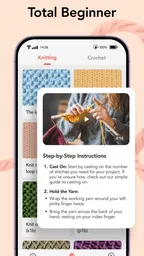
- Beginner-friendly lessons make basic crochet techniques easier to learn.
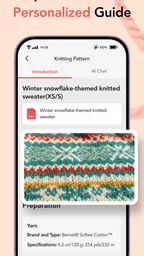
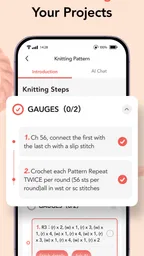
- Project instructions help users follow a clear sequence of steps.
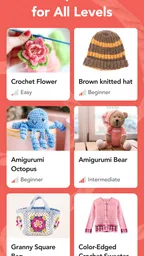
- A range of patterns offers ideas for different skill levels.
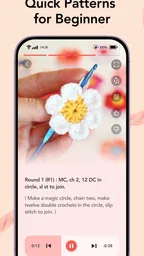
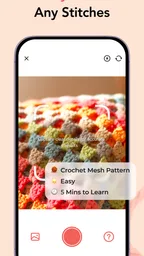
- Visual guidance can make unfamiliar stitches easier to understand.
- The app provides a convenient way to explore crochet projects on mobile.
What could be better
- Some projects may require yarn and tools that beginners do not own.
- Small phone screens can make detailed stitch diagrams hard to follow.
- Instructions may not cover every variation in crochet technique.
- Learning still requires practice beyond reading or watching app lessons.
- Some features or patterns may require payment or a subscription.





