

Swagbucks Play Games + Surveys review
 Analysis by Appsdrops
I look at Swagbucks as a small-rewards app, not a dependable way to earn a second income. It brings surveys, mobile games, and cash-back offers together, which can make it convenient when I have a few spare minutes and want to turn an ordinary activity into a modest reward. The important trade-off is that earning depends on what is available to me and whether I meet each offer’s conditions. I would use it with realistic expectations, and I would pay attention to the choices I make while setting up an account or responding to a survey.
What trust means with a rewards app
Swagbucks is a free lifestyle app from Prodege, and it has been around since its release in 2013. Its current version is 5.56.1, and its Teen content rating makes it a possibility for younger users, though I would still expect anyone under 18 to involve a parent or guardian when sharing personal information or considering rewards. The app has a 4.1 average rating from around 451,000 ratings, with roughly 50,000 written reviews and more than 10 million installs. Those figures suggest a well-established product, but popularity alone is not proof that every offer is worthwhile or suitable for every user.
My trust judgement is therefore practical rather than absolute: I would assess each activity on its own terms. A survey asks for answers; a game offer asks for time and progress; a cash-back opportunity can involve a purchase. These are different exchanges, and it helps to decide what I am comfortable sharing or spending before I begin. I would not treat a reward estimate as guaranteed income, or make a purchase just because an offer presents a possible return.
That distinction matters because the app gathers several earning routes under one roof. Compared with a survey-only app, Swagbucks gives me more ways to participate if surveys are a poor fit on a particular day. Compared with a cash-back-only service, it offers activities that do not necessarily require shopping. The added choice is useful, but it also means I need to keep track of the terms and effort attached to each route rather than assuming that every tile is equally simple.
Choices to make before spending time
When I open a rewards app, I first ask what it wants from me in exchange for the reward. For a survey, that means checking the topic and deciding whether I am comfortable answering. For a game, it means considering how much play time a goal might take. For cash back, it means asking whether I would buy the item anyway. That quick check is more useful than starting every available offer and hoping the rewards will add up.
There is a difference between earning a reward and saving money. A cash-back offer may be attractive if it matches a planned purchase, but it is a poor reason to buy something I do not need. In the same way, a game can be enjoyable in its own right, while becoming frustrating if I play only to reach a target on a deadline. I recommend treating these activities as optional extras, not as a reason to change a budget or routine.
How I would manage the different activities
I would keep surveys, games, and shopping offers separate in my mind and in my schedule. Surveys are easier to fit into a short break, but screening questions can consume time before I know whether I qualify. Games may feel more entertaining, yet progress goals can require repeated sessions. Cash back is only relevant when the purchase makes sense without the reward. This simple distinction helps me choose the activity with the least friction for the moment instead of chasing every option.
A practical habit is to read an offer’s requirements before starting, then note what I need to do and any conditions that matter. I would avoid beginning several game offers at once: splitting attention makes it harder to remember which progress belongs to which offer. For surveys, I would answer carefully and consistently rather than rushing through just to finish. This is not a shortcut to more rewards; it is a way to reduce wasted effort and make my own choices more deliberate.
If an offer asks me to take an action I would not otherwise take, I would pause. That could mean considering the time investment for a game or the cost of a purchase for a cash-back deal. I would also avoid sharing sensitive details unless I understand why they are requested and am comfortable providing them. The app’s mix of activities can be convenient, but convenience should not replace common-sense scrutiny.
Data-sensitive moments deserve a pause
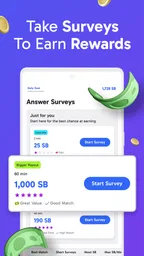
Surveys are the most obvious point where personal information may come into play, because their questions can concern preferences, habits, or other parts of everyday life. I would read each question and answer only when I am comfortable with the subject. If a survey feels too personal, I would stop rather than continue simply because I have already spent time on it. A small potential reward is not worth ignoring a boundary I would normally keep.
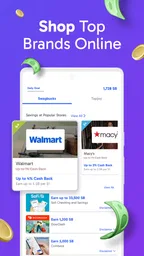
Games and cash-back offers involve different considerations. With a game, I would focus on the stated task and whether I am comfortable installing or using the game for that purpose. With shopping, I would check that I understand what purchase is involved and whether I can afford it without relying on a reward arriving. These are not interchangeable privacy or spending decisions, so I would not assume that accepting one kind of activity means I should accept all of them.
I also recommend taking a moment to review the choices and settings presented during account setup and use. I would make decisions based on the actual prompts on my device, not on assumptions about what the app must request. When an operating-system permission appears, I would ask whether it makes sense for the activity I am trying to do; if I cannot see a clear need, I would hold off until I understand the choice. That is a cautious approach, not a claim about which permissions Swagbucks requests.
Keeping control of time, spending, and expectations
For me, the strongest user-control habit is deciding a limit before opening the app. I might set aside a short break for a survey, or choose to play a game because I actually want to play it. I would not keep extending a session just because a reward is close. A visible goal can make extra time feel trivial, but the right question is whether I still want to spend that time if the reward turns out to be less appealing than expected.
I would also keep an eye on account and offer choices as I go, and use the controls actually shown in the app if I want to stop participating or change a decision. If I am unsure what an offer entails, I would leave it alone until I can understand it. This gives me a cleaner way to use the app: accept activities intentionally, skip those that do not fit, and avoid treating every notification or opportunity as a task I owe the app.
One everyday scenario where I can see Swagbucks being useful is a quiet evening at home. I could try a survey during a brief pause, then choose a game offer only if I already feel like playing. If I planned to shop, I could check whether a relevant cash-back offer suits that purchase. The key is that the purchase comes first in my decision, not the promise of a reward. If nothing fits, closing the app is a perfectly sensible outcome.
Where it fits—and where another option may be better
Swagbucks suits people who like having several small earning activities in one place and are patient about variable opportunities. It may be a good fit for someone who already enjoys mobile games, occasionally answers surveys, or wants to check for cash back before a planned purchase. Its free price removes an upfront subscription cost, but it does not remove the cost of time, attention, or any spending tied to an offer.
I would steer away from it if I needed predictable earnings, disliked answering questions, or found reward goals hard to resist once I had started. Someone who only wants shopping rewards may prefer a service focused on cash back, because a broader activity mix can be unnecessary clutter. Someone who wants surveys and nothing else may find a dedicated survey option easier to evaluate. The trade-off is straightforward: Swagbucks offers variety, while a more focused alternative can make it easier to concentrate on one kind of activity.
It is also a weaker match for anyone who expects every session to produce a reward. Eligibility and effort can vary from one activity to another, so a few minutes spent exploring may not lead to a useful result. I would treat unsuccessful screening or an unappealing offer as a cue to move on, not as a reason to keep trying indefinitely. The app works best when I can comfortably skip what does not suit me.
My cautious verdict
After weighing the convenience against the compromises, I see Swagbucks as a flexible option for casual rewards, provided I keep a clear boundary around my time, personal information, and spending. It is not a substitute for a job, and I would not plan essential expenses around rewards from surveys, games, or shopping. Its range is the main reason I would try it; the need to inspect each activity is the main reason I would use it thoughtfully.
For a first session, I would choose one activity, read its conditions, and decide in advance how long I am willing to spend. I would skip questions or offers that make me uncomfortable, avoid buying something solely to qualify for cash back, and stop playing when the game no longer feels worthwhile. Those habits preserve the useful part of the app—having options when I have spare time—without letting a small reward dictate my decisions.
Overall, I would recommend Swagbucks to a friend who enjoys trying different low-stakes activities and is comfortable treating rewards as incidental. I would not recommend it as a reliable income source or to someone who wants a completely hands-off experience. Used selectively, it can make spare moments a little more rewarding; used without limits, its variety can turn into time spent chasing offers that are not a good fit.
What we like
- Earn rewards by completing surveys and trying selected games.
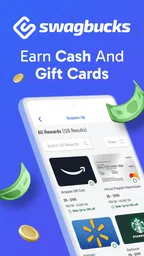
- Redeem eligible earnings for gift cards or PayPal payments.
- The app offers several ways to earn in one place.
- Some game offers provide clear goals and reward milestones.
- Joining is free and does not require a paid subscription.
What could be better
- Survey availability varies and may depend on your profile.
- You may be screened out of surveys after answering initial questions.
- Game offers can require substantial playtime to reach milestones.
- Rewards may take time to process or become available for redemption.
- Offer terms and eligible rewards can vary by country.





