





VYBS: Play & Earn Rewards review
 Analysis by Appsdrops
I look at a rewards app differently from a regular game: the real test is whether it fits comfortably into an ordinary day, not whether it promises a big payoff. VYBS: Play & Earn Rewards sits between casual gaming and lifestyle apps, inviting people to play and work toward gift cards. My take is that it may suit someone who already enjoys mobile games and likes having a modest reward goal, but it is less compelling if you want a predictable income or need a highly configurable interface.
Reading the app and finding your way around
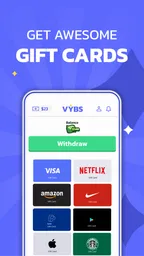
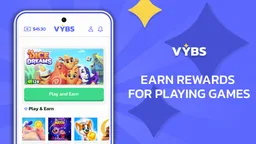
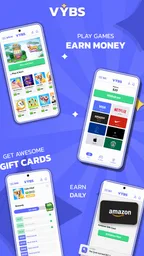
VYBS is a free lifestyle app from VYBS ENTERTAINMENT. Its central idea is easy to grasp: spend time playing and pursue rewards that can be exchanged for gift cards. That simplicity is useful for newcomers, especially anyone who does not want to learn a complicated points system before getting started. The app has a 4.7 average from around 246,000 ratings, and more than a million installs, so it has clearly reached a substantial audience.
In practical terms, I would approach it as a small leisure activity rather than a task manager or a dependable way to earn money. The difference matters. A person who opens it while waiting for a ride may enjoy having a reward target in mind; someone who is counting on a particular gift card to cover an expense should look elsewhere. Rewards are an incentive attached to play, not a substitute for paid work.
The most useful habit is to check the reward information before settling into a game session. Treat the reward goal as something to understand first, then decide whether the time and attention involved feel worthwhile. This avoids the common frustration of playing on autopilot and only later discovering that the route to a preferred reward does not suit your routine.
The public response is encouraging, with about 23,000 written reviews alongside the ratings. Still, averages cannot tell me whether the experience will work for a particular person. Someone who likes casual gaming and is comfortable with an app-led routine may find the premise appealing; a reader who needs clear, adjustable text, predictable controls, or a particular sensory setting should check how the current interface feels on their own device before committing time.
What the reward format is good for
Compared with a conventional casual game, VYBS gives play an additional purpose: there is a gift-card objective in the background. Compared with survey or cashback apps, its appeal is that the activity is gaming rather than answering questions or tracking purchases. That distinction is the main reason to try it. If you find games more relaxing than surveys, the format may feel less like an errand.
The trade-off is that rewards can change how enjoyable a game feels. When I am focused on a target, I am more likely to notice time spent and less likely to play purely for fun. I would set a modest personal limit and treat any reward progress as a bonus. That keeps the app from turning spare time into a pressure to keep going.
Motor and sensory comfort in real use
Reward-based gaming asks for attention and interaction, so comfort depends on the individual games and the way a person uses a phone. If prolonged tapping, holding a device, or concentrating on a bright screen is tiring, short sessions are the sensible way to assess the experience. Pause when your hand or eyes need a break; there is little benefit in pushing through just to maintain momentum.
A practical approach is to try the app when you have enough time to explore without rushing. Notice whether text is comfortable to read at your usual phone distance, whether controls feel manageable, and whether sound or visual activity is pleasant in your setting. I would not assume that every game will feel equally easy: one may suit a relaxed one-handed session, while another may demand more attention or quicker interaction.
That variation is especially relevant for people with motor, vision, hearing, or sensory needs. Phone-level settings can sometimes improve comfort, but they may not affect every game or screen in the same way. If you rely on a particular input method, enlarged text, reduced motion, or audio cues, test the parts you would use rather than assuming the overall app will accommodate them consistently.
Using it around the rest of the day
VYBS makes most sense in short gaps that would otherwise be spent casually browsing: waiting for an appointment, taking a break at home, or winding down after chores. A realistic routine might be to open it during a planned ten-minute break, choose a game that feels comfortable, then stop when the break ends. The point is not to maximize every spare moment, but to see whether the play itself is enjoyable enough to justify the time.
It is a poor fit when attention needs to stay on something else. I would avoid opening a game while walking, crossing streets, supervising a child, or handling work that requires concentration. The reward framing can encourage “one more round,” so deciding on a stopping point before starting is a useful safeguard. It also helps people who find it difficult to disengage from games or who are trying to reduce screen time.
For shared or public settings, consider whether a session is comfortable without sound and whether screen use is appropriate where you are. I would not rely on it as a quiet activity for every situation; the experience can depend on the game being played and the surrounding environment. At home, a short session is easier to control, while a busy commute may be better suited to something that does not demand frequent visual attention.
The app is rated Mature 17+, an important point for families deciding what belongs on a shared device. Parents and guardians should not treat the reward concept as a reason to hand it to younger children. Check the age rating and make a deliberate choice about who can use it, particularly if a child can access app downloads or in-app activities on the device.
Where the experience may create friction
The clearest limitation is the gap between the appealing idea of rewards and the practical value of the time spent. A gift card is not the same as cash income, and “play to earn” should not be read as a guarantee of a particular return. I would judge the app by whether I enjoy the gaming even before counting a reward. If the activity feels like work without a worthwhile outcome, it is probably not the right use of your free time.
Another possible barrier is consistency. A lifestyle app that contains games may involve different play styles, and what feels accessible or relaxing in one session may not in another. People who need a stable, familiar interface may prefer a single game they already know, while someone who enjoys trying varied mobile play may be more comfortable with the format.
It is also worth being honest about attention. Rewards can make a small activity feel more urgent than it is. I recommend choosing a time boundary before opening the app, especially if you are prone to losing track of time. If a session regularly displaces sleep, social time, or responsibilities, the reward is not compensating for that cost.
VYBS is free to download, which lowers the barrier to trying it, but “free” does not mean that time has no value. I would start with a brief test rather than making it a daily habit immediately. Use that first session to assess navigation, reading comfort, game controls, and whether the reward objective feels motivating rather than stressful.
Who is likely to enjoy it, and who should pass
I would recommend giving it a try to adults who already play casual mobile games, want a small incentive attached to leisure, and are happy to treat gift cards as an occasional extra. It may also suit someone who prefers gaming to the more transactional feel of survey apps. The app’s current version is 1.83.0, and it supports Android 8.0 or later, so device compatibility is worth checking before planning to use it.
I would skip it if your main goal is reliable earnings, if you dislike playing on a phone, or if you need strong certainty about how much time will lead to a particular reward. I would also look elsewhere if your accessibility needs require controls or display behavior that you cannot verify during a brief trial. A familiar standalone game, a non-screen hobby, or a rewards option based on an activity you already do may be a better match.
My practical recommendation is to begin with one short session, read the reward requirements carefully, and decide in advance when you will stop. Then ask yourself two questions: did the game itself feel enjoyable, and was the reward goal clear enough to be worth pursuing? If the answer to both is yes, VYBS may earn a place among your occasional leisure apps. If the attraction is only the promise of a payout, I would keep expectations low and choose another option.
An inclusive verdict: try it on your terms
VYBS offers a straightforward blend of mobile play and gift-card goals, and its large audience suggests that the premise resonates with many users. Its strongest use case is modest: a bit of casual gaming during suitable downtime, with a reward as a secondary motivation. The important caveat is that comfort, game demands, and reward value are personal, so the app should be tested rather than assumed to work equally well for everyone.
My recommendation is a cautious, low-pressure trial. Keep sessions short, check whether the interface and games suit your abilities and surroundings, and stop if the reward chase starts to outweigh the fun. For adults who enjoy casual gaming and can set their own limits, VYBS: Play & Earn Rewards may be a pleasant extra. For anyone seeking guaranteed income, a consistently accessible experience, or distraction-free downtime, a different choice will likely serve better.
What we like
- Offers a clear way to track points and available rewards.
- Reward options can appeal to users with varied interests.
- A simple interface helps newcomers get started quickly.
- Regular app use may unlock additional earning opportunities.
- Browsing rewards can help users decide whether the app suits them.
What could be better
- Rewards may require substantial time or activity to earn.
- Some offers may be limited by location or eligibility.
- Points may expire under the app's reward rules.
- Earning opportunities can vary over time.
- Users may need to share personal data to access some features.





