


Tody - Smarter Cleaning review
 Analysis by Appsdrops
Cleaning is easy to postpone because the mess rarely arrives as one big job. It builds up in small, uneven ways: a surface needs attention today, while another can wait. I like Tody because it treats that problem as a matter of managing household routines, not simply collecting chores in a list. Its central idea is to help me decide what needs cleaning and when, making it easier to start without turning every room into a weekend project.
Why a cleaning routine feels different here
Many to-do apps are built around deadlines and tasks that are either unfinished or complete. That can be awkward for cleaning. A task may not need doing just because a calendar reminder says so, and a room can look fine even when its scheduled chore is technically overdue. Tody is designed specifically for cleaning routines, so its value is in giving those recurring jobs a place and helping me keep them in view.
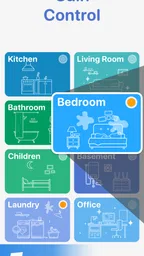
In my experience, the useful shift is from asking, “What should I clean today?” to having a manageable picture of the work across the home. That matters when I have a few spare minutes but no appetite for a full clean. Instead of relying on memory or waiting until everything feels urgent, I can use the app as a prompt to choose a sensible next task.
That approach suits people who want structure but do not want a rigid timetable dictating every part of their day. A cleaning plan should make a home easier to maintain, not create another source of guilt. I find the strongest reason to try Tody is precisely that it frames cleaning as a routine to manage rather than a long list of failures waiting to be checked off.
Turning a vague household job into a next step
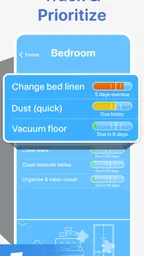
The practical challenge with cleaning is often deciding where to begin. “Clean the house” is too broad to act on; “deal with one small area” is much easier. Tody’s focus on cleaning routines encourages that kind of breakdown. When I use it as a household guide, the goal is not to finish everything at once but to make the next useful job apparent.
A tip that makes this style work better is to begin with a realistic routine, not an ideal one. I would add the tasks I genuinely want to remember first, then see how that set fits into ordinary weeks. If I enter every occasional deep-cleaning job along with daily upkeep, the plan can become intimidating before it has helped. Starting small gives me a more honest baseline and leaves room to adjust.
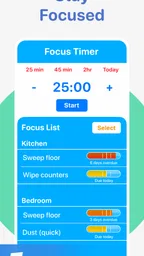
It also helps to think in terms of household areas rather than one enormous master chore. That makes it easier to choose a task that fits the time and energy I have. If I am waiting for a meal to finish, I may want a quick, contained job; if I have a clear stretch of time, I can take on something more involved. The app is most useful when I treat its prompts as guidance, not orders.
A realistic week, not a perfect-home fantasy
Imagine a busy week in which work runs late, dinner needs making, and the kitchen is the room that gets used most. Without a routine, I might put off cleaning until the counters, sink, and floor all feel like one exhausting job. With Tody as a reminder system, I can look for one manageable task instead of waiting for the ideal block of free time. That small change is more likely to keep the space usable between larger cleans.
The same idea helps in shared homes, though the benefit depends on how people agree to use the plan. A visible set of recurring tasks can make household responsibilities easier to discuss than a vague assumption that someone will notice what needs doing. I would use it as a neutral reference point for agreeing on what matters, then keep the routine realistic for everyone involved. The app cannot settle disagreements about standards, but it can make the work itself less easy to forget.
For someone living alone, the payoff is different: fewer mental reminders to carry around. I do not have to keep rehearsing every cleaning task in my head while doing something else. For a family or house-share, the appeal is more about making recurring work visible. In both cases, the routine only helps if it reflects the actual home and the people using it.
Where a dedicated routine beats a general to-do list
A regular task app can handle cleaning chores, and it may be enough if I only need a few reminders. The trade-off is that cleaning then sits among errands, appointments, and one-off jobs. Tody’s narrower focus is an advantage when the household routine itself is the problem: it gives cleaning its own context instead of asking me to build a system from scratch in a general-purpose list.
That specialization is also a limitation. If I want one place for every aspect of life, a broader task manager may be a better fit. Tody is not the choice I would make for coordinating a complicated project, managing work deadlines, or keeping notes on unrelated responsibilities. Its usefulness comes from staying centered on domestic cleaning rather than trying to become an all-purpose organizer.
Paper checklists remain a reasonable alternative, especially for someone who prefers a physical reminder on the fridge and does not want another app to maintain. A paper list is simple, but it can be less convenient to revise as routines change. Tody makes more sense when I want recurring cleaning guidance on my phone and am willing to spend a little time shaping that guidance around my home.
The setup is part of the work
The main friction I would expect is the initial effort of deciding what belongs in the routine. No app can know what “clean enough” means to me without some input, and households differ in how often they want to tackle particular jobs. If I rush through setup or copy an unrealistic standard, I may end up with reminders that feel nagging rather than helpful.
My advice is to start with the jobs that repeatedly slip my mind or cause the most annoyance when delayed. Keep occasional, larger tasks separate in my thinking from ordinary upkeep, and do not add chores just because they sound responsible. After using the routine for a while, I can adjust it to reflect how quickly my rooms actually get messy. That is a more useful workflow than trying to design the perfect cleaning calendar on day one.
Another trade-off is that a routine cannot account for every unusual week. Guests, travel, illness, or a sudden busy stretch can change what is realistic. I would not treat a missed task as proof that the system has failed. The better test is whether the app helps me return to a manageable rhythm when life settles down again.
Who is likely to get the most from it
Tody is a good fit for people who want help remembering recurring household work but dislike treating every chore as a fixed appointment. It is especially appealing if I tend to notice cleaning only once several small jobs have accumulated. The app gives that routine a dedicated home and can help turn a vague intention into a concrete next action.
It is less compelling if I already have a reliable method, if I prefer to clean spontaneously without prompts, or if I want a single organizer for every personal and professional task. It may also frustrate someone who expects an app to decide household priorities automatically. The useful routine still depends on my judgement: I have to decide what matters, what can wait, and what standard is realistic.
Families and housemates may find it helpful as a shared point of reference, but I would not assume an app alone will distribute work fairly. A short conversation about who handles which jobs is still important. For a solo household, the benefit is simpler: a little less mental bookkeeping and a clearer way to spread chores across the week.
Practical details and my verdict
In the house-and-home category, Tody is a focused cleaning app from LoopLoop Aps. It is free to install, rated for everyone, and supports devices running Android 8.0 or later. The current version is 3.6.11. Optional in-app purchases range from $0.99 to $79.99 per item, so I would check the app store for the available purchase details before deciding whether any paid option is relevant to me.
Its reach is substantial: it has over a million installs, around twenty-two thousand ratings, and a 4.7 average. Those figures suggest that many people have found the cleaning-routine approach worthwhile, though I would still judge it by whether its reminders fit my own household. It was released on December 30, 2018, and has accumulated about 2,600 written reviews.
My recommendation is straightforward: try Tody if recurring cleaning jobs are easy to forget and you want a dedicated way to make them feel more manageable. Keep the first routine modest, use it to choose practical next steps, and revise it when real life shows that the plan is too demanding. If you want a broad task manager or have no interest in structured reminders, another approach may suit you better. For a household that needs a calmer way to stay on top of cleaning, Tody offers a focused, useful place to begin.
What we like
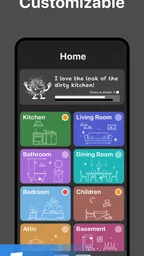
- Customizable cleaning tasks fit different rooms and household routines.
- Flexible scheduling avoids rigid daily cleaning plans.
- Progress tracking makes shared chores easier to coordinate.
- A visual interface helps identify areas that need attention.
- Useful for building consistent cleaning habits over time.
What could be better
- Setting up rooms and tasks takes time at first.
- Some features may require a paid upgrade.
- Frequent reminders can feel distracting.
- Household members may need separate coordination to share tasks.
- The app does not replace hands-on cleaning or supply planning.





