


TextNow: Call + Text Unlimited review
 Analysis by Appsdrops
I see TextNow as a practical second-line phone app, not a complete replacement for every mobile plan. It brings calling and texting together with a phone number, and it can suit someone who wants a separate way to reach people without immediately taking on a conventional carrier contract. The trade-off is that a free communication option asks you to be more deliberate about connectivity, reliability, and how you intend to use that number.
A useful second number, with a clear trade-off
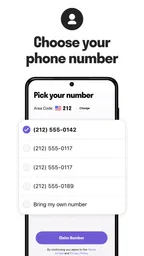
TextNow is a communication app from TextNow, Inc., and its main appeal is straightforward: it gives you a way to call and text through an app rather than relying only on the phone service bundled with your device. I like that this makes it easier to separate conversations. A number used for marketplace inquiries, volunteer work, or a short-term project can stay apart from the number you share with close friends and family.
That separation is useful even if you already have a regular mobile plan. For instance, if I were listing a chair online, I could use a separate number for interested buyers and keep my personal line private. Once the sale is done, I would also know which conversations belong to that temporary purpose. It is a simple workflow, but it can make an everyday task feel more controlled.
The app is free to install, and its age rating is Everyone. It has a 4.6 average from around 1.7 million ratings, while more than 100 million installs suggest that many people have tried it. Those figures show broad interest, but they do not guarantee that the service will fit every carrier situation or every user’s expectations. I would treat it as a tool to test against my own routine, not as proof that it will behave exactly like a standard phone plan.
Where TextNow earns its place
The strongest case for TextNow is flexibility. Instead of paying for a separate line just to handle occasional calls and messages, you can start with the app and see whether an app-based number is enough. That is particularly handy for people who want a contact point for a side project, a club, or online transactions but do not need a second handset or a full carrier subscription.
There is also a sensible middle ground for people who travel between Wi-Fi locations or spend much of their day connected at home, work, or school. An app-based communication option can be convenient when the phone is already online. But that convenience depends on having a usable connection; it is not wise to assume that an app will offer the same consistency as a traditional cellular line in every place and circumstance.
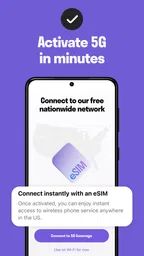
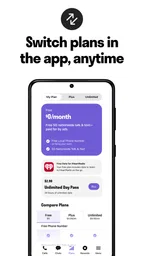
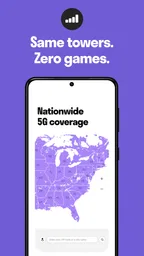
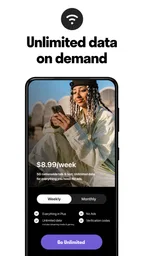
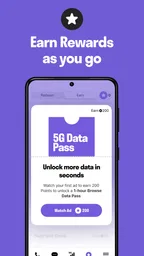
TextNow also advertises flexible 5G data plans without contracts. I see that as an option for someone who wants to explore connectivity through the same service, rather than as a reason to overlook the basics. Before relying on any plan for daily use, I would check the available choices in the app store, consider where I need coverage, and compare the total cost with my existing carrier. The flexibility is attractive, but it only matters if the arrangement suits your actual travel and data habits.
A less obvious benefit of a second number is how it can make notifications easier to interpret. If I use one line for personal calls and the TextNow number for a small business or community group, I can recognize the purpose of an incoming conversation before I answer. That does not replace good boundaries or thoughtful notification settings, but it gives the number itself a useful organizational role.
What to plan for before making it your main line
The main limitation is inherent to app-based calling and texting: your experience depends on the service being available and your device having a suitable connection. If you need to be reachable in places where internet access is uncertain, or you cannot afford to miss an important call, I would not make TextNow my only contact method without first testing it in those conditions. A conventional carrier line may be the safer choice for that kind of dependable, always-on role.
That distinction matters for account recovery and other sensitive tasks, too. I would be cautious about using any secondary or internet-based number as the sole destination for critical verification messages unless the relevant service explicitly accepts it and I have confirmed that it works. A number can be convenient for ordinary conversations while still being a poor foundation for banking access, work emergencies, or accounts that would be difficult to recover.
There is also a practical adjustment when moving from a standard phone app. People you contact need to use the number you choose, and you need to remember which line you gave to whom. If you already juggle work, family, and personal accounts, another inbox can add clutter rather than reduce it. My advice is to assign the number a clear job at the start and avoid handing it out indiscriminately.
TextNow is free, but it includes in-app purchases ranging from $0.29 to $99.99 per item. That makes it worth checking what an optional purchase does before tapping through, especially if your goal is to keep communication spending low. I would begin with the free experience, identify a specific limitation I actually encounter, and only then decide whether paying for an option makes sense. The existence of purchases does not make the app unsuitable, but “free” should not be confused with every possible use being cost-free.
Small habits that make the number more useful
For a temporary purpose, I would decide on a stopping point before sharing the number. If it is for a sales listing, for example, I would use it for that conversation and related follow-up rather than gradually turning it into a catch-all contact. This keeps the separation meaningful and helps prevent an old side project from becoming a permanent source of notifications.
For ongoing use, I would tell important contacts which number is best for calls and which one I check less often, instead of expecting them to guess. I would also keep my essential contacts reachable through another route while I am getting comfortable with the service. That is not a special feature; it is a straightforward safeguard when adding an app-based line to an existing communication setup.
These habits are especially helpful if you are testing the service before deciding whether to switch more of your communication to it. Try the kinds of calls and messages you actually make, in the places where you commonly use your phone. If the app works well for your routine, you can expand its role. If not, you have learned that before making your personal number dependent on it.
Who should try it—and who should choose differently
I would recommend TextNow to someone who wants a separate number for casual or clearly bounded communication, is comfortable using an app for calls and texts, and can usually get online where they need the service. It may also appeal to a person who wants to explore a no-contract data option alongside app-based calling, provided they compare the available plan and their own coverage needs before committing.
I would steer a frequent traveler, someone with inconsistent internet access, or anyone who depends on one number for urgent work and critical account access toward a conventional mobile line as their primary connection. TextNow can still serve as a secondary channel in those cases, but I would not assume that its convenience removes the value of a dependable carrier service. Likewise, if you dislike managing separate numbers or checking multiple communication apps, keeping everything on one familiar line may be the better choice.
Compared with the usual alternatives, TextNow sits between a standard carrier number and a messaging app tied to your existing contacts. A carrier line is generally the more natural choice when you want phone service integrated into the device and need a primary number. A messaging app can be simpler when everyone you contact already uses the same platform. TextNow’s advantage is having a distinct number for calls and texts without starting with a conventional contract; its cost is the extra dependence on an app and an internet connection.
The app’s current version is 26.42.0.0, and it has been available since September 1, 2012. I would still judge it by how it performs on my own device and in my own routine rather than by its history or popularity. Broad adoption can make it easier to understand what the service is, but it cannot answer the most important personal question: whether an app-based number is reliable enough for the conversations you care about.
My verdict: best as a purposeful extra line
TextNow does its best work when I give it a specific role. As a way to keep marketplace messages, a community project, or another slice of communication separate from my main number, it has a convincing practical use. Its free starting point and optional no-contract data plans make it worth considering, especially for someone who wants flexibility and is willing to check how well it fits their connectivity needs.
I would not describe it as an automatic substitute for a regular phone plan. Connection dependence, the need to manage another number, and the possibility of paid options are real considerations, not minor details. If you want a convenient second line and can tolerate those trade-offs, I think TextNow is worth trying. If your first priority is uninterrupted reachability or you want the simplest possible setup, keep a conventional line as your main service and look elsewhere for a secondary number.
My recommendation is to start with one clear use case, test calls and messages where you actually spend time, and avoid moving essential accounts over until you are confident in the arrangement. Used that way, TextNow can be a genuinely useful addition rather than a promise to replace every part of your phone service.
What we like
- Free calls and texts are available to US and Canadian numbers.
- A dedicated phone number helps separate personal and work communications.
- Voicemail and call forwarding add useful calling options.
- Messages sync across supported devices when signed in.
- The app supports picture messaging and group conversations.
What could be better
- Free service is generally limited to US and Canadian numbers.
- Your number may be reclaimed after a period of inactivity.
- Ad-supported use can feel distracting during everyday tasks.
- Call quality depends on a stable internet connection.
- Some features and number choices require a paid plan.




