

Parfumo review
 Analysis by Appsdrops
I would use Parfumo less like a shopping app and more like a reference shelf for a hobby that can otherwise become a blur of bottles, notes, and half-remembered impressions. Its appeal is immediate if you enjoy fragrance: it brings information and user reviews together across a very large range of scents, giving you somewhere to start before buying or revisiting a perfume. The app is free to download, though it offers in-app purchases, and its developer, Parfumo, has built it around fragrance rather than treating perfume as a small corner of a general beauty catalog.
Why the first week feels useful
The first thing I appreciate is the scale of the catalog. Parfumo covers over 231,000 fragrances, which makes it useful not only for familiar designer releases but also when a name on a sample or an older bottle sends me searching. That breadth changes the experience from casual browsing into practical lookup: I can investigate a scent I have just tried, compare impressions, and get a better sense of how other fragrance fans describe it.
The app’s strength is context. A fragrance name by itself rarely tells me whether it is likely to suit my taste; reviews can help explain the impression people get and what they notice. I treat those comments as clues, not guarantees. Fragrance wears differently from person to person, and a confident review cannot replace trying a scent on my own skin. Still, hearing several perspectives is more useful than relying on a brief product blurb.
That makes Parfumo especially handy during a sample-shopping session. If I am choosing between a few scents, I can look them up one by one and use the discussion to decide which is worth testing first. My practical tip is to search with a question in mind—such as whether a fragrance sounds like the style I usually enjoy—instead of opening entries at random. It keeps a broad catalog from becoming an endless browsing loop.
The app is rated for Everyone, and its overall rating is 4.6 from around 1,600 ratings. Those figures offer a little reassurance that it has found an audience, but I would judge its usefulness by how often I return to it for real decisions. It is best suited to people who already like exploring fragrance, not someone who simply wants a quick way to order a single bottle.
Turning curiosity into a routine
After the novelty of browsing fades, the more lasting value comes from using the app as a personal research habit. When I encounter an unfamiliar fragrance in a shop, a sample set, or a conversation, looking it up can help me make sense of it before I forget the name. That is a small task, but it solves a familiar problem: fragrance impressions are easy to mix up once several similar scents have been tried close together.
A useful workflow is to separate discovery from decision-making. I would first identify the fragrance, then read enough impressions to understand the broad character, and finally decide whether it is worth sampling. That last step matters. Online enthusiasm can tempt anyone into treating a well-liked perfume as a sure thing, but reviews cannot predict exactly how it will smell after an hour on a particular person. Parfumo is more valuable as a filter for what to try than as a substitute for trying it.
It can also help when I am revisiting something I have already smelled. Instead of trusting a vague memory—“fresh,” “sweet,” or “too strong”—I can use the fragrance entry and reader discussion to rebuild the context around that impression. The trade-off is that other people’s vocabulary may not match mine. I read for recurring descriptions and points of disagreement rather than treating one memorable comment as a verdict.
For comparison, general beauty retailers are often better when I already know what I want and need to check availability or make a purchase. Parfumo’s niche is different: it is designed around fragrance information and reviews, so it makes more sense earlier in the process, when I am learning what a scent is like. If my main goal is simply to browse products with a checkout in mind, a retailer is likely the more direct tool.
What keeps it useful—and what can wear thin
There is a real maintenance cost to a reference app: I need to remember to consult it, and I need to be selective about what I read. With a catalog this broad, discovery can turn into collecting names rather than learning what I actually like. I find it more rewarding to use Parfumo around a specific moment—testing a sample, comparing a shortlist, or trying to recall a fragrance—than to open it whenever I have a spare minute.
User reviews are both the attraction and a limitation. They add lived-in impressions that a short description cannot provide, but they are subjective and may reflect different tastes, skin, or expectations. A glowing account does not mean I will enjoy the same scent, and a negative one does not automatically make it a poor choice for me. I look for repeated themes across reviews and stay cautious when a conclusion rests on a single person’s strong reaction.
Another source of fatigue is the temptation to over-research. Reading more opinions can feel productive even after I have enough information to make a decision. My rule would be to stop once I can explain why a fragrance is worth sampling—or why it probably is not. That turns the app into a decision aid instead of a feed that keeps generating more things to investigate.
Parfumo has been available since October 31, 2017, and the current version is 5.8.2. It has over 100,000 installs, which suggests that it has reached a substantial group of fragrance enthusiasts. I would not treat longevity or popularity as proof that it fits everyone, but its continued focus on fragrance makes sense for people whose interest goes beyond choosing a familiar scent from a store shelf.
Who should make room for it
I would recommend it to fragrance hobbyists, sample-set explorers, and anyone who often encounters perfume names they want to investigate later. It can also help a newcomer build vocabulary and compare impressions, provided they remember that descriptions are personal opinions rather than precise promises. If you are trying to understand why two scents that sound similar feel different to other wearers, a collection of reader perspectives can offer a useful starting point.
I would skip it if you rarely look up fragrance, dislike reading user opinions, or want an app whose main purpose is straightforward shopping. A large reference library is only valuable when you return to it. Someone who buys the same familiar fragrance repeatedly may get little out of maintaining another place to browse, while a curious sampler can find a reason to consult it week after week.
The app costs nothing to download, with optional in-app purchases ranging from $0.99 to $28.99 per item. I see that as a reason to begin with the free experience and decide whether the app has become part of my routine before spending anything. The central question is not whether there is a lot to explore, but whether I am using that exploration to make better-informed choices rather than simply adding more possibilities to my wishlist.
Does it earn a lasting place?
For me, Parfumo earns space when fragrance is an ongoing interest, not just an occasional purchase. Its value is cumulative: each time I use it to identify a scent, compare a shortlist, or put other people’s impressions in context, the reference habit becomes more worthwhile. The strongest approach is deliberate and light—look up what matters, read reviews as perspectives, and leave the app once I have enough to decide what to sample.
It is not a replacement for smelling perfume in person, and it is not the most direct choice for someone focused on buying rather than learning. Those are meaningful limits, but they do not undermine its role as a fragrance resource. If you enjoy exploring scents and want somewhere to return when a name catches your attention, Parfumo is easy to recommend. If your interest stops at choosing a bottle, a retailer or a simpler search may serve you better.
What we like
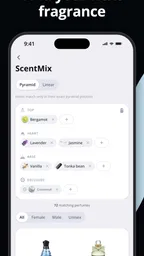
- Search perfumes by brand or fragrance notes.
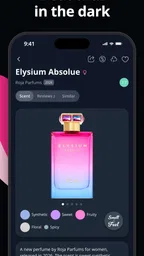
- Community reviews offer useful perspectives on scents.
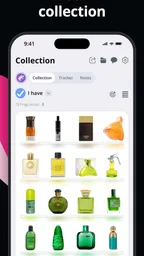
- Personal lists help organize perfumes to try or own.
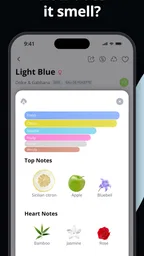
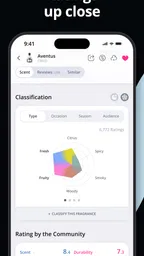
- Fragrance profiles make it easy to compare compositions.
- The catalog includes many niche and hard-to-find perfumes.
What could be better
- Some fragrance entries may have incomplete information.
- Community reviews can be subjective or inconsistent.
- The large catalog may feel overwhelming to newcomers.
- Some features may require an account to use fully.
- Availability and app features may vary by region.





