


Luvme Hair review
 Analysis by Appsdrops
I see shopping apps as most useful when they remove a little friction from a task I already intend to do. Luvme Hair is a beauty shopping app tied to the brand’s official store, so its purpose is specific: browse and shop for Luvme Hair products on a phone. It is not a general beauty guide or a place to compare every hair brand. That focus can make it convenient for existing customers, but it also means the value depends on whether you are interested in this particular retailer and comfortable doing your shopping online.
Where the connection becomes part of shopping
Because the app is a storefront, a working internet connection is central to the experience. Product browsing and the steps involved in shopping depend on getting current information from the store. I would treat it as a companion for online purchasing rather than an offline catalogue to rely on while travelling or in areas with patchy service.
That matters most when you are making a decision that needs more than a quick glance. If I am comparing product options, checking details, or moving from browsing toward an order, I want the relevant pages to load cleanly before I commit. On a weak connection, waiting for a page to respond can turn a quick check into a stop-and-start session. My practical advice is to do serious browsing over a reliable connection and leave enough time to confirm that each step has completed.
The app is made by LM BRAND, and its role is closely tied to the company’s own shopping channel. That direct focus is different from a broad beauty retailer, where I might compare many labels in one basket. Here, the trade-off is straightforward: a dedicated destination can be handy if I already know I want to shop with Luvme Hair, while a multi-brand retailer is usually a better starting point if I am still comparing brands or looking for a wider range of beauty products.
Making mobile browsing work for you
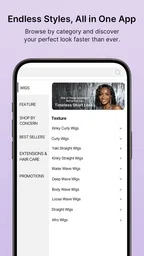
A phone is a natural place to browse a focused shop when I have a few minutes to spare: during a break, while waiting for an appointment, or at home when I want to look something up before deciding. The app’s narrow purpose helps in that kind of session. I do not have to open a general beauty service and then find the retailer inside it; I can go straight to the Luvme Hair shopping experience.
There is a useful distinction between casual browsing and purchase research. For casual browsing, short mobile sessions are convenient. For a considered choice, I prefer to slow down, read the available product information carefully, and avoid relying on a brief glance at a small screen. If I am uncertain about what suits my needs, I would compare the product details with my own requirements rather than assume that a shopping app can replace personal research or professional advice.
One practical workflow is to use a short session to identify items worth considering, then return later on a dependable connection to review the choices before buying. That reduces the temptation to treat a quick scroll as a complete evaluation. It is especially useful if you are shopping between other tasks, when interruptions can make it easy to lose track of what you were comparing.
The app is free, which makes it easy to try without paying for access to the app itself. That does not mean every purchase is free; it is a shopping app, so I would distinguish the cost of downloading it from the cost of anything ordered through it. It is rated for Everyone, and it has a 4.7 average from around 458 ratings, with more than 100,000 installs. Those figures suggest that plenty of people have tried it, but they do not tell me whether a particular product is right for an individual shopper.
What to do when a page stalls
Connection problems are an ordinary risk with any mobile storefront, and it helps to respond patiently rather than tap repeatedly. If a page appears stuck, I would first check whether the phone has a usable connection, wait briefly, and then try the action once more. Repeated taps can make it harder to tell whether a page is simply slow or whether an action has already gone through.
That caution is especially worthwhile near the point of placing an order. If the screen does not clearly show that a step has completed, I would pause and review the current state before trying again. This is a sensible habit for any connected shopping service: it lowers the chance of duplicate actions and gives you a clearer view of what happened. I would also avoid starting checkout in a place where I expect the connection to drop, such as while switching between networks or moving through an area with unreliable reception.
If the app does not respond as expected, closing and reopening it after checking the connection is a reasonable basic recovery step. I would then return to the relevant page and verify what is visible before continuing. The key is not to assume that a stalled screen means an action failed, or that a screen change alone means an order is complete. Take a moment to confirm the result instead of rushing through the next step.
For shopping that cannot wait, a browser or another route to the retailer may be a practical alternative if the app is having trouble on your device. I would not treat the app as the only way to reach a shop, especially when a time-sensitive task depends on a stable connection. Conversely, if the connection is fine and you regularly shop with this brand, having its dedicated app ready can make it easier to return to the same retailer without starting from a general search.
Using it thoughtfully on mobile data
If you are watching your mobile-data use, the simplest approach is to browse selectively rather than leave a shopping session running while you are away from Wi-Fi. Product pages and visual browsing can use data, so I would avoid loading lots of pages just to pass time when I am on a limited plan. I would also wait until I have a reliable connection before doing anything that requires several steps, because interruptions can waste both time and data as pages need to be opened again.
A data-conscious shopper can make the session more deliberate: decide what they want to investigate, open the relevant pages, and stop once they have enough information to make a choice. That is more useful than endless scrolling, particularly in a brand-specific app where the goal is to assess Luvme Hair offerings rather than browse an entire beauty marketplace. If I only want broad inspiration across brands, I would use a wider retailer or beauty resource instead of expecting this app to serve that role.
It is also worth separating shopping convenience from product evaluation. An app can put a store in reach, but it cannot make a personal fit decision for you. I would use the information presented in the shopping experience as one part of the decision, and take time to consider whether the product matches what I actually want. This is a small but important safeguard against buying simply because browsing on a phone feels effortless.
Who will get the most from it
I would recommend Luvme Hair to someone who already shops with the brand, wants a direct mobile route to its store, and is usually able to browse with a decent connection. It is also a reasonable choice for someone who likes to do product research in short bursts and then return to a decision when they have more time. Since it is free to install, trying the app is a low-commitment way to see whether its shopping flow suits your habits.
I would skip it if you want a general-purpose beauty app, a multi-brand comparison tool, or a resource whose main purpose is advice rather than shopping. It is also not my first choice for browsing in places where connectivity is unreliable, or for anyone who dislikes doing detailed product research on a phone. In those cases, a desktop browser or a broader retailer may offer a more comfortable way to compare options.
The app first appeared on November 18, 2019, and its current version is 4.0.10. It requires Android 7.0 or later, which is useful to know before installing on an older Android device. Those details help set expectations about compatibility, but the more important question is whether a dedicated Luvme Hair storefront fits the way you shop.
A focused shop, with a connection-shaped trade-off
My overall view is that Luvme Hair makes the most sense as a direct, brand-specific shopping companion. Its strength is convenience for people who already know they want to browse this retailer; its limitation is the same narrow focus, along with the fact that a connected storefront is only comfortable to use when pages load reliably. I would use it for planned browsing and considered purchases, not as a substitute for broad beauty research or as something to depend on when my connection is uncertain.
If you install it, my best advice is to browse when you have a stable connection, keep product evaluation deliberate, and verify important steps before moving on. That approach brings out the app’s practical value without expecting it to solve problems outside its purpose. For an existing Luvme Hair shopper, that can be enough to make the app worthwhile; for someone still choosing a brand, a wider shopping option is likely the better first stop.
What we like
- Offers a wide range of wig styles and textures.
- Product photos help shoppers compare different looks.
- Search and filters make it easier to find a style.
- Customer reviews can help inform purchasing decisions.
- Order tracking keeps buyers updated on delivery progress.
What could be better
- Some styles may be unavailable in popular colors or lengths.
- Wig fit can vary depending on head measurements.
- Color may look different from the photos on screen.
- International shipping may take longer than expected.
- Returns may be subject to product-specific conditions.





