

LocalAll - Everything Local review
 Analysis by Appsdrops
I like the idea behind LocalAll: instead of opening a weather tool, a neighborhood group, and a fuel-price finder separately, I can start in one place when I want a quick sense of what is happening nearby. That makes it appealing as a practical lifestyle app, especially for people whose plans depend on local conditions. The important question is whether that broad mix suits the way you actually look for information. I’d treat it as a convenient neighborhood overview, not as a replacement for every dedicated service.
What to decide before making it your local hub
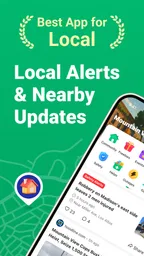
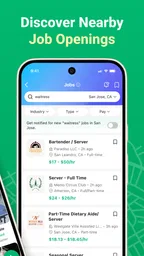
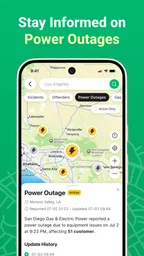
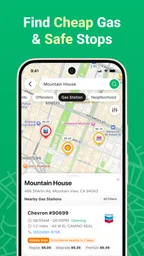
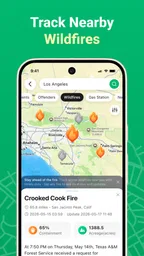
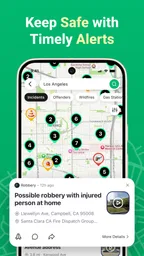
LocalAll, published by Scoopz LLC, brings together community updates and information with immediate practical value, including safety alerts, wildfire maps, gas prices, and free local offers. Its short store description is “LocalAll,” but the fuller purpose is easier to understand as a single place to check several kinds of nearby information. The app is free, which makes trying it a low-commitment decision; the trade-off is that usefulness depends on whether its local coverage matches the places you care about.
Before relying on it, ask yourself what you want from a local app. If you mainly need emergency instructions, a dedicated official alert channel should remain your authority. If you want to see a mix of neighborhood activity and everyday conveniences, LocalAll is a more natural fit. I see that distinction as central: a broad local feed can help you notice what deserves attention, while specialist sources are usually the better choice when a decision depends on precise, authoritative information.
The app sits in the lifestyle category, but its safety and wildfire content give it a more practical edge than a typical neighborhood social feed. That combination is useful, though it can also make expectations harder to manage. A person opening it for gas prices may not want a stream of community updates; someone checking a safety alert may prefer a focused source with less unrelated material. Whether the blend feels helpful or cluttered depends on your reason for opening it.
Start with the places you actually use
A sensible first test is to consider more than your home address. Think about the routes you travel, the neighborhoods where family members live, and the areas you visit for errands or work. Local information only helps when it covers the places relevant to your routine. I would use the app as a starting point, then compare what it shows with the sources I already trust before changing any habits.
That approach is especially worthwhile for wildfire maps and safety alerts. A map can help you notice a developing situation or understand where to look next, but it should not be treated as a personal safety instruction by itself. If an alert affects your household, verify what to do through the appropriate official channel. The app’s value is in bringing local awareness into the same everyday context as other neighborhood information—not in making a broad-purpose app the final word during an emergency.
Where the combination earns its place
The strongest case for LocalAll is the small, repeated check-in. Imagine you are about to drive across town: you might want to see whether anything notable is happening nearby, check fuel prices, and keep an eye on local conditions without beginning with several separate searches. I would not assume every item updates in the same way or has the same level of detail, but the convenience of having these subjects together is clear. The best use is quick awareness followed by verification when the stakes are high.
There is also a practical benefit to seeing different kinds of local information side by side. A neighborhood update may give context to a disruption that would otherwise seem isolated; a free offer may be useful while planning an errand; and a safety notice may change which route or activity makes sense. Those connections are more valuable than simply having a long list of features. They turn the app into a prompt for better questions: Is this relevant to my area? Do I need a more authoritative source? Should I adjust today’s plan?
For a household, one useful workflow is to make the app part of a brief routine rather than leaving it open as a constant feed. Check local information when planning the day, then follow up on anything important through a specialist source. This keeps community posts from becoming a substitute for direct confirmation and reduces the temptation to treat every update as equally urgent. It also gives you a fair way to judge whether the app is earning space on your phone: does it help you make a decision, or does it merely add another stream to browse?
What the audience response and age label suggest
LocalAll has a 4.7 average from around 3.8 thousand ratings, with roughly 308 written reviews and over 100 thousand installs. Those figures suggest that many people have found it worth trying, but they cannot tell you whether coverage is useful in your neighborhood. Local apps can feel very different from one place to another, so I would give more weight to what appears for your own area than to the overall score.
The app is rated Teen. That is a useful detail for families deciding whether it belongs on a shared device, but it does not mean every neighborhood post will suit every reader. As with any service that includes community updates, I would use normal judgment about what younger users see and discuss how to verify claims that could affect travel or safety. The rating is a guide to suitability, not a guarantee that every item is appropriate for every household.
When a specialist alternative is the better choice
If your first priority is emergency response, LocalAll should complement—not displace—official alerts and guidance. In a time-sensitive situation, use the channel responsible for issuing instructions, and do not rely on a community discussion to establish what is safe. Similarly, someone who needs detailed wildfire tracking for a specific decision may prefer a dedicated mapping or emergency resource as the primary tool, using LocalAll to keep local context close at hand.
The same principle applies to fuel prices. A combined app may be convenient for a quick comparison, but drivers who plan trips around exact, current prices should confirm details before taking a detour. A price that is useful as a clue is not necessarily enough to justify extra driving. For neighborhood conversation, a dedicated community group may also suit someone who wants deeper discussion and fewer unrelated categories. LocalAll’s breadth is a strength for casual discovery, but it may not deliver the focus that a single-purpose service provides.
People who dislike feeds should be honest with themselves, too. If you prefer to open one tool, complete one task, and leave, a multi-topic local app may feel like more than you need. The bundle only saves effort when you genuinely use more than one of its kinds of information. If you only check local safety guidance, a focused official source is likely easier to trust and navigate; if you only look for freebies or fuel prices, a dedicated option may make that task feel more direct.
Switching without losing your trusted sources
I would not make LocalAll the sole home for local information on the first day. Keep the tools you already use, then compare what you find in the app over a few ordinary check-ins. Pay attention to whether the locations make sense, whether the information is actionable, and whether it saves enough time to justify another feed. This gradual approach avoids a common mistake: replacing a reliable habit before learning whether a broad alternative serves the same purpose.
A helpful way to evaluate it is to give each category a different job. Use neighborhood updates for awareness, treat local deals as optional discoveries, and use safety or wildfire information as a cue to consult authoritative guidance when needed. For prices, confirm before making a costly change to your route. That division lets you benefit from convenience while avoiding the assumption that every type of local content deserves equal reliance.
The app was released on May 21, 2025, and its current version is 26.46.1. It requires Android 8.0 or later. Those details matter if you are checking compatibility on an older phone, but I would still judge the decision mainly by local usefulness. A recent version number does not tell you whether your neighborhood is well served, and the best test remains whether the app helps with real plans in the places you visit.
My recommendation: try it as a companion, not an authority
I’d recommend LocalAll to people who like having a quick overview of neighborhood life and who can imagine using several local categories in the same week. It is particularly promising for someone who routinely checks what is happening nearby, wants an extra way to discover useful offers, and appreciates having safety-related context within reach. Because it is free, trying it alongside your existing tools is an easy way to see whether its particular mix fits your routine.
I would hesitate to recommend it as the only local resource for someone making high-stakes decisions, or to a person who wants a tightly focused app with no community-feed element. Its breadth is the reason to try it and the reason some users may move on. If the information for your area is relevant and the combined view saves you repeated searches, it can become a handy part of everyday planning. If you need specialized depth or authoritative instructions, keep a dedicated service in the lead.
Overall, I see LocalAll as a useful neighborhood companion rather than a universal replacement. Give it a short, practical trial: check it while planning an errand, compare what it surfaces with your usual sources, and notice whether it changes a decision for the better. Keep the specialist alternatives that matter to you, especially for safety. That is the balance that makes this app’s broad local approach most worthwhile.
What we like
- Helps users discover nearby businesses and local services.
- Keeps local listings accessible in one place.
- Can make it easier to find independent businesses.
- Useful for exploring options in your immediate area.
- May help users support businesses in their community.
What could be better
- Available listings may vary by location.
- Some business details may be outdated.
- A smaller directory can limit the choices available.
- Local coverage may be uneven between regions.
- Users may need to verify opening hours before visiting.





