



Liftique: Face Yoga & Workout review
 Analysis by Appsdrops
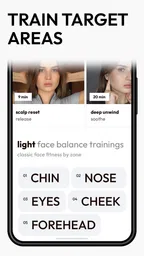
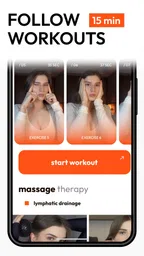
I judge a beauty app not only by what it promises, but by whether its routines feel understandable and manageable in ordinary life. Liftique is built around face yoga, jawline exercises and an AI-based age tracker, with short daily practice as its central idea. That focus makes it easy to understand who might be interested: someone who wants a guided facial-care habit, rather than another general beauty library. My main reservation is that a compact routine is not automatically an accessible one; comfort depends on how clearly instructions are presented and whether facial movement is practical for the person using it.
How the experience reads and guides you
Liftique is a free beauty app from Algidi FZ-LLC. It has an average rating of 4.1 from 651 ratings and has passed 100K installs, suggesting that it has found an audience among people curious about facial exercises and tracking. The app is for everyone by age rating, but that label is about content suitability, not a promise that every exercise or interaction will suit every ability.
The version currently available is 5.20.9, and the minimum operating-system requirement is 7.0. Those details matter if you are deciding whether an older device can run it, although compatibility alone does not tell you whether the experience will feel comfortable on a small screen or with a particular input setup. I would treat the first session as a chance to check the presentation, not as a commitment to adopt a daily routine.
For a face-yoga app, readability is more than large text. A useful instruction needs to make clear which part of the face is involved, what movement to try, and when to stop. If you have difficulty following visual demonstrations, processing several steps at once, or reading small on-screen text, take time to see whether the guidance works for you before relying on it. I would rather repeat one movement carefully than hurry through a sequence because the screen seems to be moving on.
Navigation should also support a calm pace. When trying a new routine, I find it helpful to keep the phone steady, remove distractions and read the full instruction before moving my face. This is a practical workaround, not a special feature claim: it reduces the chance of looking back and forth between the screen and a mirror while trying to coordinate a movement. If the instructions feel hard to follow in that setup, the app may not be the right guide for you.
Make the routine easier to follow
A useful first test is to try the routine at a time when you are not rushing. Sit somewhere comfortable, set the phone at a readable distance and check whether you can understand the movement without straining your neck or leaning toward the display. If the app’s presentation does not let you follow comfortably, do not force the exercise simply to finish a session. A shorter, clearer routine from another source—or no facial exercise at all—may be a better fit.
That advice is especially relevant because facial exercises ask for attention in two places: the screen and your own sensations. A mirror can help some people notice their movement, but it also adds another visual reference to manage. I would choose one clear reference at a time. If you use a mirror, position it so you can glance at it without twisting your neck; if that is awkward, focus on the on-screen guidance and gentle sensation instead.
Movement, sensory comfort and everyday use
The app’s short daily format is appealing if you want a small habit that can fit between established tasks. A realistic scenario is trying a session after washing your face in the evening, when you have a few quiet minutes and are already in front of a mirror. Another is using it during a break at home, provided you can sit comfortably and give the instructions your attention. I would not squeeze it into a commute or a noisy, crowded setting: facial movement can feel private, and divided attention makes careful practice harder.
Motor comfort deserves more thought than the phrase “face yoga” might suggest. Some people can comfortably move and hold facial muscles; others may find particular movements tiring, uncomfortable or difficult to coordinate. A jawline exercise is not automatically suitable for someone with jaw pain, limited movement or a condition affected by facial muscle effort. If a movement causes pain, stop rather than trying to push through. If you have a medical concern, a clinician is a better source of personalized advice than an app routine.
There is a useful trade-off in short sessions: they lower the time barrier, but a brief routine still requires controlled attention. If holding a phone or tapping through instructions is difficult, set up the device before beginning and avoid trying to navigate while your face is in motion. If you need hands-free guidance, confirm that the app’s actual instruction format supports your needs before making it part of your routine; do not assume that a workout app will provide spoken cues or alternative controls.
Sensory preferences vary, too. Some users may enjoy looking closely at facial movement, while others may find repeated self-observation uncomfortable or distracting. The AI face-age tracker can be an interesting part of the app for people who like seeing a visual estimate, but I would approach that kind of result as a curiosity rather than a measure of health, attractiveness or personal progress. Lighting, expression and camera position can affect how a face appears, so comparing results taken under different conditions can invite misleading conclusions.
A practical tip is to decide in advance what you want from the tracker. If your goal is simply to explore the app, there is no need to check it repeatedly or treat a changed estimate as proof that an exercise worked. If tracking makes you more self-conscious, skip that aspect and focus on whether the routine itself feels comfortable. The most useful measure may be whether you can follow the session without discomfort, not a number or age estimate.
Choosing a setting that works
For a first try, choose a place with enough light to read the screen and enough privacy to move your face without feeling watched. That can be a bedroom, bathroom or quiet corner, depending on your routine. If bright screens bother you, adjust your device’s own display settings before opening the app. If sound or visual prompts are difficult to process in a busy space, a quieter time is likely to be more manageable.
This is also where Liftique differs from common alternatives. A paper exercise guide or a saved video can be easier to pause, enlarge or revisit at your own pace, depending on the format, while a dedicated app may feel more organized for someone who wants a recurring guided habit and an age-tracking element. A general beauty app may offer broader inspiration, but that breadth can be unnecessary if your interest is specifically facial movement. I would choose the tool that makes instructions easiest for you to understand, rather than assuming a specialized app is always better.
Privacy and comfort in public are practical considerations even when the routine itself is simple. If you would feel self-conscious doing facial movements at work or on public transport, there is little benefit in trying to make the habit fit those places. A routine that you can do privately and without rushing is more realistic than an ambitious plan that repeatedly gets postponed.
What to weigh before making it a habit
The central limitation is that the app’s promise of a quick daily practice may create an expectation of visible change on a predictable schedule. Facial exercise results are not something I would assume from a short session or an AI age estimate. If you are looking for medical treatment, a guaranteed cosmetic result, or a substitute for professional advice, this is not the right kind of app. It is better approached as guided self-care and an experiment in routine, with modest expectations.
There is also a cost decision to make. Liftique is free to download, while in-app purchases range from $12.99 to $49.99 per item. I would explore the free experience first and decide whether the guidance actually suits you before considering any purchase. The price range is wide enough that it is worth checking the specific item and its terms in the app store rather than assuming every feature is included at no cost.
Its 4.1 average rating gives a broad signal of user reception, but ratings cannot tell you whether its instructions match your reading, movement or sensory needs. I would use the initial session as a personal fit check: can you understand the movements, maintain a comfortable posture, and stop or pause when needed? If the answer is no, that is a good reason to choose a different approach, regardless of popularity.
There are only a few reviews alongside the larger number of ratings, so I would not treat short review snippets as a detailed accessibility guide. A better decision comes from testing the app directly on your device, especially if you rely on a particular display setting, input method or way of receiving instructions. Give yourself permission to leave if the interface or exercises create friction; a daily habit should not require you to work around discomfort every time.
Who is likely to find it useful
I can see Liftique suiting someone who is curious about face yoga, prefers a focused app over a broad beauty catalogue and wants to try a short practice in a quiet setting. The tracker may appeal to users who enjoy exploring visual estimates, as long as they do not mistake them for clinical measurements. It may also suit someone who benefits from having a dedicated place for a small routine, rather than relying on memory or a collection of unrelated videos.
I would be more cautious if you have difficulty with facial movement, jaw discomfort, visual self-monitoring or screen-based instruction. The same applies if you need precise spoken guidance, highly adaptable controls or a specific accessibility feature: check those needs against the app itself before depending on it. If you mainly want general skincare advice, product recommendations or professional assessment, a different beauty resource or a qualified practitioner is likely to serve you better.
Overall, I see Liftique as a focused, approachable idea with a few important conditions. Its short-session approach can make facial exercise easier to try, and the combination of guided practice with an age-tracking element gives it a distinct angle within beauty apps. But accessibility is personal here: screen legibility, movement comfort, privacy and the way you interpret tracking all affect whether it will work for you. Start slowly, use a calm setting, and treat the first session as a test of fit rather than a promise of results. If the instructions feel clear and the movements feel comfortable, it may earn a place in your routine; if not, a paused video, written guide or no exercise is a perfectly sensible alternative.
What we like
- Offers guided routines focused on facial muscles.
- Short sessions can fit into a daily schedule.
- Progress tracking helps maintain a regular practice.
- Suitable for beginners with little exercise experience.
- Can be practiced at home without special equipment.
What could be better
- Visible results may take consistent practice over time.
- Facial exercise benefits are not guaranteed for everyone.
- Some features may require a paid subscription.
- Routine variety may feel limited to frequent users.
- Regular reminders may become distracting for some users.





