


JustPlay: Earn Money or Donate review
 Analysis by Appsdrops
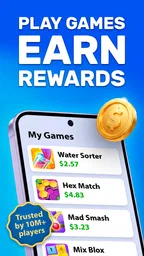
I see JustPlay as a small entertainment app with a clear bargain: you can try mobile games without paying to download the app, and the app presents play as a way to earn rewards. That can be appealing if you already enjoy trying casual games and would welcome a modest extra incentive. I would not treat it as a dependable source of income, though. The useful question is not whether playing is fun, but whether the reward experience suits the way you spend time on your phone.
Free to start, but not a guaranteed payday
JustPlay is a free entertainment app from JustPlay GmbH, released on November 11, 2020. Its current version is 1.0.108-ALL_COUNTRIES-NO_LOGS.RELEASE_0a839a1d5, and it requires Android 7.0 or later. The name may sound like a straightforward cash-earning game, but it is better understood as an app that connects users with mobile games and offers rewards for playing. It is rated Mature 17+, so it is not a good fit for children.
There is no purchase price to get started, which makes trying it a low-commitment decision. That matters: you can explore the experience without first deciding whether a subscription or paid upgrade is worthwhile. But free access is not the same as guaranteed value. Your time is still a cost, and the rewards you earn should be judged against the time and attention you put in rather than against an assumed hourly wage.
The app’s scale suggests that many people have tried it: it has over 10 million installs, around 1.8 million ratings, and a 4.4 average. Those figures can be useful context, but they do not predict what you personally will earn or how much you will enjoy the available games. A popular reward app can still feel worthwhile to one person and frustrating to another, especially when expectations about cash-out speed or earnings differ.
What “free” means in practice
I would approach JustPlay with a simple rule: do not spend money or rearrange your routine in pursuit of rewards. The free entry point removes the need to pay just to see what the app is like, but it does not make every minute spent using it valuable. If you would have played a casual game anyway, a reward opportunity can be a pleasant extra. If you are opening games solely because you expect meaningful income, the trade-off may disappoint.
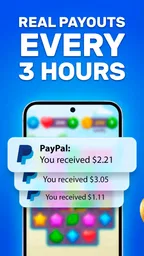
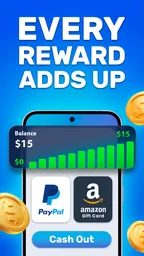
The app’s description refers to PayPal and gift cards as cash-out options. That makes the reward concept easy to understand, but it is still wise to read the in-app terms carefully before committing substantial time. Check the current eligibility, redemption steps, and any limits shown to you. Those details matter more than a broad promise of rewards, and they help you decide whether the available payout route is convenient in your country and for your preferences.
Where the value can come from
JustPlay’s strongest case is that it gives casual gaming a second purpose. Instead of browsing the app store, installing a random game, and hoping it holds your interest, you can use a rewards-focused app as a starting point for discovering games. If you enjoy sampling different mobile titles, the possibility of earning something along the way can make that exploration feel more worthwhile.
There is also a practical distinction between value and income. A gift card or a small PayPal reward can feel useful when it offsets an occasional digital purchase or provides a little spending money. That is a different standard from replacing paid work. I would think of rewards as a bonus attached to leisure, not as payment I can count on for bills, savings, or a fixed target.
A sensible way to test the value is to choose a short, ordinary play session and note how it feels: did the game hold your attention, was the reward progress understandable, and would you have spent that time playing something similar anyway? That comparison is more useful than trying to estimate an income rate from a single session. It also prevents the common trap of continuing with a game you dislike merely because you have already invested time in it.
Making the experience work for your routine
For an everyday example, imagine having a few minutes free while waiting for a friend or taking a break at home. If you already want a light game, JustPlay may give you a reason to explore one through its rewards setup rather than opening a familiar game by habit. I would keep those sessions bounded: pick a natural stopping point, then decide whether the game itself was enjoyable enough to continue. This keeps the reward from turning a brief break into an unplanned stretch of screen time.
Another useful approach is to separate game choice from reward chasing. Try a title because its style appeals to you, not just because you hope it will produce a particular payout. When a game stops being fun, move on or stop using the app. That may mean earning less, but it is a better bargain than spending leisure time on something that feels like a chore. The best value here is a reward added to entertainment you already want, not entertainment endured for a payout.
It is also worth checking your progress and redemption options before settling into a long session. Knowing what counts toward rewards and what you need to do to cash out helps you avoid guessing. I would not assume that every game, session, or country works identically; use the instructions currently displayed in the app rather than relying on someone else’s experience. That small habit makes the difference between informed experimentation and building expectations around hearsay.
The trade-offs behind reward-based play
The biggest limitation is that rewards can change how a game feels. A title that would otherwise be an easy diversion may become a task if you keep checking progress or focus on the payout more than the play. That is not unique to JustPlay, but it is especially relevant here because earning is central to the app’s appeal. If you prefer to play without thinking about tracking, milestones, or redemption, a regular game installed directly from the app store may be a more relaxing choice.
There is also a difference between seeing a cash-out method advertised and knowing exactly how satisfying it will be for you. PayPal may suit someone who wants flexible digital spending, while gift cards may be more appealing to a person who already shops with the supported options. Before spending much time, look at what the app actually offers you and whether the route fits your habits. A reward is less useful if redeeming it is inconvenient or if the available choice is not something you would use.
Reward apps can also be a poor match for anyone who dislikes exchanging attention for small incentives. If you are already trying to reduce screen time, adding a reason to keep playing may work against that goal. The same goes for people who need predictable earnings: casual-game rewards are not a substitute for a job, and I would not build a budget around them. For those users, a paid game with a clear one-time cost—or simply a free game played on its own terms—may offer better peace of mind.
The 17+ content rating is another practical point for families. I would not hand the app to a younger child simply because the games may look casual or accessible. Parents should consider the age rating and review the app themselves before deciding whether it belongs on a shared device. For adult users, the rating is simply a reminder that this is not presented as a children’s product.
How it compares with ordinary mobile games
Compared with downloading a casual game directly, JustPlay adds a rewards layer and a central place to explore play-for-reward opportunities. That can be a plus if you enjoy variety and want a possible payoff attached to gaming. A standard game, by contrast, may be better if you have found one title you love and want to focus on its own progression without thinking about an external reward system.
It also differs from a straightforward paid game. Paying for a game gives you a known upfront cost, while a free rewards app asks you to judge whether the time spent is worthwhile. Neither approach is automatically better: a modest purchase can be a cleaner choice for someone who values uninterrupted play, while JustPlay may suit someone willing to experiment without paying to get started. I would compare the experience with free games you already enjoy, not with the idea of a guaranteed wage.
Some people may compare reward apps with survey or task apps. The distinction is the activity: JustPlay centers its appeal on mobile games, so it makes more sense for someone who wants gaming to be the main experience. If you would rather complete short questionnaires or other non-game tasks, a different type of app may fit your preferences better. The right alternative depends on whether you value entertainment first, rewards first, or simply the least complicated way to spend a few minutes.
Who is likely to get something out of it?
I think JustPlay is best for adults who already play casual mobile games, are comfortable trying different titles, and see rewards as an optional extra. It may also suit someone curious about reward-based gaming who wants to test the idea without paying an entry fee. A patient user who checks the redemption process and keeps sessions within a reasonable limit is more likely to have a satisfying experience than someone expecting immediate, substantial earnings.
I would skip it if you need reliable income, dislike reward tracking, or are easily pulled into longer sessions by progress indicators. It is also a weak match if you only want one specific game and have no interest in exploring others. In those cases, downloading that game directly—or choosing a paid title with a clear price—can be simpler and more honest about what you are getting.
JustPlay has earned a 4.4 average from around 1.8 million ratings, and it has accumulated over 10 million installs, so it is clearly not a niche experiment. Still, popularity is not a personal recommendation by itself. I would use those figures as reassurance that the app has a substantial audience, then make the decision based on whether its reward model fits your habits. Its free availability makes a cautious trial reasonable, provided you treat your time as valuable.
My verdict: try it only on your terms
My recommendation is a qualified yes for casual gamers who would enjoy trying mobile games anyway. The app costs nothing to install, and the prospect of PayPal or gift-card rewards gives those sessions an extra angle. Start with a short test, read the redemption details shown in the app, and judge the experience by both the game and the time required. If it remains fun without making you chase rewards, it may be a pleasant addition to your phone.
If your main goal is dependable cash, I would pass. If your goal is a free way to discover games and possibly receive a little something for playing, JustPlay is more promising. The difference comes down to expectations: treat rewards as a bonus, not a promise of earnings. That is the fairest way to assess its value—and the approach most likely to keep the entertainment part enjoyable.
What we like
- Offers a low-commitment way to earn small rewards during spare time.
- Lets users choose between receiving money and donating rewards.
- Presents games and tasks in a simple format.
- Can make casual mobile gaming feel more rewarding.
- Does not require special gaming skills to get started.
What could be better
- Earnings may be modest compared with the time spent.
- Reward availability can vary by location and account.
- Some offers may require extra steps before credit is granted.
- Cash-out options may come with minimum thresholds.
- Ad-heavy tasks can interrupt the gaming experience.





