


Driving Instructor-Theory Test review
 Analysis by Appsdrops
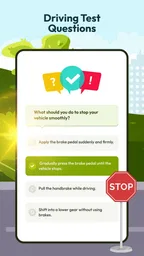
I can see the appeal of a driving instructor app most clearly in a shared household: one person is preparing for a theory test, while another wants to brush up on road knowledge before getting behind the wheel again. Driving Instructor-Theory Test is an Auto & Vehicles app from Naz Digital, and its focus is learning to drive rather than managing a car or planning a route. I’d treat it as a study companion: useful for adding practice to spare moments, but not a replacement for lessons, local road rules or careful preparation for the actual test.
Making study time work around a shared device
A phone passed between family members can make short study sessions easier to fit into a busy day. Imagine a learner reviewing material while waiting for a ride, then handing the phone to a parent who wants to check a few concepts before a practice drive. That is a practical way to use a driving theory app, provided each person keeps track of where they left off and does not assume the other person’s progress reflects their own.
The useful household habit is to make sessions distinct. Agree who is using the app, and have each learner note the topics they want to revisit outside it. This prevents a shared-device session from turning into casual tapping that feels productive but leaves nobody sure what they actually learned. If the app’s presentation suits your learning style, short, focused visits are more likely to help than handing the phone around without a plan.
I would not choose a shared device as the main study arrangement if two learners need separate, dependable records of their progress. App use on one phone can blur who completed what, depending on how the app handles sessions. Rather than assuming it separates learners, treat the device as a shared reference and keep each person’s study notes or checklist independently. That simple boundary also makes it easier for a parent to help without taking over the learner’s preparation.
Set expectations before anyone starts
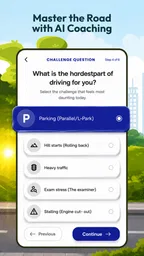
Because learners may be at different stages, decide what the app is for before opening it. A new driver might use it to become familiar with theory material, while an experienced driver may be refreshing knowledge. Those are different goals, and a useful session for one person may be too basic or too narrow for another. I’d have each learner name a specific purpose—such as identifying weak areas or building a regular study habit—rather than treating time spent in the app as proof of readiness.
It is also sensible to keep study separate from actual driving. Reviewing concepts on a phone can support learning, but nobody should try to read or interact with the app while a vehicle is moving. A learner can review before a lesson, then discuss confusing points with an instructor or supervising adult when it is safe to do so. That distinction matters especially in a household where the same phone may be used for both study and navigation.
Driving Instructor-Theory Test is free to install, though it includes optional in-app purchases priced from $4.99 to $35.99 per item. I’d check the purchase screen before confirming anything, especially if a young learner uses a family device or payment method. The free starting point makes it possible to try the app before spending, but the presence of paid items means I would not promise that every part of the experience is free. If the app asks for a purchase, pause and decide whether the added value matches the learner’s actual needs.
Coordinate learning, not just screen time
One practical approach is to pair app sessions with real-world conversations. After a learner studies, ask them to explain one rule or road situation in their own words. That reveals whether they understood the idea or merely recognized an answer. Then bring any uncertain point to a qualified instructor or an authoritative local driving resource. It is a stronger routine than repeatedly revisiting a question without understanding why an answer is right.
For a household with a learner and a supervising driver, coordination works best when each person has a clear role. The learner does the study; the adult helps identify questions to discuss and supports safe practice. The adult should avoid turning the app into a test of obedience or a scoreboard. That can make the learner focus on pleasing someone else instead of noticing what they genuinely find difficult.
A useful trade-off is convenience versus continuity. A phone makes it easy to study in small gaps, but scattered sessions can make it harder to build a coherent learning plan. I’d use a notebook, calendar reminder or simple written list alongside the app: record the topic reviewed, what remains unclear and what to ask during the next lesson. This does not depend on any special app feature, and it gives each learner a personal record even when the device is shared.
If several people in the household are studying for different licensing situations, check that the material matches the learner’s location and test requirements before relying on it. Driving rules and exam formats can vary. A general study aid can help build confidence, but it should not be treated as a guarantee that every question or rule will match a particular local test. For jurisdiction-specific preparation, official materials or an instructor familiar with the local exam are the safer reference.
Age, trust and the limits of a rating label
The app has an Everyone content rating, so its stated age classification is broad. That can make it feel suitable for a household where younger people are beginning to learn about road safety, but the rating alone does not tell a parent whether the teaching style, depth or paid options suit a particular child. I’d look at the app together first, talk through what the learner is expected to study, and keep purchases under an adult’s oversight.
Its average rating is 3.5 from around 8,800 ratings, while 106 written reviews offer additional user feedback. I read that as a reason to try it thoughtfully rather than assume it will suit everyone. Ratings can flag mixed experiences, but they do not tell me whether the app fits a specific learner’s syllabus, reading level or preferred way of studying. A short trial is more useful than making a household decision based on the score alone.
There is also a trust boundary worth keeping in mind: an educational app is one source of practice, not an authority that replaces an instructor or official guidance. If a learner encounters a confusing explanation or believes it conflicts with what they were taught, stop and verify the point before applying it on the road. That is not a criticism unique to this app; it is a sensible rule for any digital driving resource, particularly when a learner is still building judgment.
The app has more than 10 million installs and is free to download. Those figures suggest it has reached many users, but popularity is not the same as a fit for every household. I’d weigh the learner’s experience with it, the relevance of its material and whether the paid options are worthwhile. The current version is 1.7.7, and it requires Android 7.0 or later. That makes it a candidate for many older Android devices, though the person installing it should still check that it runs properly on their own phone.
Where it fits among driving-study alternatives
Compared with studying only from a printed handbook, an app can make it easier to pick up a brief session during a commute as a passenger or between other tasks. Compared with a driving lesson, it cannot give the learner the same personal feedback or supervised experience behind the wheel. The most sensible role for Driving Instructor-Theory Test is between those two: use it to support independent theory practice, then use a qualified instructor or trusted local materials to resolve gaps and connect knowledge to real driving.
I would look elsewhere if the learner needs a clearly structured course tied to a specific local licensing authority, extensive instructor feedback or separate progress tracking for several people. Those needs call for a resource that explicitly provides them, rather than an assumption that any driving app will. Likewise, someone who already has a trusted course and studies consistently may gain little by adding another app unless it fills a particular gap.
For a learner who struggles to begin studying, the low-friction option of opening a phone app may be the strongest practical benefit. To make that habit count, set a modest routine: study one subject at a time, explain the key point aloud, and write down anything that needs checking. Avoid treating repeated app use as a substitute for understanding. The test of useful practice is whether the learner can reason through a situation, not simply whether they have spent time on a screen.
My household verdict
I’d recommend Driving Instructor-Theory Test as a trial study aid for a learner who wants convenient theory practice and is willing to check uncertain material against local guidance. It is especially easy to fit into a shared household routine when everyone agrees who is using the phone, keeps personal notes and treats the app as one part of learning rather than the whole process. The developer is Naz Digital, and the app is aimed at driving education, not at replacing professional instruction.
For families, the main caution is to set sensible boundaries around shared access and optional purchases, and not to infer separate learner accounts or family-management features. The app is rated for Everyone, but adults should still judge whether its content and purchase setup are appropriate for the person using it. If a learner needs tailored instruction, formal progress tracking or guaranteed alignment with a local test, I’d choose a more specific resource and use this app only as a supplement.
Overall, I see it as a convenient way to add theory study to everyday life, with the best results coming from deliberate sessions and follow-up discussion. Its 3.5 average rating is mixed enough that I would test it with the intended learner rather than install it for everyone automatically. If it helps that person focus and identify questions to bring to a lesson, it earns a place in the household routine; if it creates confusion or does not match local requirements, a handbook, instructor or locally targeted study tool is the better choice.
What we like
- Practice questions help reinforce road rules and safe driving concepts.
- A theory test format makes it easier to check your knowledge.
- Useful for fitting short study sessions into a busy day.
- Can help learners spot topics that need more revision.
- Suitable for preparing before taking a driving theory exam.
What could be better
- Some questions may not match the latest local test syllabus.
- It cannot replace practical lessons with a qualified driving instructor.
- Study value depends on the accuracy of the included answers.
- Learners may need another resource for detailed explanations.
- Availability of relevant content can vary by country.





