
DMV Practice Test Pro 2026 review
 Analysis by Appsdrops
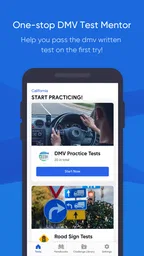
When I’m preparing for a permit test, I want practice that feels relevant to the rules I’ll actually be tested on, not a pile of generic driving trivia. DMV Practice Test Pro 2026 is aimed at that need: it is an Auto & Vehicles study app from PPXTech built around state-specific permit-test practice. That focus is its clearest reason to try it—and also the point I’d check carefully before relying on it.
State-specific practice is useful only when you choose carefully
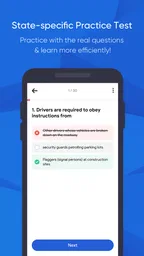
The app’s central promise is straightforward: prepare for a DMV permit exam with questions tied to a particular state. That can be more helpful than a broad quiz app, because traffic rules, signs, and test expectations can vary from state to state. Before studying, I would make sure the selected state matches the one where I plan to take the exam. A mismatched state can make even a convincing practice session less useful.
That simple check matters especially if you have moved recently, are studying while traveling, or are helping someone else prepare. I’d treat state selection as part of the study setup, not a setting to tap past quickly. If I were sharing a phone with a family member, I’d confirm the state again before each person starts a session rather than assume the previous choice still applies.
The app is free, rated for Everyone, and has reached over 500,000 installs. Its average rating is 4.7 from 955 ratings, with 203 written reviews. Those figures suggest that many people have found it worth trying, but they don’t tell me whether the questions match a particular state’s current handbook or whether a practice result predicts exam readiness. I’d use the app as a study aid, not as an authority that replaces official preparation material.
What it can add to a study routine
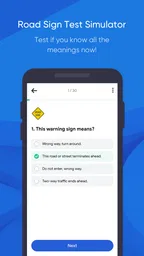
A useful way to approach a practice-test app is to use it for retrieval: answer a question without looking up the rule first, then check the handbook when the reasoning is unclear. This is more informative than repeatedly rereading material that already feels familiar. I’d keep a short note of the topics I miss—such as right-of-way or road signs—and use those mistakes to decide what to review next.
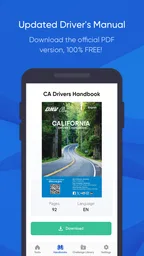
For example, imagine a learner has ten minutes while waiting for a ride. A short practice session can reveal whether a certain group of rules still causes hesitation. If a question exposes a gap, the next step is not simply to repeat the same quiz until the answer feels familiar; it is to find the relevant explanation in the state’s official driver handbook, then return later to see whether the rule can be applied without guessing. That loop makes a basic quiz tool more useful without assuming it provides a complete course.
I also like the idea of using practice to spot patterns rather than chase a perfect run. One wrong answer may be a careless tap, while repeated mistakes around the same subject point to something worth revisiting. A small paper or phone note with the topic and the rule I need to check can turn scattered quiz attempts into a focused plan.
Trust starts with keeping the app in its proper role
For a permit-test app, trust is less about polished presentation and more about whether I can tell what I’m using it for and make sensible choices while studying. The state-specific focus gives me a concrete first check: choose the right jurisdiction, then compare any uncertain rule with the corresponding official handbook. I would not treat the app’s name or a strong rating as proof that every question is current or comprehensive.
The app is listed at version 1.4.0 and requires Android 7.0 or later. It was released on May 19, 2023. That gives a reader useful context for compatibility and the app’s history, but neither a version number nor a release date guarantees that every state’s materials have been updated on a particular schedule. For rules that could affect a real driving decision, I’d verify the wording against official state material rather than rely on a quiz answer alone.
That distinction is important because practice questions simplify. A test may present a short scenario, while real roads involve visibility, traffic, signs, and judgment all at once. Passing a quiz session can show that I recognize a rule in that format; it cannot demonstrate that I have mastered every situation on the road. I’d use the app for exam preparation, not as a substitute for supervised driving or formal instruction.
Privacy and control: make choices deliberately
I take a cautious approach to any app that I use for studying, particularly if it asks for access or account details that seem unrelated to the task. I would review the permission prompts shown on my own device and consider whether each request makes sense for a permit-test practice tool. If a prompt feels unnecessary, I’d pause before granting access rather than tap through automatically.
I would also avoid entering personal information unless the app clearly explains why it is needed and I’m comfortable with that reason. A study session should be easy to keep separate from sensitive details such as identity documents or account credentials. If I’m using a shared device, I’d close the app when finished and make sure another learner can start with the correct state and their own study plan.
These are practical precautions, not claims about particular permissions, data collection, or account controls. I don’t assume that an app is private simply because it is educational, nor do I assume it collects sensitive information without evidence. My advice is to use the privacy information and permission choices presented on the device and in the app store, and to grant only what you understand and want to allow.
Where it fits among other ways to study
Compared with reading a handbook alone, a practice-test app can make recall more active and help reveal weak spots quickly. Compared with a general driving quiz, a state-specific approach has a better chance of keeping practice relevant to the learner’s exam. But the handbook remains the better place to settle questions about exact rules, exceptions, and official wording. I’d use both rather than asking one to do the other’s job.
It may also be less suitable for someone who learns best through detailed explanations, guided lessons, or instructor feedback. A quiz is strongest when the learner already has material to check and can recognize when an answer needs further verification. If I were starting from scratch and felt lost on basic road rules, I’d begin with the official handbook or a structured course, then use practice tests to check retention.
The developer, PPXTech, identifies this as a DMV Practice Test. That concise purpose makes it easy to understand what kind of tool it is, but I would still judge the experience by whether the selected state is right and whether my mistakes lead to useful review. The app’s 4.7 average is encouraging as a sign of broad user satisfaction, though I’d weigh my own learning needs more heavily than a rating when choosing how to prepare.
Who I’d recommend it to—and who should look elsewhere
I’d recommend giving it a try if you want a free, focused way to quiz yourself for a state permit exam and you’re comfortable checking unclear answers against official material. It seems especially practical for short study windows: a learner can use a spare moment to test recall, identify a topic to revisit, and return to the handbook with a specific question in mind.
I’d be more cautious if your test is soon and you have not yet read the state handbook, if you need detailed teaching rather than practice, or if you cannot confirm that the app’s selected state matches your exam. In those situations, the official handbook or an instructor should come first. A practice result is only useful when the underlying rules are the right ones and the learner understands why an answer is correct.
My overall view is positive but measured. DMV Practice Test Pro 2026 has a clear, practical role: it can help turn permit-test preparation into active self-checking instead of passive rereading. I’d use it as one part of a study routine, keep personal-data decisions deliberate, and verify important rules with the state handbook. That balance lets the app be helpful without asking it to promise more than a practice tool can deliver.
What we like
- Practice questions help reinforce road rules and traffic signs.
- Explanations can clarify why an answer is correct.
- A focused format makes short study sessions easy.
- Progress tracking can help identify topics that need more review.
- Useful for preparing before taking a state knowledge test.
What could be better
- Question coverage may vary by state and license type.
- Practice results do not guarantee passing the official exam.
- Some content may require an internet connection.
- The 2026 label may not reflect every recent state rule change.
- Ads or paid features may interrupt the study experience.





