


CashCow - Play & Earn Money review
 Analysis by Appsdrops
I can see the appeal of CashCow right away: it gives spare moments a small purpose by pairing mobile games with the possibility of rewards. In my view, that makes it more interesting than opening a game at random, but it also changes how I judge the playtime. The key question is not whether a game is entertaining for a few minutes; it is whether the reward routine still feels worthwhile after the first burst of curiosity wears off.
CashCow - Play & Earn Money is a free lifestyle app from CashCow Play & Earn. Its central idea is straightforward: play mobile games and work toward rewards that can be redeemed through PayPal or gift cards. The app has an average rating of 4.3 from around 16,000 ratings, with roughly 3,800 written reviews and over 500,000 installs. That level of uptake suggests plenty of people are willing to try the format, though popularity alone cannot tell you whether it will suit your habits.
Why the first week feels appealing
The first few sessions are easy to understand. Instead of treating every casual game as an isolated distraction, I can approach play as a small activity with a visible goal attached. That can make a quiet wait, a short break, or an evening wind-down feel a little more intentional. The attraction is less about replacing a proper income and more about giving leisure time a modest extra incentive.
That distinction matters. CashCow is best approached as a rewards app that happens to involve games, not as a reliable way to earn money on a schedule. A reward may feel satisfying when it comes from time I would have spent playing anyway. It feels much less compelling if I rearrange my day around it or expect the app to cover regular expenses. Keeping that expectation modest is probably the most useful way to enjoy it.
For a newcomer, I would make the first sessions a test rather than a commitment. Try the app during time you already set aside for casual play, then notice whether the process feels enjoyable enough to repeat. The important question is not just whether a reward is available, but whether the route toward it suits the way you like to use your phone. If the reward element makes an otherwise ordinary game more engaging, that is a genuine benefit; if it makes play feel like a chore, the novelty may not last.
Small windows of play work best
A realistic use case is waiting for a friend at a café or taking a short break between tasks. I can open a game, play for a while, and stop when the break is over, rather than letting the app dictate how long I stay. This approach also helps me separate casual entertainment from a promise of meaningful earnings. The reward is an extra, not a reason to keep extending a session when I would rather be doing something else.
One practical tip is to decide in advance how much attention the app gets in a day. That boundary is useful because reward systems can make small actions feel more important than they are. If I have a fixed break, I can use it; if I am busy, I can leave the app alone without feeling that I have missed a work opportunity. For people who already enjoy trying mobile games, that low-pressure arrangement is more appealing than treating every available moment as earning time.
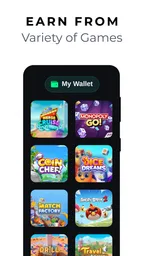
The app is also a better fit for someone who is open to casual game variety than for a player devoted to one particular title. The value comes from combining play with rewards, so the experience is naturally less attractive if I only want to spend time in a favorite game and dislike switching activities. In that case, playing directly through the games I already enjoy—or choosing a conventional rewards app that does not center on gaming—may suit me better.
What changes after the novelty fades
Month-to-month value depends on whether the routine continues to feel like leisure. At first, the idea of being rewarded can make ordinary gaming feel fresh. Later, I would judge CashCow by a simpler standard: would I still open it if I were not curious about the reward mechanism? If the answer is yes because I enjoy the play itself, the app has a plausible place in my routine. If the answer is no, the reward may not be strong enough to sustain attention on its own.
This is where it differs from the usual alternatives. A standard casual game is judged mainly on whether its play is fun, while a conventional survey or task-based rewards app asks me to complete activities that are not games. CashCow sits between those models: it makes gaming the route to rewards. That is a useful fit for people who would rather play than answer questionnaires, but it will not appeal as much to someone who wants the most direct, predictable task-based experience.
I would also avoid comparing its rewards with wages. The time is still leisure time, and the experience is better when I treat any eventual cash-out or gift card as a bonus. This is not merely cautious wording; it changes the decision. If a person needs a dependable source of money, an entertainment app is the wrong tool. If they want a low-stakes reason to sample mobile games, the same arrangement can be perfectly sensible.
When deciding whether to keep using it, I would pay attention to how often I genuinely want to play, not how often I feel nudged by the prospect of rewards. That small distinction can prevent the app from taking over a routine without delivering much enjoyment in return. It also makes it easier to tell whether the app is adding value to free time or simply giving that time a new label.
Keeping the routine light
CashCow’s maintenance burden is modest if I keep it in its proper role: an optional companion for casual play. I do not need to build a daily schedule around it or treat it like a second job. A useful workflow is to open it when I have unclaimed downtime, choose whether I feel like playing, and close it when I am ready to move on. That keeps the app from turning every quiet moment into a decision about maximizing rewards.
For a fair personal test, I would give it several relaxed sessions rather than judging it from one quick visit. I would also note whether I enjoy the games involved, whether I am comfortable with the time I spend, and whether the reward goal still feels worthwhile after the initial curiosity passes. Those are more useful measures than simply counting how many times I open the app. They focus on the lasting value that matters in everyday use.
One trade-off is that reward-focused play can shift attention away from the game itself. I may start thinking about progress toward a payout rather than whether I actually like the activity. If that happens, I would take a break instead of pushing through out of obligation. A rewards app should make spare-time gaming feel a little more satisfying; it should not make leisure feel like unpaid work.
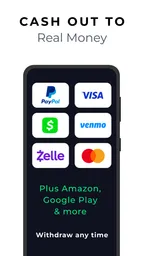
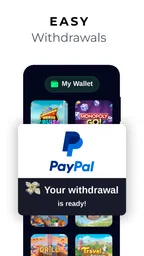
There is also a practical boundary around redemption expectations. CashCow presents PayPal and gift cards as ways to cash out, which gives the reward goal a familiar shape. Still, I would not plan a purchase or budget around rewards I have not actually redeemed. It is wiser to regard any eventual payout as a pleasant extra and to check the app’s current redemption details before making decisions based on them.
Where fatigue can set in
The biggest risk is repetition. If the games stop holding my interest, the reward layer may not be enough to bring me back. Another source of fatigue is turning every session into a calculation: whether the time is worth it, whether I should keep going, or whether I am falling behind some imagined target. That mindset can drain the fun faster than the games themselves.
My advice is to keep the app out of moments when I need focused attention. A quick game during genuine downtime is one thing; repeatedly checking an earning app while working, studying, or spending time with someone is another. The rewards are not worth interrupting something more important. Setting a simple personal limit—such as using it only during breaks—makes the experience easier to manage and gives me a clean way to stop.
CashCow is marked Mature 17+, so it is not an app I would recommend for younger users. That age designation is an important part of deciding who should install it, alongside the more obvious question of whether the person enjoys casual gaming. For an adult who wants a small reward attached to occasional play, the concept may fit. For someone seeking a child-friendly game or a serious income tool, it does not.
The app’s current version is 1.86.0, and it runs on Android 7.0 or later. Those details make it easier to check basic compatibility before installing. They do not change the more personal question of fit: whether I like the kind of game-based routine it encourages and whether I can keep it from competing with higher-value uses of my time.
Who should make room for it?
I would recommend CashCow to adults who already play casual mobile games and would enjoy having a reward goal attached to that habit. It is especially suitable for people who have scattered pockets of free time and prefer games to surveys or small non-game tasks. The app’s lifestyle classification makes sense in that context: it is less about a single deep game and more about shaping an everyday leisure routine.
I would skip it if I dislike reward-based play, want guaranteed earnings, or tend to keep going once an app gives me a target. It is also a poor match for anyone who would rather invest time in a long-form game without thinking about payouts. In those situations, a regular game offers a more direct entertainment experience, while a task-based rewards service may be a better choice for someone who values directness over playing.
The free price makes trying it relatively low-commitment, but free does not mean costless in every practical sense: my attention and time still matter. I would install it only if I am comfortable spending some leisure time on mobile games and can treat rewards as optional. That is a more grounded expectation than counting on the app to turn ordinary phone use into dependable cash.
A lasting place, with realistic expectations
My long-term verdict is cautiously positive. CashCow has a clear appeal for casual players, and its reward-and-game combination offers a different reason to open a mobile game than simply filling time. Its average rating of 4.3 points to a broadly favorable response, but the right individual test remains whether the play itself stays enjoyable. A large audience cannot make a routine worthwhile if it does not match someone’s tastes.
I would give it a small, optional place on my phone rather than make it a daily obligation. Use it during spare time, keep expectations about earnings modest, and stop when the games feel repetitive. If that balance holds, it can add a little purpose to casual play without needing to become a major habit. If the reward chase starts to outweigh the fun, deleting it or switching back to a conventional game is a perfectly reasonable choice.
What we like
- The app is free to download.
- Games offer a simple way to earn rewards during spare time.
- A range of game options can keep the experience varied.
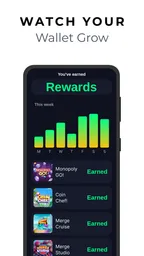
- Progress and reward information is shown in the app.
- It can be an easy introduction to play-to-earn apps.
What could be better
- Earnings may be small compared with the time spent playing.
- Rewards can depend on completing specific offers or milestones.
- Some games may require frequent engagement to qualify for rewards.
- Cash-out methods and eligibility may vary by location.
- Reward availability and redemption terms can change over time.





