
Boat Trader review
 Analysis by Appsdrops
When I’m considering a boat, the hardest part is often getting a useful view of the market without bouncing between scattered listings and general classified ads. Boat Trader gives that search a dedicated home: it is an Auto & Vehicles app from Boats Group LLC, built around people buying or selling boats. I see its main value in making boat-specific browsing easier to approach, rather than in promising that a listing alone can settle a major purchase.
What free access is worth
Boat Trader is free to download, so I can try it as a research tool without paying an upfront app price. That matters when I’m only beginning to compare boat types or checking whether a particular kind of boat appears in the market. Free access makes exploration low-commitment; it does not, by itself, establish whether every transaction or service connected with a listing is free.
I would keep that distinction in mind as a buyer or seller. The app’s price is free, but a boat purchase is a substantial decision, and the app should be treated as a way to discover and assess possibilities—not as a guarantee of the final cost, condition, or terms. If a listing interests me, I’d still verify the details directly and account for the separate costs involved in owning a boat.
The app has a 4.6 average from around 21,000 ratings, and it has passed a million installs. Those figures suggest that plenty of people find the service worth trying, but they don’t tell me whether a particular boat is right for my needs. I’d use the broad popularity as context, not as a substitute for checking a seller’s claims or inspecting a vessel.
Making a boat search more manageable
The strongest reason to open Boat Trader is focus. A general classifieds app can be useful for a wide range of goods, but its broad scope may leave a boat shopper sorting through irrelevant material or adapting generic search habits to a specialized purchase. A boat-centered app gives me a more natural place to start when the question is specifically, “What boats are available?”
That focus is especially useful before I know exactly what I want. I might be comparing a compact boat for occasional outings with a larger option that better suits regular trips. Browsing listings can help me see what kinds of choices are actually being presented, and can turn a vague wish into a more practical shortlist. I would still research each type independently, but the app can make the discovery stage less scattered.
A useful workflow is to decide on a few non-negotiables before browsing: the kind of boating I plan to do, how many people need to fit, and which compromises I can accept. Then I can use the available listings to test whether those expectations are realistic. This is more productive than scrolling without a plan, especially when visually appealing boats can distract from the basic question of whether they suit my intended use.
For example, if I’m hoping to find a boat for family days on the water, I’d note the practical requirements first and compare listings against them. If one option looks attractive but appears not to fit the use I have in mind, I’d remove it from consideration rather than let a polished presentation decide for me. The app’s value here is not making the decision; it is giving me a focused set of possibilities to evaluate.
The same browsing can help a seller think through how buyers might approach the market. Looking at comparable listings can provide a sense of what information shoppers encounter and what kinds of alternatives they may be weighing. I would treat that as informal market research, not as proof that a particular asking price is correct. Differences in condition, equipment, location, and timing can make two apparently similar boats poor comparisons.
Use listings to build a shortlist, not a verdict
One non-obvious advantage of a focused marketplace is that it can help expose gaps in my own plan. If I repeatedly find that the boats I’m considering do not match my budget or intended use, that is a cue to revisit my requirements before contacting sellers. It may be better to adjust the kind of boat I’m looking for than to spend time pursuing listings that were never a realistic fit.
I would also compare listings in batches rather than judging each one in isolation. A simple note of the boat type, the features that matter to me, the questions I need answered, and the reasons I ruled it out can prevent me from circling back to the same attractive but unsuitable option. This small habit is particularly helpful when a purchase involves many tradeoffs and browsing sessions are spread across several days.
Before making contact, I’d prepare specific questions prompted by the listing. I would ask for clarification on anything that affects whether the boat suits my intended use, and I’d distinguish confirmed information from assumptions I made while browsing. That turns a casual inquiry into a more useful conversation and makes it easier to compare the response with other candidates.
Where the convenience has limits
A marketplace can bring options together, but it cannot remove the uncertainty that comes with buying a boat. Listings are the starting point for due diligence, not a replacement for it. I would not treat an appealing description or a convenient search result as confirmation of a vessel’s condition, history, or suitability. Before committing, I’d verify important claims with the seller and arrange whatever independent checks make sense for the purchase.
There is also a tradeoff between a specialized search and a complete picture of the market. Boat Trader’s focus is a strength if I want to look for boats, but it is not necessarily the only place I should check. A buyer may benefit from comparing other marketplaces, local dealers, or direct recommendations, depending on the type of boat and the area being searched. If I need an exhaustive view, I would not rely on one app alone.
Another limitation is that an app can make browsing feel more decisive than it is. A list of candidates is not the same as a shortlist of verified options, and an interesting listing can disappear from consideration for reasons that have nothing to do with its quality. I’d avoid delaying essential research while waiting for a perfect match, but I’d also resist rushing into a purchase simply because one listing looks compelling.
For sellers, the app can be a useful channel for presenting a boat to people already interested in boats. Still, appearing in a focused marketplace does not guarantee a sale or tell me how quickly a listing will attract a suitable buyer. I’d regard it as one avenue for reaching an audience and continue to think carefully about the accuracy and completeness of the information I share.
Who is most likely to get value
I’d recommend trying Boat Trader if I’m actively shopping for a boat, still exploring what kind might fit, or preparing to sell and want to see how boat-focused listings are presented. It makes the most sense for someone who will use the listings as a research starting point and is willing to follow up with careful questions. Because it is free to download, it is also reasonable for a curious first-time shopper to explore before deciding whether a dedicated boat search is useful.
It is less suitable for someone who expects the app to independently validate a seller, determine whether a boat is seaworthy, or settle the right price. Those are decisions that need evidence beyond a listing. I’d also look elsewhere or broaden my search if I’m seeking a very specific local option and do not see suitable candidates, rather than assuming the app contains every boat available.
Boat Trader is available to everyone, and it was released on August 14, 2018. The current version is 1.32.1, with Android support from OS 9. That gives Android users a practical compatibility point to check before installing. The age rating is Everyone, which makes the app suitable for a broad audience, though a boat purchase itself still calls for adult judgment and careful handling of seller communications.
My verdict: useful for discovery, not due diligence
After weighing what it offers, I see Boat Trader as a worthwhile, low-cost first stop for people who want a boat-specific place to browse. Its clearest benefit is focus: it helps me organize the search around boats rather than treating them as just another category in a general classifieds feed. That can save effort during early research and give buyers and sellers a more relevant setting for exploring options.
The key is using it with realistic expectations. I would make a shortlist, compare candidates against a clear plan, ask targeted questions, and verify important details outside the listing before making a decision. If I only wanted a general marketplace, or expected an app to certify a boat’s condition, this would not be enough on its own. For someone who wants to begin a focused search without paying to download the app, though, it is an easy option to try—and a useful companion to, not a replacement for, careful research.
What we like
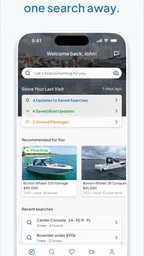
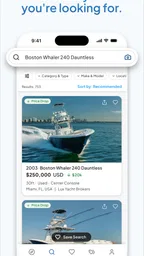
- Search filters help narrow listings by boat type and price.
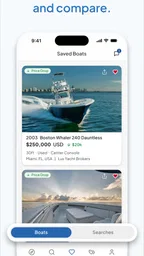
- Saved searches make it easier to revisit boats that match your needs.
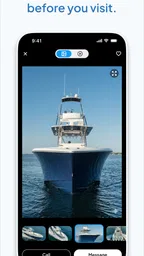
- Listing photos provide a useful first look at boats for sale.
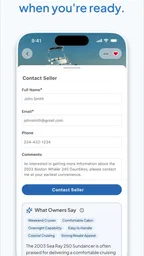
- Seller contact options make it convenient to ask about a listing.
- Location-based browsing helps find boats in nearby areas.
What could be better
- Listing details can vary depending on what each seller provides.
- Some listings may be outdated or no longer available.
- Prices and listing quality depend on individual sellers.
- The app is most useful in areas with plenty of active listings.
- Contacting sellers may require sharing personal information.





