






BestPlay: Play Games & Earn review
 Analysis by Appsdrops
I can see the appeal of BestPlay right away: it turns short mobile-game sessions into a chance to work toward rewards, rather than asking me to choose between casual play and a small payoff. The important question, though, is what happens after the novelty of earning wears off. I’d treat it as a lightweight entertainment app to try during spare moments, not as a dependable source of income or a replacement for the games I already love.
What makes the first week appealing
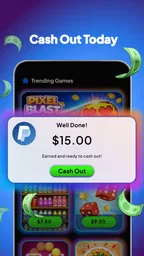
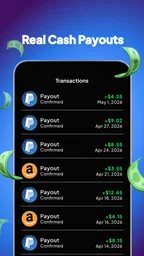
BestPlay is a free entertainment app from Bestplay. Its basic idea is easy to grasp: play casual games and build toward rewards that can be redeemed through PayPal or gift cards. That simple loop makes the first session approachable, especially if you already reach for quick phone games while waiting for a ride, taking a break, or winding down in the evening.
The early appeal is less about mastering one deep game and more about having a reason to sample casual play. Instead of deciding which standalone title to open, you can use BestPlay as a doorway to bite-sized entertainment with a reward goal attached. That framing may make a few spare minutes feel more purposeful, provided you enjoy the games themselves and don’t focus solely on the payout.
I would set expectations carefully from the start. “Earn rewards” sounds exciting, but it is not the same as earning a reliable wage. The app is best approached as entertainment with a possible bonus. If you install it expecting meaningful money for minimal effort, the gap between that expectation and the reality of casual-game rewards could make the experience feel disappointing quickly.
The app has a 4.6 average from around 472,000 ratings, with roughly 26,000 written reviews and over 10 million installs. Those figures suggest that many people have tried it, but they don’t tell me whether the reward pace or game selection will suit your habits. I’d use the first few sessions to answer those personal questions instead of assuming popularity guarantees a good fit.
A useful first-week test is to play only when you would otherwise have opened a casual game. Notice whether the activity feels enjoyable on its own, whether progress toward a reward is understandable, and whether you naturally want to return. This keeps the app in perspective: it should add a little structure to downtime, not create a new obligation to keep tapping.
Make the reward loop work for your routine
For a realistic example, imagine you have ten minutes before a meeting or while waiting for dinner. BestPlay can make sense in that window if you’re happy to spend it on a light game and treat any reward progress as a secondary benefit. It is less suitable when you have a fixed amount of time and are counting on reaching a particular cash-out threshold by the end of it.
One practical tip is to decide in advance how long you’re willing to play, rather than letting a reward target dictate the session. That small boundary helps prevent “just one more round” from eating into a break. It also makes it easier to judge whether the app offers value in your actual day, rather than only when you’re caught up in the initial novelty.
Another useful habit is to check the redemption route that matters to you before investing much time. PayPal and gift cards are the stated options, but your preference may depend on whether you want flexible spending or a particular retailer’s credit. Thinking about the destination first makes the reward feel concrete and helps you decide whether the app’s loop is worth keeping in your rotation.
Does it retain value month to month?
For long-term use, I’d judge BestPlay less by the excitement of its first reward and more by whether it remains an easy, pleasant choice for short breaks. A casual reward app can earn a place on a phone when it offers a repeatable routine without demanding planning. The value is modest but real if you enjoy the play and appreciate having a small goal to work toward.
The app’s lasting appeal will depend on your tolerance for repetition. Casual games are designed to be easy to enter, which is useful when you only have a few minutes, but that simplicity can also make sessions feel similar after a while. If you need new mechanics, a compelling story, or a strong sense of progression to stay interested, BestPlay may feel thin compared with a dedicated premium or story-led game.
I’d also separate two kinds of value: enjoyment and reward. Enjoyment is immediate and personal; a reward is a longer-term incentive whose usefulness depends on your patience and preferred redemption method. If you only value the second, the app may become a chore. If you like casual play anyway, the incentive can be a pleasant extra rather than the sole reason to open it.
Compared with ordinary free casual games, BestPlay adds a reward-oriented reason to play, but a standalone game may be the better choice if you want a polished experience centered on one specific style. Compared with paid games, the trade-off is different: you avoid an upfront purchase, yet you should be more cautious about treating play time as something with guaranteed monetary value. I’d pick the option that best fits what I want from the session, not simply the one that advertises a reward.
The app is rated Mature 17+, so it is not a suitable choice for younger players. That matters even if the games look casual: parents should consider the age rating before installing it on a shared device or letting a teenager use it. For adults who want light entertainment, the rating is a straightforward part of deciding whether it belongs on their phone.
Keeping it useful without turning it into work
My best advice for month-to-month use is to make BestPlay a “when I feel like it” app, not a daily streak to protect. If you open it during idle moments and enjoy the session, it can remain a low-pressure option. If you find yourself checking progress out of obligation, or playing past the point of enjoyment just to chase a redemption, that is a sign the incentive has started to outweigh the entertainment.
It can help to compare your experience with your usual alternative after a week or two: did you enjoy these sessions more than the free games you already play, or did the reward angle merely keep you there longer? That distinction is important. An app can successfully encourage repeat use without necessarily being the most satisfying use of your leisure time.
For someone who already likes trying casual games, the variety implied by the app’s format can be a useful change of pace. For someone loyal to one particular puzzle, strategy, or arcade title, switching away may feel unnecessary. There is no advantage in forcing a new routine just because the app connects play with rewards; the strongest reason to keep it is that the play itself fits your tastes.
Maintenance and the small frictions
BestPlay is currently at version 3.7.1 and requires Android 7.0 or later. That makes the basic compatibility check simple for Android users: compare the device’s system version before downloading. If you use iOS, check the app store on your device for compatibility before committing, since operating-system requirements can differ by platform.
Maintenance is also about attention, not just software. Reward-oriented apps ask you to keep track of progress and make choices about when to redeem. I’d avoid letting those checks become a frequent interruption. A brief review of your progress at the end of a session is more sensible than repeatedly leaving a game to inspect the reward goal.
Before spending a lot of time, get comfortable with how the app presents progress and redemption. A clear mental picture of what you are working toward makes the experience easier to evaluate. If you find the path confusing, or if you cannot tell whether you are making progress, pause rather than assuming more play will automatically resolve the uncertainty.
One trade-off is that reward-focused play can change how you judge a game. A simple title that would normally be a pleasant distraction may start to feel like a task once you measure every session by its contribution toward cash or a gift card. I’d take that feeling seriously. The point of casual entertainment is to relax, and no small incentive is worth turning every spare minute into a productivity target.
Where fatigue can set in
The biggest risk is reward fatigue: the moment when the goal stops feeling motivating and starts feeling distant. That can happen if you prefer immediate results or if you don’t enjoy repeating casual activities. I would not install BestPlay for a specific bill, purchase, or deadline. Its role is better understood as optional entertainment that may produce a modest perk over time.
There is also a difference between a game that is fun for a few sessions and one that remains satisfying for months. BestPlay’s appeal may fade if its available play no longer matches your mood, or if you’d rather spend your limited break on a game with deeper progression. That isn’t necessarily a flaw; it simply means the app may be a rotating extra rather than a permanent fixture.
People who dislike reward systems should probably skip it. If you would rather pay for a game once, play without incentives, or avoid thinking about cash-out goals entirely, a conventional casual title is likely a better fit. Likewise, anyone seeking a serious gaming experience should look elsewhere: this is aimed at accessible entertainment, not an involved campaign or competitive destination.
For those who do keep it, I’d suggest a simple personal rule: stop when the session is no longer fun, regardless of how close you feel to a reward. This is a concrete way to prevent the app from turning leisure into a sunk-cost loop. It also gives you a fairer test of whether you genuinely like the games, independent of the promise of a future redemption.
My long-term verdict
BestPlay can earn a small place in a phone’s entertainment folder if you enjoy casual games and are comfortable treating rewards as a bonus. It is free, has a large audience, and offers PayPal or gift-card redemption as a clear reason to try its particular approach. The strongest case for keeping it is a routine of short, enjoyable sessions that would have happened anyway.
I would not make it a mainstay if you need predictable earnings, dislike repetition, or tend to feel pressured by progress targets. In those cases, ordinary free games—or a carefully chosen paid game with no reward loop—may be more satisfying. The right comparison is not “which app pays more?” but “which option makes my downtime feel better without asking too much of me?”
Bestplay’s app is free and was released on February 14, 2025. Those details may help you identify it in the app store, while the Mature 17+ rating is worth checking before installing. My recommendation is to try it with a time limit, pay attention to whether the games hold your interest, and keep it only if the experience still feels worthwhile after the first-week excitement has passed.
In the end, I see BestPlay as a casual-play companion, not a financial tool. It has a clear niche for adults who like low-commitment games and enjoy having a reward in the background. If you keep that boundary in mind, it may provide a pleasant bit of extra motivation; if the reward becomes the whole point, it is probably time to return to the games you enjoy for their own sake.
What we like
- Offers a variety of casual games in one app
- Provides a simple way to discover new games
- Can make short breaks more entertaining
- Rewards give players an extra reason to keep playing
- The interface is approachable for new users
What could be better
- Rewards may require substantial time to accumulate
- Earnings are not guaranteed and can vary by user
- Some rewards may have minimum redemption thresholds
- Game availability can change over time
- Ads may interrupt gameplay or reward collection





