




Advance Auto Parts review
 Analysis by Appsdrops
When I need to check a part before making a trip to the auto store, I want a clear answer more than a flashy shopping experience. Advance Auto Parts is aimed at that practical moment: finding car, truck, and SUV parts, looking for DIY tools, and getting repair help in one place. I see it as a useful companion for owners who like to handle basic maintenance themselves, though it works best when I already know what vehicle I’m shopping for and what problem I’m trying to solve.
How it fits into a repair or parts search
This free auto and vehicle app comes from Advance Auto Parts, Inc., a retailer-focused developer, so its natural strength is connecting a repair need with parts and tools to consider. It is not the same kind of tool as a general car-maintenance log or a mechanic’s diagnostic scanner. I would open it when I’m trying to move from “something needs attention” to “what should I look for?”
The distinction matters. A catalog can help narrow a purchase, but it cannot replace a diagnosis or prove that a repair is within my abilities. If I’m confident about the vehicle and the job, browsing parts in the same context as DIY help can save me from bouncing between unrelated sources. If I only have a vague symptom, I would treat the app as a starting point rather than a definitive answer.
Its standing suggests that plenty of drivers find a reason to keep it around: it has a 4.7 average from around 79,000 ratings, and it has passed the million-install mark. Those figures are useful context, not a promise that every search will fit every vehicle or that every repair guide will suit my skill level.
Speed depends on the question I bring
For a focused search, the app’s purpose is straightforward: I can look for a part or DIY tool without first working through a broad general-shopping app. In practice, the biggest speed gain is likely to come from being prepared. I’d have the vehicle details and the name of the part, or a clear description of the maintenance task, ready before browsing. That reduces the chance of comparing items that look similar but are meant for different applications.
When I’m not sure what a part is called, the experience naturally becomes slower. I may need to identify the issue first, check repair guidance, and then return to the shopping side with a more precise search. That is not a fault unique to this app; parts shopping is unforgiving when a guess is wrong. The sensible workflow is to use the repair help to clarify the job, then verify the part against the vehicle before committing.
I would also avoid treating a quick result as a fitment guarantee. A listing that appears relevant is only useful if it matches the exact vehicle and repair. For a safety-critical component or a job with several similar variants, I’d cross-check the details rather than buying based on a name that sounds close. That extra pause is faster than dealing with a return or a stalled repair.
What changes during a busy repair session
The app is most valuable when a task has several small decisions. Imagine I’m preparing for routine maintenance on a weekend: I need to understand the job, identify the right tools, and make a parts list before leaving home. Keeping those questions together can make planning less fragmented than searching for a repair explanation in one place and shopping in another. It is especially handy when I’m still learning the names of tools and components.
A less obvious benefit is that I can use it before I’m standing in an aisle. I can compare what I think I need with the repair steps, then make a deliberate shopping list instead of buying the first plausible option. That helps reduce impulse purchases and the familiar “I forgot one small item” problem. For a repair involving multiple parts, I’d check the complete job requirements before ordering or making a store run, not just the most obvious component.
On the other hand, a long session may expose the limits of a shopping-and-help app. It can support the research and purchasing stage, but it is not a substitute for a workshop manual, hands-on instruction, or professional judgment when a repair is complicated. If I reach a point where the instructions don’t match what I see on the vehicle, I would stop and reassess rather than push ahead because the app made the task seem manageable.
That is also where the app is less compelling than dedicated alternatives. A vehicle-specific repair manual may offer deeper step-by-step detail, while a diagnostic tool can help investigate a warning or fault in a way a parts catalog cannot. I would use Advance Auto Parts to organize the shopping side and find general repair help, then turn elsewhere when the job calls for detailed technical procedures or diagnosis.
Reliability means checking the match, not just the app
For parts, reliability has two layers: whether the app is usable and whether the item is right for the vehicle. The app’s broad focus makes it a convenient place to begin, but my confidence should come from careful matching, not from the fact that a result appears in a catalog. I’d double-check the vehicle configuration and part description, especially for components that can differ across trims, engines, or model variations.
Repair advice also needs a sensible boundary. DIY help can be reassuring for straightforward jobs, but not every task is appropriate for a first-time owner. If a repair involves serious safety systems, unfamiliar electrical work, or a vehicle that behaves unpredictably, I’d prefer a qualified mechanic over trial and error. The app can help me understand what I might be dealing with; it cannot inspect the car or take responsibility for the repair.
For everyday use, I would keep the app’s role narrow and practical: research, prepare, and shop. I would not rely on it as the only record of maintenance or as a full diagnostic history. Drivers who want service reminders, fuel tracking, or a detailed ownership log may find a dedicated vehicle-management app a better fit. The distinction is useful because it keeps expectations realistic and prevents a parts resource from being judged by tools it is not meant to replace.
Stability, recovery, and a sensible fallback
I can’t responsibly promise a particular loading speed or say how smoothly it behaves on every phone. App performance depends on the device, connection, and the specific task, so I would judge it by whether it gets me through a real search without unnecessary friction. If a page or result takes longer than expected, I’d first check the connection and retry before assuming the app itself has failed.
For a repair planned in advance, a useful recovery habit is to keep the part name, vehicle details, and any important instructions somewhere accessible outside the shopping session. That way, if I need to switch apps or revisit the task later, I’m not starting from memory. I’d also confirm the final part choice before making a trip, rather than relying on a half-finished search while already on the road.
In heavy use, the most demanding part is likely to be the decision-making, not the idea of browsing a parts app: comparing candidates, checking fit, and reading enough repair guidance to understand the task. I’d avoid multitasking through those checks while driving or working under time pressure. The app is more useful as a planning tool at home or in a safe place than as a hurried answer in the middle of a roadside problem.
Who should install it—and who may prefer something else
I’d recommend Advance Auto Parts to drivers who buy their own maintenance parts, take on approachable DIY jobs, or want repair guidance close to their shopping research. It is a particularly sensible option for someone who knows the vehicle they own and wants to plan a parts run with fewer disconnected searches. The Everyone age rating makes its intended audience broad, while its practical value still depends on whether the user is comfortable making vehicle-related decisions.
I’d be less likely to recommend it to someone who expects a full diagnostic system, a comprehensive maintenance diary, or highly detailed workshop procedures. Those needs point toward other tools or professional service. Likewise, if I rarely buy parts myself and always leave repairs to a mechanic, the app may not earn a place on my home screen; a quick search when a specific need comes up could be enough.
It is free, which makes trying it a low-commitment choice, and the current version is 5.8.1. It was released on March 31, 2020, and requires Android 8.0 or later. Those details help set basic compatibility expectations, but they do not tell me how a particular device will feel in day-to-day use. I’d install it on a supported phone, try a real parts search, and decide whether its workflow suits the way I maintain my vehicle.
My performance verdict
My overall view is that this is a focused convenience app rather than an all-in-one car-care solution. Its strongest use is bringing parts shopping, DIY tools, and repair help into the same practical task: preparing to fix or maintain a vehicle. I find that most valuable when I have a clear goal and can take time to confirm fitment before buying.
The trade-off is that convenience can make a complicated repair look simpler than it is. I would not use a product listing as a diagnosis, or general guidance as a substitute for expert help when the work is beyond my experience. For a routine job, the app can help me plan and shop with more confidence; for deep troubleshooting or specialist repairs, a manual, diagnostic tool, or mechanic is the better next step.
If that boundary sounds right for you, I think it is worth keeping available. Advance Auto Parts has a strong audience response, with around 9,100 written reviews alongside its rating record, but the deciding question is personal: do you want a convenient parts-and-DIY resource, or a broader tool for managing the whole life of a car? I’d choose it for the first job, use careful checks to avoid mismatched parts, and look elsewhere when the repair calls for more than shopping support.
What we like
- The store locator helps you find nearby Advance Auto Parts locations.
- The app lets you check whether a product is available at a chosen store.
- Account features make it easier to view rewards and purchase details.
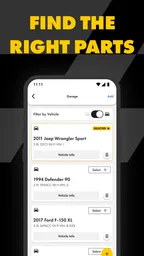
- Saved vehicles help you find parts that fit your car.
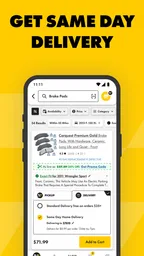
- Order tracking keeps delivery status easy to check.
What could be better
- Product compatibility details may not cover every vehicle configuration.
- Inventory shown in the app may differ from what is available in store.
- Some purchases may require an account for a smoother checkout.
- The app is less useful if there are no nearby Advance Auto Parts stores.
- Search results can take extra steps to narrow down to the right part.





