

Zoo Prank: Crazy Animals review
 Analysis by Appsdrops
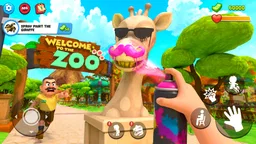
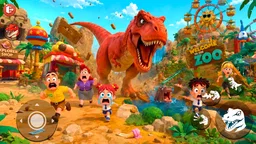
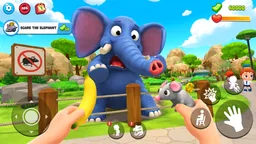
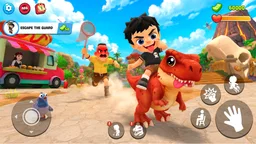
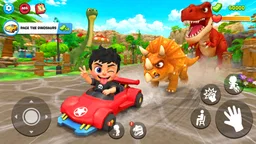
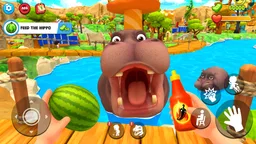
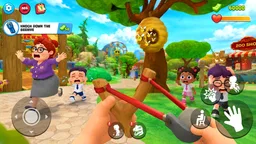
I find Zoo Prank: Crazy Animals most appealing as a playful simulation for people who enjoy mischief more than management. Its central idea is to move around a zoo and stir up comic trouble for the animals, rather than build a serious wildlife park or follow a realistic animal-care routine. That gives it a clear, silly identity, but it also means the game is best approached as light entertainment, not as a deep simulation.
What the zoo-prank premise is good for
In my experience, this kind of setup works best when I want a quick change of pace: the zoo gives the jokes a setting, and sneaking around makes the mischief feel like the point rather than a side activity. The humor is likely to suit players who enjoy cartoonish antics and playful rule-breaking. If you prefer calm decorating, detailed animal management, or a serious simulation of running a zoo, the premise may not be your idea of fun.
The game is listed as a simulation, though its focus is more prank-led than the usual simulation fare. Traditional zoo games often ask you to plan habitats, manage visitors, or balance resources. Here, the hook is the encounter between a sneaky player and animals in a public space. That difference is useful to know before downloading: you are choosing comic trouble, not a full park-building substitute.
I would recommend trying it when you have a short break and want something easy to understand in concept. It also has a natural appeal for younger players who like animal characters and goofy situations, while the Teen content rating is a reminder that it is not presented as a game for every age. Parents should use that rating as a starting point and make their own call about whether the tone suits their child.
Small sessions suit the idea
A practical way to judge the game is to treat each play session as a handful of comic attempts rather than expecting a long, layered campaign. The premise suggests fun comes from trying to create a moment of surprise, so I would focus on observing the surroundings before making a move. Taking a beat to notice where the animals are and what seems possible can make the prank feel more deliberate than simply tapping through in a hurry.
That is also a useful approach if you are playing on a phone during a commute or while waiting for something. A short session can be satisfying if the game lets you get to the joke quickly; if you prefer long-term goals and a sense of steady mastery, a more systems-heavy simulation will probably hold your attention better. The available description establishes the prank premise, but it does not establish how levels, objectives, or progression are structured, so I would avoid assuming a particular campaign format.
Making the most of the mischief
One non-obvious tip for a prank game is to resist the urge to repeat the same kind of action immediately. Even when the broad goal is comic disruption, a little variation in approach can keep the idea fresh for you. I would try to read each animal encounter as its own setup: pause, look for a safe opening, then commit to the gag. That makes the experience feel more like playful timing than random button pressing.
Another useful habit is to set a personal stopping point. Games built around short jokes can be enjoyable in bursts, but the novelty of a single premise may wear thin if you try to stretch it into a long session. If a prank lands, enjoy it and take a break rather than expecting every attempt to be funnier than the last. That is not a criticism of this game alone; it is the trade-off that comes with a narrowly focused comedy concept.
Progress, pressure, and what to expect
The title is free to download, and its current version is 1.2.6. In-app purchases are listed at $0.99 to $1.49 per item. That is the confirmed spending context I would keep in mind before installing: the entry cost is free, while optional purchases are part of the game’s commercial setup. I would not treat those prices as evidence that a purchase is necessary or that it changes progression; those details are not established here.
For a fair first look, I would play without spending and decide whether the core prank loop is entertaining enough on its own. If the game presents a purchase prompt, take a moment to consider whether it is for something you genuinely want rather than tapping through automatically. The small stated price range may make an individual item seem minor, but repeated purchases can still add up, so a simple personal limit is sensible—especially if a child is using the device.
There is no verified detail here about timers, energy systems, unlock conditions, or how quickly the game progresses. I therefore would not promise a pressure-free experience, nor claim that it uses a particular system to keep players returning. The sensible expectation is narrower: it is a free simulation with a prank-focused premise and optional in-app purchases. If you need to know exactly what an item buys or whether an activity is gated, check the purchase screen carefully before confirming anything.
Fairness and the spending decision
For competitive fairness, the key question is whether purchases affect performance against other players. No multiplayer mode, leaderboard, or purchase-based advantage is confirmed here, so I cannot responsibly describe the game as pay-to-win—or guarantee that spending is irrelevant to competition. If you are choosing it specifically to compete with friends, look for clear in-game information about how scores or shared challenges work before investing time or money.
That uncertainty matters less if you want a solo comedy game. In that case, the more useful test is whether the jokes and animal encounters keep you amused without buying anything. I would not spend simply because an item is offered; I would first establish that the basic experience is a good fit. The listed price range gives a boundary for individual purchases, but it does not answer what each item provides or whether purchases are consumable, permanent, or progression-related.
Compared with a conventional zoo-management game, the trade-off is straightforward. A management title usually offers planning and long-term organization; Zoo Prank: Crazy Animals is centered on sneaking and comic disruption. Compared with a general prank or slapstick game, its zoo-and-animal setting is the distinguishing angle. Choose it for that specific flavor, not because you expect it to replace a broad simulation with many different systems.
Who will enjoy it—and who may not
I can see this working for players who like goofy animal humor, prefer a simple premise, and are happy to judge a game by the fun of its moment-to-moment antics. It may also suit someone who wants a low-commitment download to try between other games. Its 10 million-plus installs and 4.5 average rating suggest that many players have taken an interest, though those figures alone cannot tell me whether its humor or pacing will suit you personally.
I would steer away if you want realistic animal care, thoughtful zoo planning, a detailed story, or an established competitive scene. It is also not my first recommendation for someone who dislikes games built around teasing or provoking animals, even when the treatment is framed as comedy. If you are after a more peaceful experience, choose a simulation where animal welfare and habitat design are the main activities rather than a backdrop for pranks.
The game is developed by Unicorn Studio Official and is free, with the stated optional purchases. Its release date is Jun 11, 2026, and it requires Android 7.1 or newer. Those details make it easier to check basic compatibility and cost, but they do not predict how smoothly it will run on a particular device. I would install it only if the device meets the requirement and the mischievous tone sounds appealing.
What I would check before committing
If you are unsure whether to keep playing, give yourself a simple test: does the first handful of encounters make you smile, and do you want to try a different approach afterward? If yes, the core concept is doing its job for you. If the jokes feel repetitive almost immediately, more time or an optional purchase is unlikely to fix a mismatch in taste. That is a more useful measure than judging the game by its broad simulation label alone.
For families, I would check the Teen rating together with the actual tone on the device before handing it over. The rating is a guide, not a personal recommendation for every household. For anyone concerned about spending, remember that the game is free to start and purchases are priced per item within the listed range; use device-level purchase controls if a child might play. Those are practical safeguards, not claims about the game’s own account or payment policies.
One final point: the app has a current version of 1.2.6, but that does not tell me what changed in it. I would not infer new animals, levels, or balance adjustments from a version number alone. If you are returning after time away, look at the in-game notices or app-store update notes for specifics instead of relying on assumptions. That keeps expectations grounded and avoids mistaking a version label for a feature list.
My verdict on the prank-first approach
Overall, I see Zoo Prank: Crazy Animals as a narrowly focused choice with an easy-to-grasp joke: sneak around a zoo and make trouble for the animals. Its appeal depends on whether that mischievous tone makes you laugh, and its main trade-off is that the premise is more specific than the broad, long-term systems many players expect from simulation games. I would try it for a casual, playful diversion, not for deep management or proven competitive fairness.
My recommendation is to start free, give the core antics a fair trial, and spend only if an item’s purpose is clear and genuinely worthwhile to you. The confirmed purchase range is modest per item, but the value of any item depends on what it offers, which should be checked in the game rather than guessed. If you want animal-themed comedy and can accept that the experience centers on pranks, it is an easy game to sample; if you want a peaceful zoo builder or a detailed simulation, another option will serve you better.
What we like
- Easy controls make pranks simple to trigger.
- Short stages suit quick play sessions.
- Cartoon animals give the game a playful look.
- Prank scenarios offer lighthearted humor.
- The basic gameplay is easy to understand.
What could be better
- Repeated prank patterns may feel predictable.
- Some scenes rely on exaggerated slapstick.
- The game may offer limited depth for experienced players.
- Progress can feel repetitive over longer sessions.
- Prank humor may not appeal to every player.







