

UNO!™ review
 Analysis by Appsdrops
I think UNO!™ works best when you want the familiar tension of a card game without having to find a table and a full group first. Its appeal is easy to understand: shed your cards, watch what everyone else is doing, and decide when to change the color or disrupt a rival’s plan. The mobile format makes it convenient for a short break, though it also turns a simple game into an ongoing app experience with unlocks, challenges, and reasons to return.
From familiar rules to early goals
At the heart of this free card game is the classic UNO rhythm. You play a card that matches the current color or number, use a special card to alter the round, and try to empty your hand before the other players do. That basic loop is welcoming even if you have never played the physical game, and it remains easy to follow on a small screen.
The opening appeal is not just learning the rules; it is seeing how quickly a round can turn. A hand that looks comfortable can become awkward when the color changes, while a well-timed action card can make a rival rethink their next move. I like that the central decision is usually clear, but the consequences are not. That balance gives newcomers room to participate without making every turn feel automatic.
UNO! is developed by Mattel163 Limited and sits squarely in the casual card-game space. Its age rating is Everyone, which suits the straightforward presentation and familiar rules. It has been available since November 14, 2018, and its longevity is reflected in more than 100 million installs. Those figures suggest broad reach, but the practical reason to try it is simpler: if you already enjoy UNO, you can get into a round with very little explanation.
Learning without overthinking
My advice to a first-time mobile player is to focus on the current color and the cards likely to leave you with few options, rather than trying to predict every opponent. The most useful early habit is to avoid spending a flexible card merely because it is playable. Holding it can help when the table’s color shifts against you, but waiting too long can also leave you stuck with it. That small trade-off is where the game begins to reward attention.
The app has a 4.3 average from around 2.6 million ratings, with roughly 69,000 written reviews. I read that scale as evidence that many people find the basic loop approachable, not as a guarantee that every match will suit every player. Online card games depend on the pace and behavior of the people at the table, and a lively match can feel very different from a quiet or frustrating one.
Progress, unlocks, and the feeling of momentum
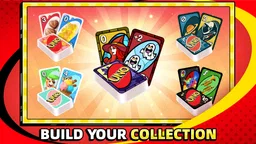
Beyond the cards in a single hand, the app gives players goals and progression signals that encourage another round. These can make a familiar game feel less repetitive: instead of treating every match as an isolated event, you have reasons to keep playing and notice how your results are adding up. I find that kind of structure useful when I want a small, self-contained goal during a break.
The trade-off is that progression can shift attention away from the match itself. If you are playing mainly to complete objectives or move toward an unlock, a loss may feel like a setback beyond the round. I prefer to treat those goals as a bonus rather than the point of every session. That keeps the card decisions enjoyable even when progress is slower than hoped.
A practical way to use the progression layer is to set a stopping point before you begin: play until you finish a short session or reach a particular in-game goal, then leave. Without that boundary, the promise of one more round can make a brief visit stretch out. This is especially worth considering when you have only a few free minutes and do not want the game to take over the rest of your break.
How the challenge changes over time
UNO! is easy to start, but the challenge does not come from complicated rules. It comes from uncertainty: you cannot control which cards you draw, what color the table will be on your turn, or how other players will respond. As you get more comfortable, the interesting question becomes less “Can I play a card?” and more “Which playable card leaves me in the least awkward position next?”
That makes the difficulty curve feel social and situational rather than like a steady climb through increasingly complex mechanics. A beginner can understand the choices, while an experienced player can pay closer attention to timing and the likely needs of the table. Still, a run of unfavorable cards can make skill feel less important than luck. I see that as part of the game’s character, but it can frustrate anyone expecting a tightly controlled competitive contest.
One useful adjustment is to think one turn beyond the obvious play. If you have several cards in the same color, keeping that color active may matter more than getting rid of the card with the highest number. Conversely, holding a useful color-change option can be more valuable than spending it to solve a minor inconvenience. These are not guaranteed winning formulas; they are simple ways to make choices feel deliberate even when the draw is unkind.
Players who want a quiet solo puzzle may find the social uncertainty less satisfying. A traditional solitaire card game offers more control over the pace and the problem in front of you. A physical UNO deck is also a better choice when the main goal is conversation around one table, since phones can pull attention away from the people present. This app is strongest when you want the game itself to be the activity, not just background company.
When the app earns another round
For an everyday example, imagine waiting for a friend who is running late. A quick match gives you something familiar to do without requiring a long tutorial or a large time commitment. If the round ends quickly, you can put the phone away; if you have more time, the goals and unlocks offer a natural reason to continue. That flexibility is one of the format’s real advantages.
There is a retention trade-off, though. Progress systems and repeated rounds can make it tempting to keep chasing the next small milestone, while in-app purchases add another layer to the experience. Purchases range from $0.29 to $299.99 per item, so the free entry point does not mean every optional purchase is inexpensive. I would decide in advance whether I am comfortable spending anything and avoid treating a purchase as a way to fix a poor run. The game is still playable as a free download, but players who dislike purchase prompts or monetized progression may prefer a physical deck or a simpler card app.
For parents, the Everyone age rating makes the game broadly approachable, but it is still sensible to check how a child responds to online competition and spending choices. A child who is content to play casually may enjoy the familiar cards; one who gets upset by losing or feels pressured to buy optional items may need clearer limits. The game’s accessibility does not remove the need to set ordinary boundaries around screen time and purchases.
Who should choose it, and my verdict
I would recommend UNO! to fans of the original who want a convenient way to play on a phone, and to casual players who enjoy quick rounds with a bit of unpredictable rivalry. It is also a reasonable pick for someone who wants a recognizable card game that can be learned quickly, then revisited through goals and unlocks. The current version is 1.18.4423, and it runs on Android 6.0 or later.
I would skip it if you want a strictly offline, distraction-free experience, prefer games where skill consistently outweighs luck, or dislike progression systems and optional spending. In those cases, a physical deck, a solitaire game, or a more measured strategy card game is likely a better fit. The app’s best moments come from the quick swings of a shared UNO round; its weaker moments arrive when the surrounding app incentives feel more demanding than the cards themselves.
Overall, I find the progression most satisfying when it supports play rather than dictating it. The early goals help give a new session direction, the unlocks provide a visible sense of movement, and the changing hands keep familiar rules from feeling completely settled. But no objective can make a bad run of cards enjoyable for everyone, and chasing progress too long can turn a fun break into a chore.
My recommendation is to try it as a convenient digital version of a game you already understand, keep purchases optional, and let the round—not the next milestone—decide whether you want to continue. If that sounds like your kind of casual competition, UNO!™ is an easy game to pick up and a lively one to return to, provided you are comfortable with luck, online play, and an app built to invite another match.
What we like
- Classic UNO rules make it easy to learn.
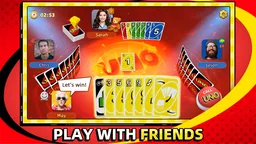
- Online matches let you play with friends.
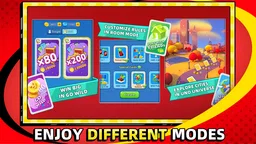
- Different modes offer variety beyond standard UNO.
- Quick rounds suit short play sessions.
- The colorful cards are easy to read on small screens.
What could be better
- Random card draws can make matches feel luck-driven.
- Online play depends on a stable internet connection.
- In-app purchases may encourage extra spending.
- Ads or promotions can interrupt the experience.
- Competitive matches may feel frustrating for casual players.







