




Tiki Solitaire TriPeaks review
 Analysis by Appsdrops
I would recommend Tiki Solitaire TriPeaks to someone who wants a card game they can learn quickly and return to in short bursts. Its central appeal is the familiar TriPeaks routine: clear cards from a layout by choosing a card that sits one rank above or below the card you’re playing from. That simple rule gives each turn a small decision, while the changing layouts keep a run from feeling like the same deal repeated.
It is a casual game rather than a traditional, quiet solitaire app. The tropical presentation gives it a distinct personality, and the pace is built around moving through deals rather than carefully arranging a full deck. If you enjoy Spider or Pyramid but want something that feels brisker and more focused on spotting the next available card, this is a natural one to try. If you prefer a plain table, strict classic rules, or a game with no purchase prompts, you may find other solitaire options a better fit.
What the game feels like once you start
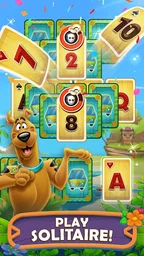
TriPeaks is easy to understand after a few turns. You look at the exposed cards, compare their ranks with the current card, and choose a playable neighbor in rank. Clearing cards can uncover choices that were hidden underneath, so a move is not only about what you can play now; it can also open up the next decision. That makes the game approachable without making every deal automatic.
The useful skill is learning to scan the layout before tapping. When several cards are available, I try to notice which choice exposes more of the board or preserves a useful sequence. A quick move may work, but pausing for a moment can reveal a longer run of consecutive plays. This is one of the small habits that makes the game feel more rewarding than simply tapping whichever card looks convenient.
The game is published by Scopely and belongs to the card game category. It is free to download, rated for Everyone, and has an average rating of 4.5 from around 768,000 ratings. Its reach is substantial, with more than 10 million installs, but the best reason to try it is still the straightforward play loop: you can grasp the basic idea without studying a rulebook.
That accessibility comes with a trade-off. The satisfying moments depend on the layout and the sequence of available cards, so some deals may feel more generous than others. If you want every outcome to depend on deliberate planning, TriPeaks can seem lighter than Spider, where managing suits and long sequences is a bigger part of the challenge. Here, the puzzle is more immediate: choose well, uncover options, and make the most of the cards currently open.
Getting started without overthinking it
On a compatible device running Android 6.0 or later, the current version is 17.1.0. The game is free to install, and it also offers in-app purchases ranging from $0.49 to $199.99 per item. I would approach those purchases as optional rather than part of learning the game: first see whether the core card-clearing loop suits you, then decide whether anything on offer is worth your money.
For a first session, I would keep the goal modest: learn which cards can be played, watch how clearing one reveals the layout, and finish a deal without worrying about perfect play. That gives you a useful feel for the rhythm before you invest attention in improving your choices. The tropical setting is part of the presentation, but you do not need to understand a separate theme or complicated system before you can start making moves.
A helpful first habit is to look at all the currently exposed cards before choosing. If two moves are legal, ask which one is more likely to uncover another playable card or preserve a useful rank for the next turn. You will not always be able to predict the full chain, and that is fine. The point is to replace hurried tapping with a quick scan; even a few seconds can make the decision feel more intentional.
This game is especially easy to fit into an ordinary pause. I can imagine opening it while waiting for a friend to arrive or taking a short break between chores: play a few turns, put the phone away, and return when convenient. It does not demand the sustained concentration that a long strategy session does. That makes it a good candidate for casual play, though anyone who dislikes games that invite repeated short sessions may prefer a finite puzzle or a traditional deck game.
Your first satisfying clear
The first meaningful success is not necessarily winning a difficult run. It is seeing how one well-chosen card can expose another option and start a chain of plays. Once that happens, the layout becomes easier to read: you begin thinking about the cards underneath rather than treating every visible choice as an isolated tap. That shift is where the game’s modest strategy starts to show.
When a deal offers multiple legal cards, I would avoid assuming that the longest-looking chain is always the safest choice. A move can open a promising section while leaving a useful rank stranded elsewhere. Instead, check whether the card you are about to remove is supporting access to something you will need. This is a practical way to make fewer impulsive moves, especially when the board has several exposed possibilities.
It also helps to treat a stalled sequence as information rather than a personal failure. TriPeaks depends on the cards available in the layout and the order in which you can reach them. Sometimes the sensible move is simply the one that gives the board its best chance, not a guarantee of clearing everything. Keeping that expectation makes the game more relaxing and prevents a casual card session from turning into a frustrating test of perfection.
For a first-time player, I would not recommend spending money just because a deal becomes awkward. Play enough to decide whether the basic puzzle is enjoyable on its own. Since the game is free to start and purchases are available at a wide range of prices, setting a personal limit before exploring optional spending is a sensible way to keep the experience under control.
Where new players can get confused
The most common point of uncertainty is the rank rule. A playable card must be one step above or below the current card, so a card that looks close in color or position may still be unusable if its rank does not match. Once you focus on rank rather than appearance, the basic decisions become much clearer. If you are unsure, take a moment to compare the current card with the exposed choices instead of tapping quickly and hoping.
Another source of confusion is the difference between a legal move and a good move. A card can be playable but still leave you with fewer useful options afterward. That is why scanning the board matters. Think about what a move reveals and whether it helps connect exposed cards into a sequence. You do not need to calculate every possibility; a simple look ahead is enough to make the puzzle more engaging.
Players arriving from other solitaire games may also expect the same kind of control they have in Spider or Pyramid. Those games emphasize different patterns and planning demands. TriPeaks feels faster because the key question is usually which neighboring rank to play next, not how to reorganize a tableau or build a long suit sequence. If you want a familiar card game with a lighter planning load, that difference is a strength. If you want deep control over a spread of cards, it may feel too dependent on the deal.
Purchases are worth keeping in mind even though the game costs nothing to download. The listed per-item range extends from $0.49 to $199.99, so I would pay attention to any purchase screen and avoid treating optional items as necessary for a fair first impression. A free download is a convenient way to try the game, but it does not mean every part of the surrounding experience is purchase-free.
Who will enjoy it, and who may want another card game
I think this is a good choice for people who like quick card puzzles, want an approachable alternative to more involved solitaire, or enjoy making a few small decisions during a break. Its Everyone age rating also makes the basic content broadly accessible. With an average of 4.5 from around 768,000 ratings and more than 10 million installs, it has found a large audience, though popularity alone cannot tell you whether its style is right for you.
I would steer away from it if you mainly want a no-frills deck of cards, a strict version of a classic solitaire format, or a game that asks for substantial long-term planning. Pyramid may suit someone who prefers matching pairs to a running chain of neighboring ranks. Spider is a better fit if arranging sequences and managing suits is the part of solitaire you find satisfying. TriPeaks occupies a lighter middle ground: more decision-making than a purely automatic card flip, but less involved than a layout that demands extended planning.
It may also not be the best pick if optional purchases are a deal-breaker for you. The game is free, but its in-app items can be expensive at the upper end of the listed range. I would make the choice based on whether you enjoy the core play before considering any paid extras. If you already know you want a completely purchase-free experience, a simple offline card app with a conventional deck may be a more comfortable alternative.
A sensible next step after your first session
After you understand the basic rule, try slowing down at the moments when two or more cards are playable. Look for a choice that opens more of the layout, and notice when a tempting card could leave an awkward rank as your next starting point. That small adjustment is a practical way to improve without turning a casual game into homework. You can keep sessions short and still get better at reading the board.
Scopely released the game on July 30, 2013, and the current version is 17.1.0. Its long-running presence and large player base suggest that the central idea has staying power, but my recommendation is more personal: give it a try if you want a bright, approachable TriPeaks game that rewards a little foresight. If the sequence-based decisions click for you, it can make an easy companion for spare moments. If you quickly wish for deeper control or a quieter, more traditional solitaire layout, you will know early that another card game suits you better.
My overall view is positive, with one clear caveat: the game works best when you accept its short, deal-focused rhythm and treat each layout as a small puzzle rather than a test you must always win. Start with a free session, scan before each choice, and decide based on the core card play—not on optional purchases or the game’s popularity. That is the most reassuring way for a first-time player to find out whether this particular take on solitaire belongs on their phone.
What we like
- Easy-to-learn rules make it welcoming for casual players.
- Short rounds fit well into brief breaks.
- Daily challenges offer a reason to return.
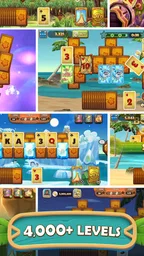
- Card layouts add variety between levels.
- Offline play is useful when internet access is limited.
What could be better
- Progress can slow when lives run out.
- Some rewards and features encourage in-app purchases.
- Ads may interrupt play for free users.
- Later levels can feel difficult without power-ups.
- The game requires regular internet access for some features.







