




Blackjack 21: Blackjackist review
 Analysis by Appsdrops
I like card games that let me settle in for a few hands without demanding a long session, and Blackjackist is built around that kind of quick decision-making. It brings blackjack to a social, polished setting, with three-dimensional tables and other players in the mix. My main impression is that it makes the familiar rhythm of blackjack easy to pick up, while giving regular players reasons to return. That does not mean every part of the experience will suit everyone: the social, progression-focused approach is less appealing if you want a quiet, stripped-back game with no prompts to keep playing.
How the first hands find their rhythm
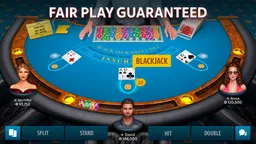
As a card game from KamaGames, Blackjackist is centered on a simple loop: follow the cards, choose how to play your hand, and see whether your total beats the dealer’s. That clarity makes it approachable if you already know the basic rules, and useful for someone who wants to get comfortable with blackjack decisions in a game setting. The realistic 3D tables give the action a more social feel than a bare card interface, though presentation is not a substitute for understanding the rules or making careful choices.
The opening stretch is best treated as practice rather than a race to build a streak. I’d use the first few sessions to learn where the important choices appear and how quickly a table moves. If you are new to blackjack, pause before acting and think about the hand total instead of tapping through automatically. If you already play, use those early rounds to judge whether the table pace feels comfortable. A game can be easy to start and still become frustrating if you feel pushed to make decisions faster than you enjoy.
That distinction matters because blackjack’s uncertainty is part of the appeal. A sensible decision can still lead to a loss, while a lucky outcome does not prove that a risky choice was sound. I find it healthier to focus on whether I understood the hand than on whether one round went my way. That small shift makes the early learning process more useful and reduces the temptation to chase a result after a bad hand.
The game’s social framing is also a practical choice. A table with other players can make a familiar card game feel less solitary, particularly when I only have a short break and want more atmosphere than a single-player practice screen. On the other hand, anyone who prefers to study every decision without the sense of a live table may find a basic blackjack trainer or a quieter offline alternative more comfortable. Blackjackist’s appeal is not only the cards; it is the sense of joining a larger play space.
Small goals, better sessions
I get more from a session when I set my own modest goal before joining a table: play a handful of hands, practise a particular decision, or stop once I notice I am acting on autopilot. This is a useful way to create structure without assuming that the game’s progression will always match my mood. It also helps keep a quick diversion quick. Blackjack can encourage “one more hand” thinking, so deciding in advance what counts as enough is a practical habit rather than a needless restriction.
For returning players, a good early goal is not simply to win. It can be to make each choice deliberately and notice how the pace affects concentration. If I am distracted, I am more likely to tap without considering the hand; that makes the session less satisfying even if the outcome happens to be favourable. The table format works best when I give it attention, so it is not ideal as a background activity while doing something that needs focus.
What keeps progress meaningful
Blackjackist has a substantial player community, and that gives its tables a different character from a solitary card app. It has more than ten million installs, and its average rating is 4.5 from around 281,000 ratings. Those figures suggest broad interest, but they do not tell me whether the social atmosphere or the pace will suit a particular player. I would weigh them as signs that the game has found an audience, not as a promise that every session will feel rewarding.
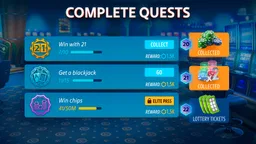
Progress in a blackjack game can be easy to misread. A run of wins feels like momentum, but the basic hand-by-hand uncertainty remains; a run of losses can feel like a setback even when the decisions were reasonable. I recommend separating skill practice from short-term results. Notice whether you are understanding the choices more clearly, not just whether your balance or session has gone in the direction you hoped. That is a more grounded way to judge improvement in a game where luck is always part of the experience.
One useful workflow is to take a break after a close or frustrating sequence rather than immediately trying to recover the feeling of a win. Returning later with a clear head makes it easier to enjoy the table as entertainment instead of treating it as a problem to solve. This is especially valuable in games built around repeated rounds: the next hand arrives quickly, and that convenience can blur the point at which a casual session becomes longer than intended.
Version 76.21.0 is the current release, and the game runs on Android 6.0 or later. It is free to download, with optional in-app purchases priced from $0.99 to $999.99 per item. That broad range is worth noticing before you start: a free entry point does not mean every optional purchase is a small one. I would decide on a personal spending limit in advance, and I would not buy anything to make up for a losing run. If you want blackjack with no purchase prompts or spending decisions to think about, a simpler free alternative may be a better fit.
Difficulty without a conventional campaign
The challenge here comes primarily from making repeated choices under changing card outcomes, rather than from a clearly defined story campaign. That makes it easy to drop in for a few hands, but it also means players who need chapter endings, a clear finish line, or a steadily unfolding single-player challenge may find the structure less compelling. The game’s lasting appeal is tied to the table loop: decide, watch the outcome, and choose whether to play again.
For an experienced blackjack player, the basic decisions may soon feel familiar. The social setting and 3D presentation can still make a session more engaging than a plain digital deck, but they will not turn every hand into a new strategic puzzle. I would recommend it more readily to someone who enjoys the repeated rhythm and atmosphere than to a player seeking deep tactical variety or a traditional progression campaign.
Newcomers should also be patient with the difference between learning and winning. If a hand goes badly, it is tempting to assume the game is too difficult or that a different approach would guarantee a better result. Neither conclusion follows from one outcome. A better test is whether you can explain your choices and whether the pace leaves you enough time to make them. If you cannot, step away or choose a more deliberate practice option instead of forcing another round.
When the social pace helps—and when it does not
The 3D-table approach is a strength when I want blackjack to feel like a shared pastime rather than a private exercise. It can make short sessions feel more lively, and the presence of a wider player community gives the game a sense of activity. But social presentation is not for everyone. If you dislike playing around other people, want fewer distractions, or prefer a calm interface focused only on rules practice, a standard single-player blackjack app is likely a better match.
It is also worth choosing the right moment to play. A short wait or a relaxed break can suit a quick run of hands, while a noisy commute or a conversation that needs your attention can make the decision-making feel rushed. I would not start a session when I know I will have to stop abruptly; the easy availability of another hand can make it harder to put down than a game with a natural level ending.
The Teen age rating is another useful consideration for households. It gives parents a clear reason to review the game’s social and purchase aspects with younger players rather than treating it as a purely solitary card exercise. For adults, the same point is practical: if the social layer or optional spending is not something you want to manage, a simpler alternative can keep the focus on the cards.
A fair way to judge its staying power
Blackjackist has been available since October 26, 2015, and its 9,500 reviews give prospective players more than a first impression to consider. I would still approach community feedback with the same caution I use for any game: individual reactions depend on expectations, play style, and tolerance for social features or purchases. The more useful question is whether you want a repeatable blackjack table experience, not whether every player has had the same one.
Its retention comes naturally from the short hand cycle: each round resolves quickly enough to make another tempting. That can be enjoyable when I have chosen to play, but it can also encourage longer sessions than planned. I find that setting a time limit or deciding on a stopping point before opening the game keeps the activity intentional. If you want an experience that nudges you through a fixed series of stages and then ends, Blackjackist is not the strongest choice; its appeal is the ongoing table play.
For a realistic everyday use, imagine having a few minutes free before meeting a friend. I would open the game, play a small number of hands, and stop when the time is up rather than trying to finish on a win. That makes the fast, repeatable format work in its favour. If I had a longer, focused practice session in mind, I would instead choose a tool that explains blackjack decisions more explicitly, because atmosphere and repetition alone may not teach the reasoning behind each move.
Who I would recommend it to
I’d suggest Blackjackist to people who already enjoy blackjack, want a lively table presentation, and are comfortable with a game designed for repeat visits. It is also a reasonable place for a beginner to become familiar with the flow of hands, provided they take their time and do not treat short-term results as proof of skill. The free download makes it easy to try the format, while the optional purchases mean it is sensible to keep spending boundaries clear from the start.
I would skip it if you want a fully quiet, no-frills card tool, dislike social play, or find repeated rounds and purchase options hard to put down. I would also look elsewhere if your priority is structured lessons or a deep solo campaign. In those cases, a focused blackjack trainer or a straightforward offline game may offer a better balance, even if it lacks the more animated table feel.
My verdict is that the game’s progression works best as a reason to return to a familiar table, not as a promise of a carefully staged journey. The early hands are approachable, the repeated decisions can keep a short session engaging, and the social presentation gives it more personality than a barebones alternative. Its limitations are just as clear: the core loop can become repetitive, outcomes are not a reliable measure of decision quality, and optional purchases deserve a little caution. If that trade-off sounds right to you, it is an easy blackjack game to sample; if you want calm instruction or a firm endpoint, another card app will probably serve you better.
What we like
- Practice mode lets newcomers learn without risking chips.
- Quick rounds make it easy to play in short sessions.
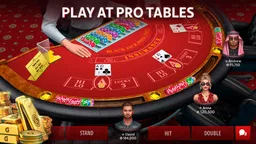
- Table options offer variety for different play styles.
- Clear card visuals make hands easy to follow.
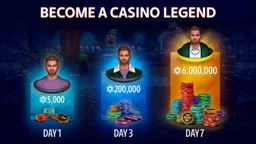
- Daily rewards provide extra chips for regular players.
What could be better
- In-app purchases can speed up access to more chips.
- Random outcomes may lead to long losing streaks.
- Online play depends on a stable internet connection.
- Some tables may require higher chip balances.
- Ads and promotional prompts can interrupt the experience.







