





Truck Simulator EVO: Drive USA review
 Analysis by Appsdrops
There is a particular pleasure in taking a big truck onto an open American highway and settling into the steady work of a delivery. Truck Simulator EVO: Drive USA builds its appeal around that familiar fantasy: drive American trucks, take on cargo transport missions, and move through US cities and highways. It is a simulation game rather than a racer, so the mood is shaped less by chasing a finish line and more by the journey between one destination and the next.
A trucker’s first impression
What stood out to me about Truck Simulator EVO is how clearly its premise sets expectations. You are here to handle cargo runs in a truck, not to blast through traffic as quickly as possible. That gives the game a more measured identity from the start. Its central loop is easy to understand, while the subject leaves room for the small, satisfying details that make driving simulations enjoyable: keeping your attention on the road, guiding a large vehicle through different surroundings, and making progress across a route.
The setting does a lot of work in establishing the mood. American cities and highways suggest variety without needing a complicated premise, and cargo transport gives each drive a practical purpose. I like that combination because it makes a trip feel like a job to complete rather than a drive with no context. Even if you come to the game simply because you enjoy trucks, the mission framing provides a reason to keep heading toward the next destination.
The game is free to download, and it is developed by Ovidiu Pop, a name attached here to a focused truck-simulation experience. It has a 4.6 average from around 104,000 ratings, a substantial audience for a game built around a specific driving fantasy. That reception gives new players a useful sense of its broad appeal, though the best test is whether the pace and subject suit what you want from a mobile game.
Built around the American road
Truck Simulator EVO: Drive USA gives its setting a direct role: US roads are not merely a backdrop to a generic driving challenge, but the landscape for hauling cargo. Highways naturally lend themselves to a sustained, forward-moving rhythm, while city routes imply a change in surroundings and a different kind of attention. That contrast helps the world feel like more than a single stretch of road, even before you get into the specifics of any individual mission.
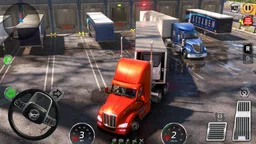
There is a pleasing sense of scale in the idea of piloting a heavy vehicle through a broad road network. A truck asks you to think differently from a small car: the appeal comes from managing a sizeable machine and making each movement feel deliberate. That weight is part of the fantasy, and it supports the simulation tone. Instead of treating the vehicle as a disposable way to reach a score, the game invites you to focus on the act of driving itself.
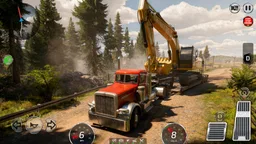
The visual direction works best when it supports that calm, road-focused identity. The promise of cities and highways gives the journey a clear visual frame, moving between more built-up surroundings and longer open stretches. I find that kind of setting especially effective for a simulator because it can make routine travel feel atmospheric. The road becomes the main stage, and the truck’s steady progress supplies the drama.
Just as importantly, the premise avoids overcomplicating the experience. Cargo transport is recognizable, and the American setting gives it a strong sense of place. Players who want a simulation with a clear theme can understand what they are getting into before starting: this is about driving trucks through US environments and completing transport missions. That clarity is a strength, particularly for a game people may pick up for short sessions or return to when they feel like a slower-paced drive.
Sound, pace, and the feel of a trip
A driving game’s atmosphere depends on more than what is on screen. Sound can make a vehicle feel present and help the road feel like a place rather than a static route. In a truck simulator, that sensory layer matters because the experience is built around staying with the journey. The core mood should feel grounded and focused, with the vehicle and the movement of the drive reinforcing the idea that you are transporting a load rather than racing for spectacle.
The game’s premise naturally supports a steady rhythm. Cargo missions give a drive a destination, but the highway setting encourages you to settle into the trip instead of treating every moment as a burst of action. I appreciate that slower cadence in a mobile simulation. It leaves room to enjoy the scenery and the simple satisfaction of making progress, while the task of reaching the destination keeps the experience from feeling entirely aimless.
That pacing also makes the game’s audience fairly easy to identify. If you want instant, constant action, a truck-hauling simulation may feel restrained. If you enjoy games where the routine is part of the reward, the measured pace can be exactly the point. The fantasy is not just owning or driving a truck; it is taking on the responsibilities associated with a working vehicle and seeing a transport job through.
There is a quiet appeal to that loop. Each journey can be approached as a small break from faster games, with the road providing a consistent focus. The American setting gives the drive a recognizable character, while the cargo objective lends the trip direction. Together, those elements create an atmosphere that is more about concentration and movement than intense competition.
How the mechanics fit the mood
The most successful part of the concept is the way its mechanics and setting point in the same direction. Driving a truck, carrying cargo, and travelling through cities and highways all reinforce one coherent idea. That unity matters in simulation games: when the activity, environment, and pace support one another, the experience feels purposeful even when the basic task is straightforward.
For me, the appeal is in the balance between structure and freedom. A mission gives you a clear reason to drive, while the journey remains the main event. That makes each run easy to approach without demanding that the player learn an elaborate story first. You can come for the trucks, follow the transport objective, and enjoy the gradual rhythm of a road trip. The simple premise is an advantage because it lets the game stay focused.
Its simulation identity also makes expectations important. This is not a game I would choose for quick reflex challenges or arcade-style speed. The pleasure is more deliberate: handling a large vehicle, keeping your attention on the route, and moving cargo through a distinctly American setting. Players who enjoy that kind of grounded routine are more likely to connect with it than those looking for constant surprises.
The game is rated Everyone, making its broad truck-driving premise accessible to a wide audience. It is free to play, with optional in-app purchases ranging from $0.99 to $44.99 per item. Those purchases are worth keeping in mind if you prefer to avoid spending inside mobile games, but they do not change the basic appeal of the core idea: take a truck, accept a cargo run, and travel through US roads.
Truck Simulator EVO: Drive USA has reached over 5 million installs, another sign that the truck-simulator concept has found a sizeable audience. It was released on October 23, 2025, and its current version is 1.2.94. The stated minimum operating-system requirement is version 8.0, so compatibility is worth checking on your device before downloading. These details matter in practical terms, but the deciding factor is still whether a steady transport simulation sounds enjoyable to you.
A focused fit for mobile play
Mobile games benefit from a clear premise, and this one has it. You do not need a long explanation to understand the goal or the setting. The cargo missions establish a reason to drive, and the truck itself provides the central attraction. That straightforward structure makes the game easy to approach, while the simulation genre gives it a calmer tone than a typical racing title.
I also like that the setting is doing more than decorating the experience. Cities and highways create a sense of travel, and the contrast between them supports the idea of working through a route. That gives the game a coherent identity: the vehicle, the cargo, and the landscape all belong to the same fantasy. When those pieces align, even a simple driving loop can feel satisfying.
There is a trade-off in choosing such a focused style. The game’s strongest appeal is also its most specific one. If you are not interested in trucks, cargo jobs, or unhurried driving, the core loop may not hold your attention for long. But if that fantasy does appeal, the straightforward presentation is refreshing. It does not need to dress the experience up as something else; it puts the road and the work of driving at the center.
That focus gives the game a useful place in a mobile collection. It can offer a different mood from action-heavy games and fast racers, leaning instead on a longer, more composed journey. The satisfaction comes from settling into the task and letting the route set the pace. For players who enjoy simulation games as a way to relax and concentrate, that can be a compelling reason to give it a try.
Final thoughts on the road
Truck Simulator EVO: Drive USA succeeds most clearly as a cohesive truck-driving fantasy. Its American cities and highways provide a setting with an immediate sense of place, while cargo transport missions give each journey a practical goal. The measured pace suits the subject, making the game feel more like a road-going simulation than a race. Its appeal comes from keeping those pieces aligned: truck, cargo, road, and destination.
I would recommend it to players who enjoy a grounded driving game and like the idea of spending time behind the wheel of an American truck. It is less suited to someone who wants constant action or a rapid arcade challenge, but that is not a flaw so much as a clear creative choice. The experience knows what mood it wants to create and builds its central activity around it.
With a 4.6 average from around 104,000 ratings and over 5 million installs, the game has drawn a broad community for its particular niche. My overall impression is that Truck Simulator EVO: Drive USA offers a straightforward, accessible way to enjoy cargo-hauling simulation on mobile. If the thought of following a route through US cities and highways sounds relaxing rather than repetitive, its steady rhythm and focused premise make it an appealing drive.
What we like
- Offers a wide selection of American trucks to unlock and drive.
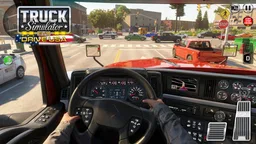
- Detailed interiors make the first-person driving view more immersive.
- Truck handling gives vehicles a distinct sense of weight.
- Weather and road conditions add variety to long drives.
- Customizable trucks let players personalize their rigs.
What could be better
- Some trucks and upgrades require substantial in-game grinding.
- Ads may interrupt play or appear around optional rewards.
- Traffic behavior can feel unpredictable on busy roads.
- Long journeys may become repetitive without varied objectives.
- Performance can drop on older phones during detailed scenes.







