
Trophy Hunter - Sniper Game review
 Analysis by Appsdrops
I like hunting games most when they make me pause before taking a shot, rather than treating every target as a reflex test. Trophy Hunter - Sniper Game aims for that measured feel: it puts shooting in a three-dimensional wilderness setting and adds player-versus-player competition. In my view, that combination makes it more appealing to people who enjoy weighing a shot and testing their aim than to anyone looking for a purely relaxing walk through the woods.
It is a free simulation game from Ten Square Games, rated Teen. The game has a 4.6 average from around 113,000 ratings, and it has passed 5 million installs. Those figures suggest a sizeable audience, but the more useful question is whether its particular mix of hunting and competition suits the way you like to play.
Choosing when to take the shot
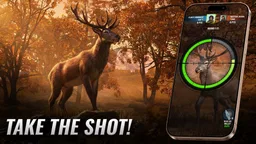
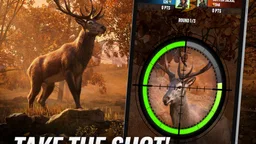
The central appeal is the decision around a shot. A target in a 3D environment gives aiming more context than a flat target gallery, while the sniper framing encourages patience and precision. I find that a more interesting premise than simply tapping as quickly as possible: the fun comes from looking, lining things up, and deciding when to commit.
That also makes the game a better fit for short, focused sessions than for players who want a broad outdoor adventure. If you have a few minutes between tasks, the idea of concentrating on a hunt can be satisfying. If you expect a large world built for free exploration, a deep survival simulation, or a long narrative campaign, this is a different sort of experience.
The shooting-and-hunting premise carries a trade-off. It offers a clear goal and a direct test of aim, but it may feel narrow if you want multiple kinds of activity beyond hunting. I would approach it as a focused shooting game with a wildlife setting, not as a complete simulation of life outdoors.
For someone new to this style, I would start by treating each attempt as a chance to understand the aiming challenge instead of rushing for a result. That mindset is useful even in a competitive setting: careful observation is a better starting point than assuming speed alone will carry every encounter.
When competition changes the stakes
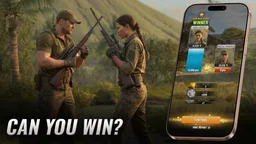
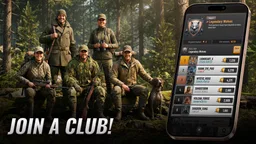
The player-versus-player element gives the shooting a different purpose. A hunt against the environment can be a private test of patience; a contest against another player adds pressure, because your performance is being compared. I like that contrast in principle, since it gives precision a reason to matter beyond simply completing a shot.
It also changes who is likely to enjoy the game. If you thrive on trying to outperform another person, competition can make a familiar aiming loop more engaging. If you prefer hunting as a calm, solitary activity, the competitive emphasis may feel like an interruption rather than an improvement. The right choice depends less on whether you like hunting themes and more on whether you enjoy being tested.
When a match feels tense, the practical lesson is to avoid letting urgency take over your aim. The useful counterplay is not to assume that every opportunity should be taken immediately. Take a moment to line up, and think of control as part of performance. That is a sensible approach to this kind of game without needing to treat each encounter as a simple race.
I would also separate two goals when deciding whether to keep playing: enjoying the act of aiming and wanting to climb through competition. The first can be rewarding on its own; the second can make losses feel more personal. If you are in the mood for a low-pressure break, it may be better to play when you can enjoy the process rather than measure the session only by the outcome.
Managing risk, rewards, and spending
The game is free to download, but it includes in-app purchases ranging from $0.49 to $99.99 per item. That broad range is worth noticing before you start, particularly if you are prone to making quick purchases when a game becomes competitive. I recommend deciding in advance whether you want to spend anything at all, and checking each purchase carefully rather than treating a small initial amount as a guide to later costs.
I would not assume that spending is necessary to enjoy the core idea, nor would I promise that it has no effect on the experience. The sensible approach is to play first and judge whether the aiming and competition hold your interest. If they do, you can decide whether any optional purchase is worthwhile for your own play; if they do not, paying more is unlikely to fix a mismatch in taste.
There is a broader risk-and-reward choice in how you approach competition: chasing every contest can make the game feel more intense, while a more selective approach can keep it enjoyable. I find that useful advice for any competitive shooter, but especially for a game whose appeal depends on composure. A hurried session is not always the best setting for a precision challenge.
Parents should also take the Teen content rating into account. That label is a useful starting point when deciding whether the game is appropriate for a younger player, while the combination of hunting and shooting is worth discussing in light of the family’s own standards. The rating does not replace a parent’s judgment, but it does help set expectations before installation.
Adapting instead of relying on one approach
Aiming games can tempt players to repeat the same routine, but a more thoughtful way to improve is to notice what is actually going wrong. Is the problem rushing, losing focus, or simply not enjoying the pressure of player-versus-player play? Those are different issues, and each calls for a different response. Slowing down may help with rushed shots; taking a break may be better if competition is making the session frustrating.
One practical habit is to set a small goal before you begin. For one session, focus on patience; for another, pay attention to how comfortable you feel when a contest becomes tense. This avoids turning every play period into an all-or-nothing judgment of your skill. It also helps you tell whether the game’s central loop is rewarding you, rather than merely keeping you busy.
Another useful trade-off is between playing for a personal sense of improvement and playing to compare yourself with others. The competitive mode may make comparison natural, but it is not the only reason to value a session. If you are new, learning to stay deliberate can be a worthwhile result even when you do not come away feeling dominant.
I would skip it if you strongly dislike aiming challenges, hunting themes, or competitive pressure. A casual puzzle game or a noncompetitive exploration title would likely be a better fit for someone who wants a gentler, less performance-focused break. Likewise, players seeking extensive management systems or detailed wilderness survival should look elsewhere rather than expect this game’s premise to expand into those genres.
How the experience can hold up over time
At the time I’m reviewing it, the current version is 3.34.0, and the game requires Android 9 or later. The version number alone does not tell me how much variety a player will find, so I would judge long-term appeal by a more personal test: do you still enjoy lining up shots and handling the competitive stakes after the initial novelty has worn off?
That is where the game’s focused design can work both for and against it. A clear central activity makes it easy to return for a short session, but players who need frequent changes of pace may tire of the same broad premise. I would not recommend installing it on the assumption that it will provide a different kind of gameplay every time you open it. Its strength is concentration, not necessarily breadth.
Compared with more traditional hunting simulations, this game’s emphasis on shooting and player competition sounds more immediately goal-oriented than a leisurely, exploratory approach. Compared with ordinary target shooters, the wildlife setting gives the aiming a hunting context. That middle ground is its clearest identity, and it is also why neither comparison is a perfect substitute for the other.
For everyday use, I can see it fitting into a break when I want a task that calls for attention but not a long commitment. I would avoid opening it when I am already impatient or looking for a soothing game, because competition can make a precision-focused session feel less restful. That small choice of timing can change whether the same game feels engaging or irritating.
My recommendation for the right player
Overall, Trophy Hunter - Sniper Game is worth trying if you like hunting themes, careful shooting, and the extra tension of competing against other players. I appreciate that its premise asks for more composure than a simple tap-to-fire game, and the 3D wilderness setting gives that aim a clear context. Its limitations are equally important: it is a focused experience, competition will not suit everyone, and in-app purchase prices make a spending boundary sensible.
I would recommend starting free, playing with patience, and deciding after a few sessions whether the central shooting loop genuinely holds your attention. If you want an easygoing outdoor atmosphere or a wide-ranging simulation, choose something less competitive and more exploratory. If you want a direct test of aim in a hunting setting, this one has a clear case for a place on your phone.
What we like
- Intuitive controls make aiming and shooting easy to learn.
- Varied missions offer clear goals beyond simple target practice.
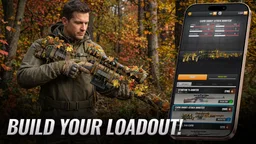
- Weapon upgrades add a sense of progression.
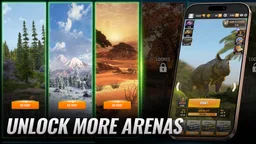
- Hunting environments provide visual variety.
- Offline play suits short sessions without an internet connection.
What could be better
- Ads can interrupt the flow between missions.
- Some upgrades may require considerable grinding.
- Touch aiming can feel imprecise on smaller screens.
- Mission objectives may become repetitive over time.
- Graphics and animations may feel dated on newer devices.







