
Sprunki Playground: Sandbox review
 Analysis by Appsdrops
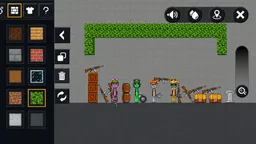
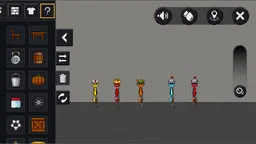
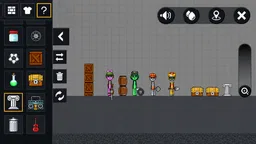
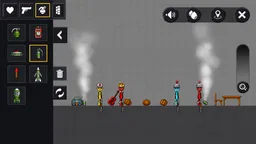
I approached Sprunki Playground: Sandbox as a game for brief creative sessions rather than a challenge to conquer. Its appeal is the freedom to arrange and experiment with monsters in a playful space, then see what ideas emerge. That makes it an easy fit when I want something lighter than a mission-based simulation, though it also means the fun depends heavily on whether I enjoy making my own goals.
Choosing what to make in an open playground
In this simulation game, the central decision is less about following a fixed route and more about deciding what kind of scene or play session I want. I can treat the sandbox as a place to combine characters, test arrangements, and make small variations. The freedom is inviting, but it asks me to supply the purpose: the game does not become compelling simply because the space is open.
That difference matters when choosing between this and a more guided simulation. A structured game usually gives me explicit objectives and a clear next step; this one is better suited to players who like improvising. I might start with a simple arrangement, notice an unexpected result, and build around it. If I need missions, progression targets, or a steady stream of instructions to stay engaged, a conventional level-based game is probably a better match.
A useful way to begin is to set a tiny creative brief before playing: make a scene with a particular mood, try a different grouping, or see how much I can change while keeping one part of the setup recognizable. That small constraint gives an open session direction without pretending the game has a built-in objective. It also makes experimentation easier to judge: I know what I was trying to change, rather than moving things around at random.
The game is made by Logic Apz and is free to play. It has a 3.7 average from around 500 ratings, with more than a million installs. Those figures suggest a sizeable audience, but they do not tell me whether its open-ended style will suit a particular player. I would use the rating as a rough signal, not as a substitute for deciding whether sandbox play is what I want.
Small experiments make the freedom more useful
When a sandbox offers room to create, it is tempting to change several things at once. I find that less helpful than changing one element, pausing to inspect the result, and then making another adjustment. The benefit is practical: I can tell which choice gave a scene its character. This is especially useful when I am trying to produce something coherent instead of merely filling the space.
I also recommend taking a moment to observe before rebuilding. If a setup is not working, first decide whether the problem is the overall idea or just one part of it. Replacing everything can erase the interesting detail that was already there. A more deliberate approach—keep the strongest element, alter the rest—turns the sandbox’s open-endedness into a creative advantage rather than a source of indecision.
For a younger player, or someone sharing the game with a child, that same approach can make play more engaging. Instead of asking only “What can you make?”, I would suggest a concrete prompt such as creating a funny scene or changing one part of an existing arrangement. The age rating is Everyone 10+, so I would check the store’s rating details and use my own judgement about whether it suits the child who will play.
Where risk and reward show up
The main risk here is not a difficult penalty; it is spending a session without finding a satisfying idea. With no strong goal to chase, a player can keep tinkering without feeling that the effort adds up. The reward is the opposite: a small, self-directed experiment can be enjoyable precisely because there is no pressure to perform or complete a long task.
I would treat each session as a short creative loop. Make a first version, inspect it, then decide whether to refine it or start over. If I am still curious after a few changes, I keep going; if not, I stop rather than expecting the game to manufacture motivation for me. That is a better fit for a casual break than setting aside a long block of time and hoping the sandbox will provide a narrative arc.
There is also a tradeoff between variety and control. Trying many combinations quickly can be entertaining, but it may make the result feel arbitrary. Slowing down and keeping a simple intention gives choices more meaning. I would not assume that every experiment needs to lead to a polished creation; sometimes the useful outcome is simply learning which direction I do not want to take.
For a realistic everyday use, I can imagine opening it during a short wait or a quiet break, choosing one small idea, and playing until that idea has either taken shape or stopped being fun. That works because the sandbox does not require me to remember a complicated objective between sessions. If I want a game that rewards a long-term plan with clear milestones, though, I would choose a more progression-focused alternative.
Adapting instead of starting from scratch
A good habit in this kind of playground is to revise with intent. When an arrangement feels cluttered, I would identify its focal point and remove or reposition the least useful parts rather than resetting immediately. This gives me a chance to discover a stronger version of the same idea. It is a small decision, but it helps avoid the common sandbox trap of endlessly restarting because the first attempt was not perfect.
Another useful tactic is to alternate between playful and deliberate sessions. In a playful pass, I can try combinations without judging them. In a deliberate pass, I can choose one promising result and make it clearer. Separating those moods prevents premature editing from cutting off a surprising idea, while also keeping experimentation from becoming aimless. It is a workflow I would use whenever the game’s open structure leaves me unsure what to do next.
I would also adapt my expectations to the kind of entertainment I want that day. If I want quick, low-pressure interaction, I can accept a rough result and move on. If I am in a more creative mood, I can spend longer refining a single arrangement. The game’s strength is that it can support either pace; its limitation is that it does not necessarily tell me when a session has reached a satisfying endpoint.
How much depth it offers over time
Open-ended games can stay fresh through player-made goals, but that kind of depth is different from unlocking a sequence of new challenges. Here, I would measure replay value by how often I find a new way to use the playground, not by expecting a formal campaign to carry me forward. That distinction helps set a fair expectation: the game may remain appealing to an imaginative player while feeling thin to someone who wants a steady supply of authored tasks.
The current version is 3.1, and it runs on Android 7.0 or later. That gives Android users a straightforward compatibility point to check before installing. I would also consider the device and the player’s habits: a person who enjoys touch-based, casual experimentation is more likely to appreciate this format than someone who prefers precise controls, competitive play, or a strong narrative thread.
Compared with typical simulation games, this one leans toward playful creation rather than managing a detailed system. Compared with a puzzle game, it does not make solving a defined problem the central attraction. That makes it a distinctive choice for someone who wants room to improvise, but it also means that players seeking measurable mastery may prefer a simulation with deeper management decisions or a puzzle title with clearly stated objectives.
Its free price lowers the barrier to trying that style, but free does not mean it will be the right use of time for everyone. I would install it if I were curious about a monster-themed sandbox and comfortable bringing my own ideas. I would skip it if I routinely abandon games that do not provide explicit goals, or if I mainly want competitive systems and obvious progress markers.
Who I would recommend it to
I would recommend Sprunki Playground: Sandbox to players who enjoy making scenes, testing combinations, and deciding for themselves when an experiment feels complete. It is also a reasonable choice for a casual player who wants a creative change of pace from games built around winning, collecting, or following a long sequence of objectives.
I would be more cautious about recommending it to someone who needs detailed instructions or reliable long-term progression. The open format can feel liberating to one person and underdirected to another. If that uncertainty is a concern, I would approach the first session with one simple goal and see whether the freedom feels enjoyable or merely vague.
Overall, I see this as a lightweight creative sandbox whose strongest feature is the room it gives me to decide what counts as fun. Its best sessions come from making a small plan, testing it, and adapting rather than expecting the game to supply a complete itinerary. If that sounds appealing, Logic Apz’s monster playground is worth a look; if I want structure to do most of the work, I would choose a more guided simulation instead.
What we like
- Open-ended sandbox play encourages creative experiments.
- Physics-based interactions make setups feel lively.
- A wide range of characters supports varied scenes.
- Simple controls are easy to learn.
- No fixed objectives lets players set their own pace.
What could be better
- The lack of goals may feel aimless to some players.
- Repeated experiments can become predictable.
- Large scenes may be harder to manage on small screens.
- Controls may take practice for precise placement.
- Performance can vary across devices.







