
Spades - Classic Card Game review
 Analysis by Appsdrops
I like card games that make a quiet break feel engaging without demanding a long commitment, and Spades is a natural fit for that mood. This is a digital version of the familiar trick-taking game, built for people who want to play a hand online or offline. I found the best way to approach it as a newcomer is not to worry about winning immediately: first learn how a bid shapes the hand, then watch how your partner’s and opponents’ cards change what is possible.
What to expect from a familiar card game
Spades - Classic Card Game is a free card game from FIOGONIA LIMITED. It has been available since September 17, 2018, and its current version is 1.8.1. The game is rated for Everyone, and it runs on devices with Android 7.0 or later. It also offers in-app purchases, with items priced from $4.99 to $49.99 each, so I would check the purchase details in the app store if you are considering spending anything.
The core appeal is the recognizable rhythm of Spades: decide how many tricks you expect to take, then play each card with that commitment in mind. If you already know the game from family gatherings, you can get to the familiar decisions quickly. If you are new, it helps to think of each hand as two related tasks: estimate your own strength, then adjust your play as the other three players reveal information.
The game has a 4.7 average from around 51,000 ratings, with about 17,000 written reviews and more than five million installs. Those figures suggest that it has found a sizeable audience, but they do not tell you whether its particular pace or style will suit you. I would treat it as a convenient way to play a classic, rather than as a substitute for every kind of card-game experience.
Its online and offline availability is useful for different reasons. Online play makes sense when you want the feeling of a live match; offline play is a practical option when you are away from a dependable connection or simply want a low-pressure game. That flexibility makes it easier to fit a hand into a commute, a waiting room, or a short break at home, though your preferred mode will depend on what kind of opponents and atmosphere you want.
Why the bidding matters more than a lucky card
For a first-time player, the most important shift is understanding that a strong-looking hand is not automatically a good reason to bid high. Your estimate needs to account for the cards you can likely control, the possibility that a suit runs out, and the uncertainty of what your partner holds. A conservative bid can be a sensible success if it keeps the team’s plan realistic; the aim is not to make the boldest prediction but to play the hand you actually have.
My practical tip is to pause briefly before committing to a bid and ask what would need to happen for your estimate to come true. If the answer depends on several uncertain tricks, lower expectations. Then, once play starts, keep track of which suits have appeared and whether your own cards still give you a way to take a trick. This simple habit makes decisions feel less random, even before you have memorized advanced tactics.
Getting from installation to a first good hand
When you open a card game for the first time, it is tempting to tap through every screen and start playing as quickly as possible. I would take a moment to identify the basic controls and the point at which you choose a bid, so the first hand does not become a rush of unfamiliar prompts. You do not need to master every rule before beginning; you only need to know the goal of the bid and how to select a card when it is your turn.
For the opening hand, choose a modest estimate rather than trying to prove that you understand the game. Follow the cards played in the first few tricks, and notice how a suit changes once players have no more cards of it. That observation is more valuable than memorizing a complicated rule of thumb: it helps you see when a card that looked ordinary may become powerful later, or when a plan has become harder to fulfill.
A useful first success is not necessarily a win. It is finishing a hand with a clearer sense of why your bid was accurate or missed. If your team takes fewer tricks than expected, think back to whether you counted on a suit holding up or assumed your partner would cover a particular situation. If you take more, consider whether a high card or a shortage in one suit gave you extra control. That reflection turns a casual round into a small lesson without making the game feel like homework.
Small decisions that make play feel more deliberate
One non-obvious way to improve is to keep your attention on the shared table rather than treating each turn as an isolated choice. A card’s value depends on what has already been played, what suit is leading, and how many opportunities remain. If you simply play the strongest card you can each time, you may spend a useful control card on a trick your side was likely to take anyway. Saving it can preserve options for a later moment when the outcome is less certain.
Another helpful habit is to separate a bad result from a bad decision. In a card game, a reasonable bid can still go wrong because the unseen cards fall unfavorably. I try to judge a hand by whether my estimate made sense at the time, not only by whether the final score was pleasing. That distinction keeps a few unlucky rounds from making a new player abandon a sound approach.
If you are playing in a short break, it can also help to finish the current hand before switching away. Spades depends on remembering what has been played, so stepping out mid-hand may leave you returning without a useful picture of the table. For a quick session, begin when you have enough time to see a hand through; for a longer stretch, use the next hand to test one small idea, such as being more cautious with uncertain bids.
Where beginners commonly get tangled
The first confusion is often the difference between a bid and a result. A bid is a prediction, not a guarantee that you must take exactly that number of tricks by any means necessary. It gives the hand a target and makes each later decision part of a wider plan. If you focus only on taking the trick in front of you, you can lose sight of whether your team is ahead of or behind its estimate.
Another point that can feel counterintuitive is that following suit and managing a hand are not always the same thing. A card that seems like the obvious play may not be the best use of your remaining options. Pay attention to whether a suit has already been established and whether you are spending a card that could matter later. The useful question is not just “Can this card win now?” but “What choices will I still have after I play it?”
Partnership play adds a further layer. Your partner’s actions provide clues, but they are not a promise that every trick will unfold as you hoped. Avoid building a plan around an assumption you cannot verify from the cards already on the table. When in doubt, make the play that protects your team’s realistic target rather than chasing an impressive individual move.
Finally, do not assume that every unfamiliar result means you have misunderstood the rules. Some hands simply develop in surprising ways. If a decision feels confusing, slow down and look at the sequence of cards and the bid again. Learning to connect those two parts is more useful than trying to remember a perfect move for every possible deal.
Who will enjoy it, and who may prefer another option
I would recommend this game to someone who already enjoys trick-taking cards, wants a familiar pastime on a phone, or needs the option to play without being online. It is also approachable for a newcomer willing to learn through a few hands rather than expecting immediate mastery. The free entry point makes trying it straightforward, while the Everyone age rating makes it broadly suitable as a casual card game.
It may be a poor fit if you want a game with a strong story, fast visual action, or a large variety of unrelated modes. Spades is intentionally centered on one kind of card-table decision. Someone who finds bidding stressful may be happier with a simpler matching game, while a player seeking a social table with a particular group should make sure the available online experience matches their expectations before building a routine around it.
Compared with playing a physical deck, the app offers the convenience of having a game ready without setting up a table or finding three other people in the room. A real table, on the other hand, brings conversation, gestures, and the shared rhythm that a phone cannot reproduce. Compared with broad card-game collections, this focused Spades experience is easier to return to when you want this specific game, but it will not provide the same variety as a bundle of different card formats.
When to try a different approach
After you have completed a few hands, your next step is to look for one recurring pattern rather than changing everything at once. Maybe you often overestimate a hand with too many uncertain high cards, or perhaps you use strong cards early without considering what remains. Pick one tendency and pay attention to it for the next round. This makes improvement manageable and keeps a casual game enjoyable.
If you are playing offline, use that time to practice reading your own hand and remembering the cards that have been played. If you want the unpredictability and interaction of a live match, choose online play instead. Neither mode is inherently better: the first suits a quiet solo break, while the second is the more natural choice when you want opponents and a shared competitive feel.
The in-app purchase range is worth keeping in mind if you prefer to avoid spending. The game is free to start, but optional items can cost from $4.99 to $49.99 each. I would decide in advance whether you want to make purchases and review each item before confirming it; the presence of a free download does not mean every optional item will feel worthwhile to every player.
Overall, Spades - Classic Card Game is at its best when I treat it as a compact way to practice judgment, not as a game that must reward every hand with a win. Its familiar rules, offline option, and focused format make it easy to pick up for a few rounds, while bidding and partnership choices give experienced players plenty to think about. If you enjoy classic trick-taking and are comfortable learning one decision at a time, I think it is worth trying. If you mainly want variety or a richer face-to-face social experience, a broader card collection or a real deck may suit you better.
What we like
- Clear rules make it approachable for new Spades players.
- Quick rounds suit short gaming sessions.
- Offline play is useful without an internet connection.
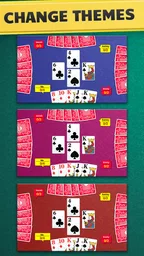
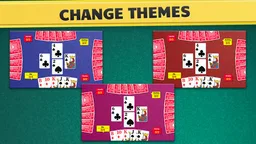
- Adjustable settings let players tailor the game.
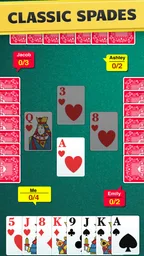
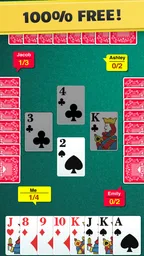
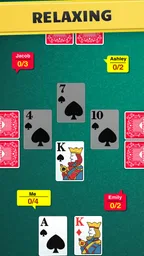
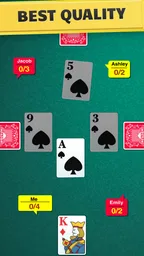
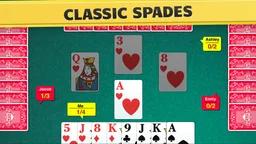
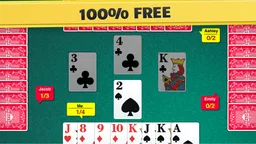
- Familiar card visuals keep the table easy to follow.
What could be better
- Computer opponents may feel predictable after repeated play.
- A full match can take longer than a quick card game.
- Ads may interrupt play in the free version.
- The interface may feel dated to some players.
- Limited social features reduce interaction with friends.







