
Space Waves - CrazyGames review
 Analysis by Appsdrops
I found Space Waves easiest to understand as a game of quick visual decisions: guide an arrow through a course, notice what is coming, and react before the route closes in. That makes it appealing when I want a focused arcade challenge rather than a long game to manage. It is also a format that asks a lot of the player’s eyes and hands, so whether it feels welcoming depends as much on the moment and the player as on the level itself.
Published by CrazyGames.com, this free arcade game is rated for Everyone. It has an average rating of 4.6 from around 46,000 ratings, with more than five million installs. Those figures suggest a broad audience, but they do not tell me whether the controls or visual demands will suit a particular player; trying a short session is the more useful test.
Reading the route and finding your way around
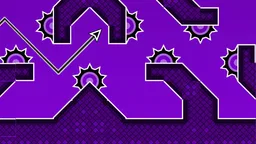
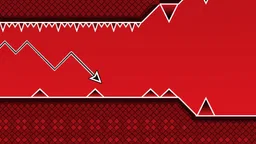
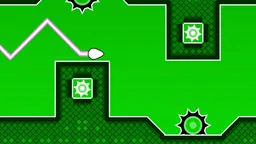
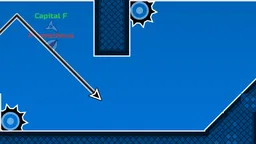
The basic idea is direct: move an arrow through more than 80 geometry-themed levels while avoiding obstacles. I like that the central task can be grasped without a tutorial-heavy explanation. The challenge is in reading the course and responding, not learning a large inventory of characters, equipment, or rules before play can begin.
That simplicity is a real advantage for casual players, including someone opening the game for a brief break. It also gives the levels room to be the focus. Rather than comparing a build or planning a long campaign, I can concentrate on the immediate path ahead. If I prefer games with a story, strategic choices, or a clear sense of progression beyond tackling courses, this narrower focus may feel thin.
In a game built around geometry and evasion, visual clarity matters more than decorative detail. I would approach a new level by watching the route before trying to rush through it: identify the direction of travel, notice where the path tightens, and use the first attempt to learn the sequence. This is a practical way to reduce avoidable errors, especially when a level’s shape is less familiar than its basic controls.
One useful distinction is between a mistake caused by a rushed reaction and one caused by not understanding the route. On a replay, I would focus on the exact point where the run went wrong rather than repeating the whole course at the same speed. That turns a reflex test into a small learning loop: observe, adjust, and try again. It is a more satisfying approach than treating every failure as proof that the game is simply too hard.
How the arcade format affects readability
Space Waves is a better fit for players who enjoy watching a compact play area and making rapid decisions than for anyone who wants to pause often and inspect a detailed map. The geometry gives the challenge a visual identity, but it also means a player must keep track of both the arrow and the obstacles. If that kind of visual scanning is tiring, a slower puzzle game with time to plan may be a more comfortable choice.
I would also avoid assuming that a simple premise automatically means an easy experience. Understanding what to do is straightforward; doing it consistently is the test. That gap is part of the appeal for players who enjoy improving through practice, but it can frustrate people who expect a relaxed, low-pressure arcade toy.
Fast reactions, comfort, and different abilities
The main motor demand is timely control: the player has to guide the arrow and respond as the course changes. Anyone who finds rapid or precise input difficult may have a harder time than someone who is comfortable with quick adjustments. I would not recommend it as a first choice for a player who needs a slow pace or generous time to decide, unless they already know that fast arcade games are enjoyable for them.
A helpful way to test the fit is to play when rested, with the device held comfortably, and stop if the repeated reactions start to feel tense. That sounds obvious, but it matters in a game where a small lapse can interrupt a run. For a younger player or someone new to this style, brief attempts with breaks are more sensible than pushing through frustration simply to clear a level.
The sensory side deserves equal attention. The visual task is central, so a player who struggles to distinguish moving shapes or track an arrow amid changing geometry may find the experience demanding. I would try the game in a calm setting first, rather than assuming it will work equally well in every environment. A quieter visual field around the device can make it easier to focus on the course itself.
There is a trade-off here: the focused, uncluttered premise helps keep attention on one task, but the task still relies on visual tracking and fast response. Players who are sensitive to intense motion or who experience eye fatigue should use their own comfort as the guide. If the movement feels unpleasant, a less kinetic arcade game is the better option; there is no need to force a fit because the game is popular.
When and where I would play
This is the kind of game I would open during a short wait or a spare moment at home, when I can give the screen my attention. A level-based challenge can suit small pockets of time better than a game that expects a long uninterrupted session, though the need to react means it is not ideal when I am distracted. I would not play while walking, crossing a street, or doing anything that requires attention elsewhere.
On public transport, I would be cautious: a moving vehicle, glare, and interruptions can all make a visually guided reflex game harder to enjoy. At home, sitting comfortably and reducing nearby distractions gives me a fairer sense of whether I like the challenge. This is a useful distinction for families too: the Everyone age rating describes the audience category, but it does not mean every child will find fast reactions comfortable or easy.
Compared with endless runners, Space Waves puts the emphasis on negotiating geometry courses rather than simply surviving a stream of incoming obstacles. Compared with slower logic puzzles, it offers less time to deliberate and more demand for immediate response. I would choose it over a typical casual puzzle when I want active concentration; I would choose the puzzle when I want to unwind without keeping my hands and eyes in a constant feedback loop.
Another practical tip is to treat a difficult stretch as a pattern to learn, not a test of reflexes alone. If I keep making the same mistake, I would pause briefly and think about what part of the route I am misreading. That small reset can help distinguish a timing problem from a visual one. If the mistake keeps happening because I cannot comfortably follow the action, the game may simply not match my needs.
Limits, value, and who should choose it
Space Waves is free to download, with in-app purchases listed from $1.99 to $9.99 per item. I would keep that in mind if I were setting expectations for a child or sharing the device: free access and optional purchases are different things. The presence of purchase options does not change the core appeal of the arcade format, but it is sensible to check the purchase controls on the device before handing it over.
The game’s strength is its focused premise and sizable set of courses; its limitation is that the same focus leaves little room for players who want a broader mix of activities. It is not the choice I would make for a long narrative, social play, customization, or a slower accessibility-first experience. Nor would I recommend it to someone who dislikes retrying after mistakes. Its appeal depends on finding improvement enjoyable rather than treating repetition as wasted time.
The current version is 1.7.5, and the stated minimum operating-system requirement is 7.1. That makes it worth checking the device’s software before installing, particularly on an older phone or tablet. The developer is CrazyGames.com, and the game’s release date is September 22, 2025. I mention these details because compatibility and recency can matter when deciding whether to try a new arcade title, not because they guarantee a particular experience on every device.
With 742 reviews alongside its much larger rating pool, there is a substantial audience response, but I would not use popularity as a substitute for a personal comfort check. The most useful test is whether the arrow remains easy for you to follow and whether the pace feels energizing rather than stressful. A short session is enough to learn whether that basic interaction suits you.
My inclusive verdict
I would recommend Space Waves to people who enjoy brief, visually driven arcade challenges and are happy to improve through repeated attempts. It can work well for a player who wants a clear objective without a complicated setup, especially when they have a quiet moment and can focus on the screen. The Everyone rating makes it broadly positioned, but suitability still depends on the individual’s comfort with fast visual tracking and responsive input.
I would suggest a different game for anyone who needs more time to process movement, finds repeated visual motion uncomfortable, or wants controls and pacing that can be adapted to a wide range of abilities. In my view, Space Waves is accessible in its basic idea, not necessarily in the demands of playing it well. That distinction is important: a simple rule set lowers the learning barrier, while the reflex challenge can remain a real barrier for some players.
Overall, this is a focused arcade pick rather than an all-purpose recommendation. I like the prospect of learning a course through observation and small corrections, and the range of levels gives that loop room to continue. I would try it for an energetic break, keep sessions comfortable, and move on if the visual pace or motor demands stop being fun. That is the fairest way to judge whether this particular kind of challenge belongs on your device.
What we like
- Quick rounds make it easy to play during short breaks.
- Simple controls are approachable for new players.
- Increasing difficulty provides a satisfying challenge.
- Bright visuals make obstacles easy to spot.
- No lengthy story or setup stands between you and a run.
What could be better
- Precise movement can be difficult on a touchscreen.
- Later stages may feel punishing for casual players.
- Repeated attempts can make the gameplay feel repetitive.
- Fast hazards leave little time to react.
- An internet connection may be needed to play the web version.







