


Granny review
 Analysis by Appsdrops
I find Granny works best as a tense little game to pass around when everyone wants a turn at the same challenge. One person can explore while another watches, points out a detail, or suggests a route; then you can swap and see whether the next player handles the same pressure differently. That shared-room appeal is a big part of its charm, though the game itself is built around individual play rather than household coordination tools.
A tense arcade game that suits short, shared sessions
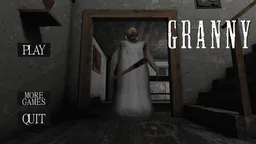
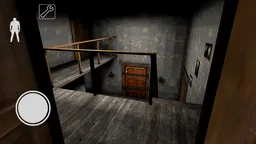
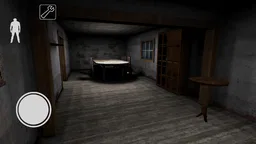
At its core, this is an arcade horror game about getting out of a dangerous house without drawing attention. The simple premise is easy to explain, but the experience asks for patience: rushing through unfamiliar rooms can turn a promising attempt into a sudden setback. I like that contrast between a straightforward objective and the nervous care needed to pursue it.
When I think of a realistic shared-use moment, it is a quiet evening with a phone or tablet on the table and a few people taking turns. One player tries a route, another remembers where something was seen, and the next person starts with a better plan. That kind of informal cooperation is enjoyable without requiring everyone to learn a complicated control scheme first.
The game is free to install, and the scale of its audience is substantial: it has passed 500 million installs and holds a 4.3 average from around 4.4 million ratings. Those figures suggest that its basic idea has broad appeal, but they do not mean it will suit every household. The tension is the point, and anyone who dislikes being startled or pressured may find the same design more stressful than entertaining.
Why taking turns can be more fun than sharing the controls
On a shared device, I would treat each attempt as one person’s turn rather than have several people reach for the screen at once. That keeps control clear and makes it easier to notice what happened when a plan goes wrong. Spectators can still contribute by remembering a clue, noticing a route, or simply offering encouragement, but the player should remain the one making decisions.
A useful habit is to say the plan aloud before moving: what you are looking for, which area you intend to check, and what you will do if you need to retreat. It sounds modest, but it turns a chaotic group session into a small problem-solving exercise. It also helps younger or less experienced players follow the action without being handed the device mid-move.
There is a trade-off. Watching someone else play can reveal useful information, so a later turn may feel easier than an earlier one. If everyone wants the same level of discovery, agree to avoid giving away observations until each person has had a first go. If the group prefers collaboration, share what you noticed and treat the challenge as a team effort instead.
Set expectations before handing over a shared phone
Granny is a game, not a household account manager. I would not rely on it to create separate player profiles, set turn limits, or organize family permissions. On a device used by several people, those boundaries need to come from the people sharing it: decide who is playing, when the phone is available, and whether anyone is allowed to make purchases.
That last point deserves a practical check. The game is free, but it includes in-app purchases priced at $2.99 per item. If children use a shared device, review the device’s own purchase settings and make sure everyone understands that optional spending is different from simply opening a free game. I would also avoid leaving a payment method exposed to casual taps when passing a phone around.
Before a group session, it helps to agree on whether a turn ends after a single attempt or when the player chooses to stop. Without that small rule, a tense game can become an argument over who gets the device next. The game does not need a formal rotation system; a simple household agreement is enough to keep the fun from turning into screen-time bargaining.
Coordination without pretending the game has family features
The most useful coordination happens outside the game. One person can keep track of what the current player has already checked, while another waits for a clear handoff before taking a turn. If the group is trying to solve the house together, a short spoken recap is more helpful than a long debate: what worked, what caused trouble, and what to try differently next.
I also recommend deciding how much help is welcome. Some players enjoy hints; others want to discover the route on their own. A good compromise is to ask before giving advice rather than narrating every move. That keeps the experience suspenseful and gives the person holding the device room to learn from mistakes.
For a shared tablet used in a living room, this can make the game feel social without making it noisy or competitive. It is less suited to a crowded gathering where people are constantly interrupting, because careful attention matters. If your group wants rapid action that everyone can join at once, a party-style arcade game is likely a better fit; this one rewards focused turns and patient observation.
Teen-rated tension and deciding who should play
The content rating is Teen, so I would use that as a prompt for a parent or guardian to consider the child and the household’s comfort with suspense. A rating is not a substitute for knowing how a particular person responds to horror. Some teenagers enjoy the nervous atmosphere; others may find it unpleasant, especially when playing alone or late at night.
For a younger player who is curious, I would start with a brief, supervised session in a shared room rather than assume the game is suitable just because its controls look approachable. Watch for whether the suspense feels exciting or genuinely upsetting, and let the player stop without pressure. In a household with different ages, playing together can make the experience easier to judge, but it should not become a way to push someone into content they do not enjoy.
On the trust side, be clear that one person’s comfort does not automatically apply to everyone else. A teenager may be happy to play, while a younger sibling nearby may not want to watch. Headphones can reduce noise but also make the player feel more isolated; playing with the screen visible to others can be more reassuring, though it may invite too much commentary. Choose the setup that suits the person playing, not just the person holding the device.
What the game does well—and where the friction shows
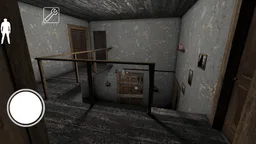
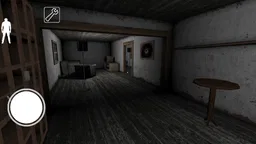
The strongest part is how a simple escape objective creates reasons to pay attention. Instead of treating every room as scenery, I found it useful to approach exploration deliberately: look carefully, remember where you have been, and avoid repeating a risky choice without a reason. That makes the game more satisfying for players who like learning through observation rather than relying only on quick reactions.
The corresponding weakness is that cautious play can feel slow, while a mistake can make an attempt feel abruptly wasted. That tension is effective when I am in the mood for it, but it is not a relaxing background game. I would skip it if I wanted a calm puzzle, a forgiving experience for a very young child, or an arcade game built around constant movement and immediate rewards.
Compared with the usual arcade alternative of chasing a score through quick, repeatable rounds, Granny leans more on suspense and careful decisions. That makes it a better choice for a focused solo session or a group taking turns than for a short burst while distracted. If you only have a minute and cannot give the screen your attention, a simpler pick-up-and-play game will probably feel more satisfying.
Who should install it, and what to expect
DVloper developed the game, which is currently at version 1.8.13 and requires Android 7.0 or later. It is a free arcade title with optional purchases, and it has been available since November 24, 2017. I would check that the device meets the operating-system requirement before planning a shared session, particularly if the household keeps an older spare phone for games.
The game is a strong match for players who enjoy suspense, exploring a space carefully, and learning from a failed attempt. It also works for a small group that likes taking turns and discussing what to try next. It is a weaker match for people who dislike horror, want a multiplayer experience where everyone acts at once, or need the game itself to enforce family schedules and account boundaries.
My household verdict is positive with a clear condition: install it when the people sharing the device are comfortable with tense horror and can agree on simple turn and purchase rules. It gives a group something to talk through while keeping the actual challenge personal, which is a combination I enjoy. But if the goal is a calm family game for mixed ages, or a title that manages shared access for you, I would choose something else. For the right audience, Granny is a memorable, free arcade diversion that rewards attention more than hurried tapping.
What we like
- The controls are simple to learn on a touchscreen.
- Randomized item locations encourage repeat playthroughs.
- Multiple escape routes give players different goals.
- Difficulty options help tailor the challenge.
- The compact setting keeps exploration focused.
What could be better
- Sudden scares may feel stressful for some players.
- Limited hints can make puzzles difficult to solve.
- Repeated attempts can make the experience feel familiar.
- The dark visuals can hide important objects.
- A single mistake can quickly end a run.







