

Geometry Dash Lite review
 Analysis by Appsdrops
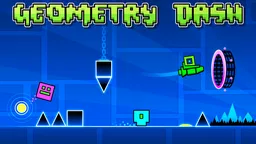
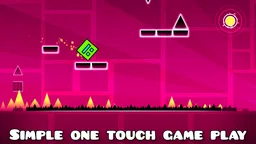
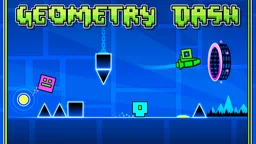
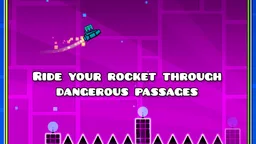
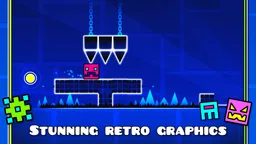
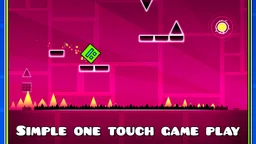
I find Geometry Dash Lite works best when I want a game that gets straight to the point. There is no long setup to learn before the action begins: you guide a geometric character through obstacle-filled stages, timing jumps and changes in movement to match the beat. A mistimed tap can end a run almost immediately, but restarting is so direct that a failed attempt often feels like an invitation to try once more rather than a reason to put the phone down.
That sharp, try-again rhythm is the game’s main pleasure, and also its biggest demand. It expects focus, quick reactions, and a willingness to learn by repeating sections. I would recommend it to someone who enjoys arcade challenges in compact bursts, but not to a player looking for a relaxed platformer where exploring and improvising matter more than precise timing.
Why a tiny run can feel satisfying
As a rhythm-based arcade platform game from RobTop Games, Geometry Dash Lite builds its challenge around coordination rather than a complicated control scheme. The inputs are simple; the difficulty comes from recognizing what is coming and acting at the right instant. Obstacles, jumps, and changes in movement make each run feel like a short sequence you are trying to perform cleanly, not a wide world you wander through.
That simplicity is useful when I have only a few minutes. I can open the game, make an attempt, and understand immediately whether I am in the mood to concentrate. There is little waiting between failure and another try, so the game suits a spare moment better than an activity that needs a lengthy session to feel worthwhile. Its appeal is not that every attempt is easy; it is that the next attempt is close at hand.
The beat gives the action a sense of flow, but I would not treat it as a substitute for attention. Listening can help me anticipate a pattern, yet visual cues and timing still matter. If I start tapping casually without watching the course, the music alone will not carry me through. That balance makes the game feel musical without turning it into a passive rhythm toy.
Its scale is striking: the game has passed 500 million installs and holds an average rating of 4.4 from around 7.8 million ratings. Those figures suggest a broad audience, but they do not make the experience universally comfortable. The same exactness that keeps dedicated players returning can frustrate someone who prefers a forgiving arcade game.
A quick start, with a real learning curve
The first appeal is how quickly the basic idea makes sense. You do not need to study a long list of commands before attempting a level. That lowers the barrier to entry, but it can create a misleading first impression: simple controls do not mean easy progress. The challenge comes from building reliable timing and remembering the sequence of hazards well enough to react rather than panic.
A useful way to play is to treat each failed attempt as information. Instead of changing your timing wildly, notice the obstacle or transition where the run breaks down, then focus on that moment next time. This sounds obvious, but it is a more productive habit than tapping faster whenever a section feels difficult. The game rewards controlled repetition, and impatience tends to make the same mistake harder to diagnose.
For a new player, I would suggest starting when you can give the screen your attention rather than trying to learn a demanding passage while distracted. Once a familiar stretch becomes comfortable, the game is much easier to pick up for a short break. That distinction matters: it is quick to launch, but not every part of learning it is a casual, half-attentive activity.
Short sessions and the cost of interruption
The run-based structure fits short sessions naturally. A single attempt can provide a clear unit of play, and a restart avoids the feeling that one mistake has wasted a long stretch of progress. I like that when I want a small challenge between other tasks. There is an immediate question—can I get farther or perform this sequence more cleanly?—and no need to invent a goal before playing.
However, quick retries should not be confused with perfect interruption tolerance. If a call, conversation, or journey stop pulls my attention away during a demanding section, I may lose the run. The restart is convenient after that, but it does not preserve the moment or make concentration optional. I would choose it for a brief break where I can focus, not as background entertainment while switching constantly between tasks.
There is also a practical difference between pausing because I am done and stopping because something interrupted me. The game is easy to return to in the broad sense that its core idea needs little explanation, but muscle memory and attention can fade. When I come back after a distraction, I do better by treating the next attempt as a fresh one rather than expecting to continue at exactly the same level of precision.
That makes it a good fit for a short wait with a little privacy and a free hand, and a weaker fit for situations where I need to watch my surroundings or answer people immediately. The game asks for visual concentration; it is not the sort of arcade title I would recommend playing while walking through a busy place. A calm, stationary moment gives the timing a fair chance.
Repetition that teaches, and repetition that wears thin
Repeated attempts are not just a side effect of the difficulty; they are the central way the game becomes legible. A section that initially feels like a blur can become a sequence of recognizable cues. My progress then comes from turning a reflexive mistake into a deliberate response. That is satisfying in a way a simple score chase may not be, because improvement can be felt in the run itself.
Still, repetition has a limit. If I am tired, frustrated, or unable to focus, replaying the same stretch can stop feeling like practice and start feeling like a loop. A sensible tip is to pause after several unproductive attempts and return later, rather than assume that more taps will solve a timing problem. The game is at its best when I am curious about the pattern; it is less enjoyable when I am trying to force progress without attention.
Compared with many casual arcade games that emphasize collecting, wandering, or steadily extending a run, Geometry Dash Lite puts more weight on precision and memorization. That makes it more demanding than an easygoing time-killer, but also more rewarding for people who enjoy mastering a fixed challenge. If you want a game that lets you improvise freely or progress while only glancing at the screen, another arcade option will likely suit you better.
The trade-off is clear: you get a compact, focused loop rather than a broad range of activities. Some players will value that clarity, because they always know what they are trying to improve. Others may want more variety between attempts. I would not pick it as my only game if I were looking for a constantly changing experience, but I would keep it in mind when I specifically wanted a test of timing.
Who will enjoy it most
I think it is especially well suited to players who like learning a difficult sequence through practice. If you enjoy repeating a short section until your reactions become consistent, the game gives that effort a clean purpose. It can also work for someone who wants a game they can understand quickly and revisit without having to remember a complicated story or a large collection of controls.
It is less suitable for anyone who dislikes restarting, reacts poorly to repeated failure, or wants a gentle game to unwind with after a tiring day. The arcade presentation may look approachable, but the demand for timing can make it tense. Younger players may enjoy the immediate action, while adults looking for a low-pressure break should be aware that this is not automatically relaxing just because each attempt is short.
The age rating is Everyone 10+, which is useful context for families deciding whether the tone is appropriate. I would also consider the child’s patience: the more important question is not only whether the presentation suits them, but whether they enjoy practicing after a mistake. For a child who finds retries frustrating, a slower, more forgiving platform game may be a better first choice.
For a realistic everyday use, imagine waiting for a ride or sitting through a short gap before an appointment. One or two focused runs can make that empty time feel more engaging without requiring a long commitment. If you are in a noisy environment, though, the rhythm may be less helpful, and if you need to keep checking the time or respond to messages, a less timing-sensitive game will be easier to manage.
What the Lite edition means for choosing it
The title identifies this as the Lite edition, so it is worth approaching it as a specific version rather than assuming it is interchangeable with every Geometry Dash release. If you are simply curious about the core style, it is a free way to see whether rhythm-led obstacle runs appeal to you. I would make that decision based on how much you enjoy the actual retries, not just whether the basic concept sounds exciting.
It is listed as free, which lowers the barrier to trying it, and the game is rated Everyone 10+. Its current version is 2.2.148, and it requires Android 7.0 or later. Those details help with a straightforward install decision, but a compatible device does not guarantee that the play style will be a match. The more important question is whether you want a precise arcade challenge on your phone.
The large audience—over 500 million installs and roughly 496,000 written reviews—also makes it a familiar choice in mobile arcade gaming. I would not use popularity alone as a reason to install it. Someone seeking a forgiving game for quick, distracted play may find a less demanding alternative more enjoyable, while someone who likes a hard pattern to master has a clearer reason to give this one a try.
My casual verdict
Geometry Dash Lite earns its place as a compact arcade game because it makes each attempt understandable and each retry easy to begin. I like its directness: the challenge is visible, the controls do not get in the way, and a short session can still offer a satisfying chance to improve. RobTop Games has made a game whose appeal rests on getting better at the thing it asks you to do, rather than on layering distractions around it.
My reservation is equally straightforward. It is not a dependable choice for every spare minute, because the most satisfying play needs focus and the repetition can wear me down when I am tired. I would skip it if I wanted a calm, forgiving diversion or something I could play while frequently looking away. If I had a few uninterrupted minutes and felt like testing my timing, though, it would be an easy one to open.
Overall, I would recommend it to a friend who enjoys retrying a challenge until a difficult sequence finally clicks. The free price makes trying it straightforward, and its arcade format keeps the commitment small, but patience is the real entry requirement. If that kind of practice sounds rewarding rather than irritating, this is a strong choice for short, focused bursts; if not, a more relaxed platformer will probably make better company.
What we like
- One-touch controls are easy to learn.
- Short stages make it convenient for quick play sessions.
- Practice mode helps players learn difficult sections.
- Distinctive music gives each level a strong rhythm.
- Offline play works without an internet connection.
What could be better
- Precise timing can make early stages frustrating.
- There are fewer levels than in the full game.
- Frequent retries may feel repetitive.
- The Lite version includes advertisements.
- Custom level creation is not available.







