






Sonic Dash Run review
 Analysis by Appsdrops
I find Sonic Dash Run easiest to enjoy when I treat it as a quick burst of arcade action rather than a game that needs a long, quiet session. It puts Sonic in a fast-moving run where I have to react to hazards, keep my path clear, and make quick decisions. That simple premise is immediately readable, but the pace leaves little room for hesitation. If you want a familiar character and a game you can pick up for a short break, it is an easy one to try; if you prefer slow exploration or careful planning, its constant forward motion may wear thin.
Fast runs, quick decisions, and the places players can get stuck
SEGA has built this arcade game around momentum. The basic appeal is not learning a complicated rule set; it is staying alert as the course moves beneath Sonic. I like that a run can feel active from the start, but the same speed that makes the game exciting can also make a mistake feel abrupt. A missed cue or a late reaction can end a promising attempt before I have time to recover mentally.
That makes Sonic Dash Run a good fit for small pockets of time: waiting for a ride, taking a short break, or unwinding between other tasks. A useful habit is to begin a session when you can give the screen your attention, even if only briefly. Trying to play while answering messages or walking around is a poor match for a game that depends on quick visual reactions. The friction is less about understanding what to do and more about being ready to do it at the right moment.
For a new player, the first challenge is often resisting the urge to react to everything at once. I find it more useful to watch the immediate path and make deliberate movements than to chase every distraction on screen. When a run goes wrong, I try to identify whether I reacted late, misread the route, or simply lost focus. That small pause before restarting turns a string of frustrating failures into practice rather than repetition.
The game has a 4.7 average from around 6.5 million ratings, and it has been installed over 500 million times. Those figures point to broad appeal, but they do not mean every player will enjoy its particular rhythm. People who like reflex-led arcade games are the natural audience. Someone looking for a story-heavy adventure, a relaxed puzzle, or a game that can be played without watching the screen closely should choose something else.
Before you start: a few checks that prevent avoidable frustration
Sonic Dash Run is free to download, and it is rated Everyone. It was released on November 26, 2013, and the current version is 10.7.0. The minimum operating system is 7.1. Before installing, I would check that the device has a compatible system version and enough available space for the download and its normal operation. If the install stalls, checking the app store’s download status and the device’s available storage is a sensible first step.
There are in-app purchases, with individual items priced from $0.99 to $99.99. I recommend deciding in advance whether you want to spend anything, especially if a child will be using the device. The game is free to start, but optional purchases mean it is worth reviewing purchase controls on the device rather than assuming that a free download rules out spending. You can try the core experience first and decide later whether any paid item is worth considering.
One practical setup tip is to give yourself a short, uninterrupted first session. That lets you get used to the pace and the way the game asks for quick reactions without blaming a poor attempt on divided attention. If the display feels difficult to follow, try a different posture or hold the device more steadily before changing anything else. Small adjustments to how you play can matter more in a reflex game than they would in a turn-based title.
Because it is an established game with a long release history, it may be tempting to assume that every problem is caused by the game itself. I would first check whether the device is responsive in other apps, whether the game has finished installing or updating, and whether restarting it changes the behavior. These are general troubleshooting steps, not a guarantee that they will fix every issue, but they help separate a temporary device or download problem from a gameplay difficulty.
Recovering a run without turning every mistake into a restart
When a run ends quickly, I try not to tap through immediately and repeat the exact same approach. I take a moment to recall the last obstacle or decision that caught me out, then focus on that kind of moment in the next attempt. This is a more useful workflow than trying to react faster everywhere at once. In a game built around reflexes, attention is a limited resource; watching the next section carefully is usually better than mentally replaying the last failure.
If controls seem unresponsive, I would first make sure the screen is clean and that my fingers are landing where I expect. Then I would close and reopen the game and check whether the device is struggling elsewhere. That sequence keeps troubleshooting simple: screen contact, app restart, then a broader check of the device. If the same issue continues only in this game, checking for an available update through the app store is a reasonable next move.
There is also a useful distinction between a genuine technical problem and a run that simply feels unfair because it moved quickly. If Sonic responds in other moments but I miss one particular cue, I treat that as a timing mistake and adjust my focus. If input seems to fail repeatedly in otherwise ordinary play, I stop rather than burning through several attempts while annoyed. A short pause often gives a clearer sense of whether the trouble is concentration, the device, or the app.
For a shared device, I would set expectations before handing it over: this is a fast game, and a child may want to replay a difficult section or explore purchase options. Since the age rating is Everyone, the content is broadly accessible, but that does not replace an adult’s judgment about screen time or purchases. Keeping a simple household rule—play first, ask before buying—makes the free-to-start model easier to manage.
What makes it different from other arcade choices
Compared with slower arcade games that let you plan each move, Sonic Dash Run asks for attention in the moment. That makes it more exciting when I am alert, but less forgiving when I am tired or distracted. A conventional platform game may give me more room to study a jump or explore a level; this runner-style approach is better when I want immediate action rather than a careful journey through a world.
That difference also affects how I recommend using it. I would choose this game for a brief, focused session, not as background entertainment while doing something else. If you enjoy trying again to improve your reactions, the repeating run structure can be satisfying. If you want a clear stopping point after every small objective or dislike restarting after errors, a puzzle game or a more leisurely arcade alternative may suit you better.
The Sonic identity gives the action a recognizable face, but the appeal here is still the play rhythm, not simply seeing a familiar character. I would not recommend it solely because someone likes Sonic in other kinds of games. The key question is whether they enjoy fast decisions and can accept that a good run can end after one poorly timed response. That is the trade-off that shapes the experience more than the character alone.
One non-obvious way to get more from it is to treat each attempt as a small practice drill. For a few runs, focus on keeping your attention on the path; on another, notice whether you tend to react too early or too late. This is not a formal training mode, just a way to make play feel purposeful. It helps players who otherwise fall into impatient tapping and makes short sessions more rewarding even when they do not produce a personal best.
When the problem may be the device, the moment, or the fit
Not every rough session means something is broken. A bright or busy environment, a small screen, a low battery, or a device that is already slowing down can make quick visual play harder. I would try again in a calmer setting and close other demanding apps before deciding the game is at fault. If other apps also respond slowly, the issue is more likely to involve the device than Sonic Dash Run alone.
It is also possible to be playing at the wrong time. When I am tired, I make more late reactions, and a game that depends on speed can turn that into frustration quickly. In that situation, I would switch to something less demanding instead of forcing another run. This is a small but important distinction: the game may be working as intended while the player is simply not in the mood for a reflex test.
For the same reason, this is not my first choice for someone who wants uninterrupted progress, a deep narrative, or precise control over a slower challenge. A more deliberate arcade title offers time to plan; a casual puzzle offers pauses between decisions. Sonic Dash Run is strongest when the player wants a direct burst of movement and accepts that quick failure is part of the loop.
My practical verdict on picking it up
SEGA’s arcade game is worth trying if you want a recognizable, fast-paced mobile game that works well in short sessions and rewards concentration. Its free entry makes it easy to sample, while optional purchases are a reason to keep spending settings in mind. With 417,000 reviews alongside its large player base, it is clearly a widely used title, but popularity should not be confused with a perfect fit for every kind of player.
I would recommend it to Sonic fans who enjoy reflex challenges, and to casual players who want something more active than a simple tap-and-wait game. I would steer away from it if you need a calm experience, dislike repeated attempts, or often play with only half your attention. The best way to judge it is to try a few focused runs and notice whether improving your reactions feels fun or merely stressful.
Overall, I see Sonic Dash Run as a strong pick for short, energetic play rather than an all-purpose game. Check device compatibility, keep optional purchases in perspective, and give yourself enough attention to learn its pace. If those conditions suit you, its quick action can make an ordinary spare moment more entertaining. If not, a slower arcade alternative will probably be a better companion.
What we like
- Fast-paced running makes short play sessions exciting
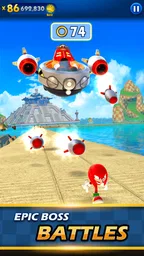
- Familiar Sonic characters add appeal for longtime fans
- Simple swipe controls are easy to learn
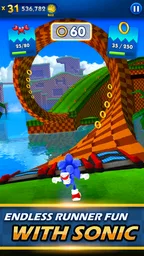
- Bright environments give each run a lively look
- Collectible rings provide a clear goal during runs
What could be better
- Frequent obstacles can make later runs feel demanding
- Progress may depend on repeated runs to unlock content
- In-app purchases can speed up progression
- Ads may interrupt play between runs
- Gameplay can feel repetitive over longer sessions







